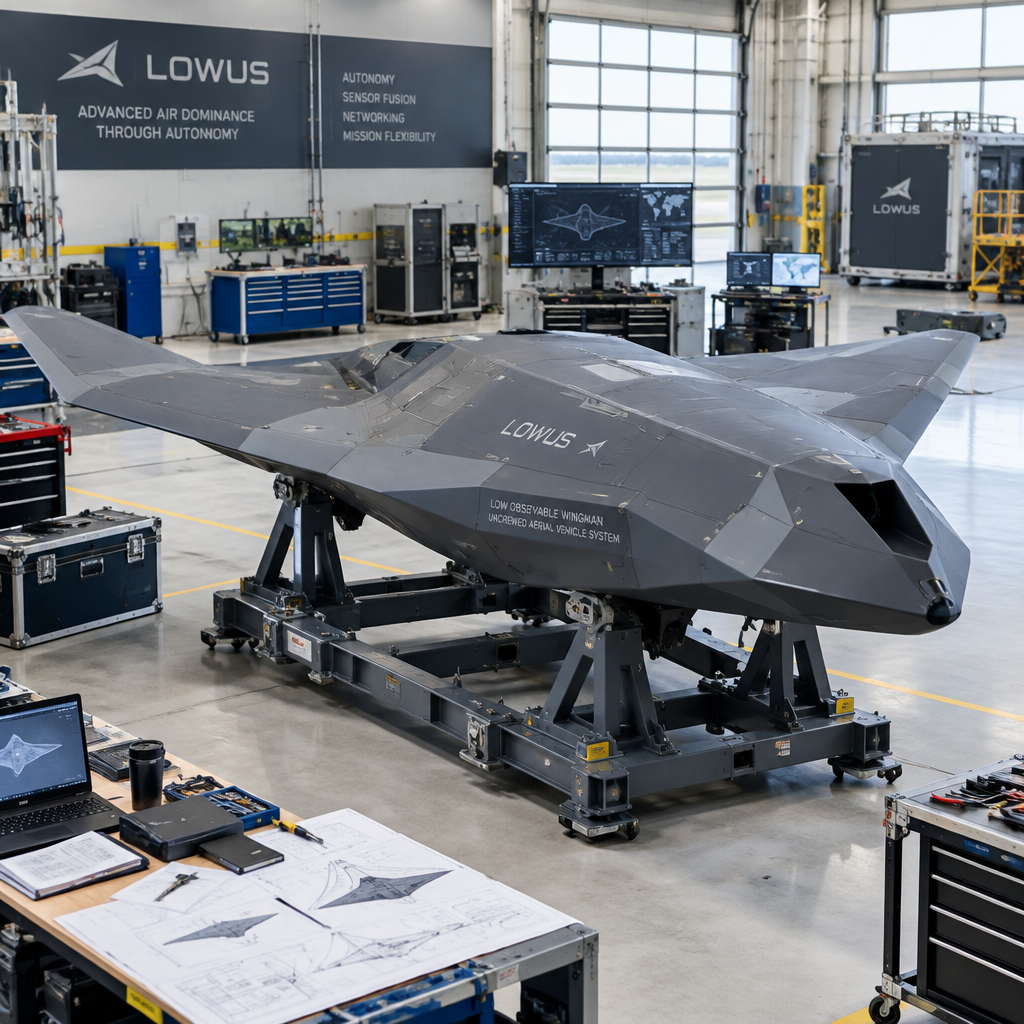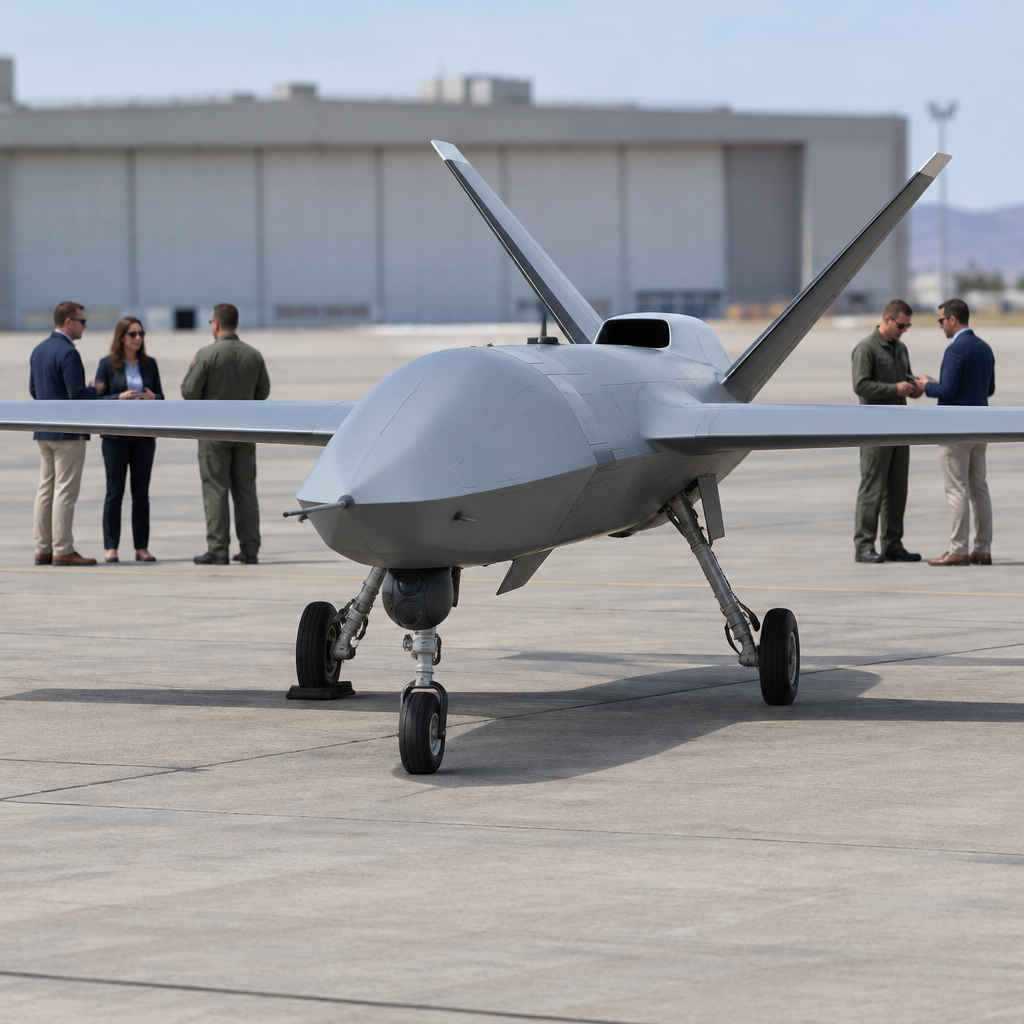
“I would not want to be anyone else than Kratos with the Valkyrie, that’s in production, that comes off the line, ‘white tail,’ six million dollars or something like that, maybe eight [million dollars], depending on configuration,” Eric DeMarco said on Kratos’ quarterly earnings call.
Eric DeMarco on price, production, and affordability
Kratos’ president and CEO provided the clearest public price band yet for the MQ-58 Valkyrie family: roughly $6 million to $8 million per aircraft, depending on configuration and “without certain mission systems installed,” DeMarco said. He added that a “missionized” aircraft would cost more. The figure marks an increase from prior comments — DeMarco put the price at about $6.5 million in 2023 and told TWZ in 2024 that RATO versions had a $4–$6 million range, with a $4 million number contingent on a 100-airframe production run.
On the earnings call DeMarco emphasized affordability as a strategic advantage: “Affordability is gonna win,” he said, and noted Kratos’ high-volume experience across target and tactical jets as a source of supply-chain leverage. The company’s stated production goal, as of August, is an annual rate of 40 airframes by 2028.
Variants and operational modes: XQ-58A, MQ-58B, U740; RATO versus CTOL
The Valkyrie family exists in multiple configurations. Two primary categories are rocket-assisted takeoff (RATO) versions, which lack landing gear and land by parachute, and conventional takeoff-and-landing (CTOL) types that operate from runways and have landing gear. The U.S. Air Force’s XQ-58As and the European U740 are RATO types; the Marine Corps is acquiring a fully missionized CTOL version referred to as the MQ-58B. Kratos has also developed a launch trolley so RATO drones can be launched from runways, and CTOL variants can themselves be RATO-launched and then land conventionally.

The cyber insurance questionnaire just landed. Now what?
SOC 2, HIPAA, insurance renewals - someone has to own security strategy. Nubivance provides fractional CISO leadership without the full-time salary.
Get a security leadComparisons with other Collaborative Combat Aircraft (CCA) programs
Even at $8 million apiece, Kratos’ stated unit cost sits at the lower end of the known CCA price spectrum. The U.S. Air Force’s Increment 1 CCA contracts include General Atomics’ FQ-42A Vengeance and Anduril’s FQ-44A Fury; the Air Force has said it is aiming for at least 500 of those uncrewed aircraft in inventory by 2032 and has targeted a $20 million average unit cost for Increment 1 CCAs at full-scale production. Public commentary has suggested design price ranges of $20–$30 million for some of the field, although Anduril has said each Fury will be cheaper than that without offering a hard figure. Boeing’s MQ-28 Ghost Bat has been compared previously with an Australian aim of a unit cost equal to “10 per cent of the cost of a crewed aircraft such as a[n F-35],” which translated at that time to roughly $8–$10 million based on publicly available F-35 data.
International sales, Airbus U740 first flight, and other contracts
Kratos has secured at least two other Valkyrie contracts for customers not publicly identified; the company delivered drones to at least one of those customers in the third quarter of 2025. Kratos is pursuing a bid to supply a Valkyrie variant called the U740 to the German Air Force through a partnership with Airbus. The U740 made its first flight at an unnamed test facility in northern Europe “last month,” and Airbus Defence highlighted that flight publicly. DeMarco noted that Kratos obtained State Department approval to fly internationally, framing such approvals and international test flights as a competitive advantage for selling to foreign customers.
Test incidents and the pace of development
Development has not been without setbacks. TWZ reported the crash of a Valkyrie in a “test configuration” on August 4 at the U.S. Army’s Dugway Proving Ground in Utah. Kratos told TWZ that no one was injured, that flight test operations for the system were “paused temporarily in an abundance of caution” while the company investigated the cause, and that additional test systems were ready once the investigation completed. Kratos’ Unmanned Systems Division president, Steve Fendley, said the company is “constantly increasing the capability of the system” to meet mission requirements and customer requests.
What this means for the U.S. Air Force, the Marine Corps, and foreign buyers
- U.S. Air Force: The Valkyrie’s $6–$8 million unit price contrasts with the service’s stated $20 million average target for Increment 1 CCAs; Kratos “could potentially submit a bid” for follow-on competitions such as Increment 2, according to the reporting.
- U.S. Marine Corps: The service is procuring a fully missionized CTOL MQ-58B under its CCA effort, with Northrop Grumman listed as the prime contractor for that Marine program.
- Foreign buyers and partners: Kratos points to the U740’s European flight and to State Department approvals as enablers of international sales; at least one foreign customer took deliveries in Q3 2025, and Kratos is actively pursuing a German Air Force bid with Airbus.
The figures and developments Kratos disclosed — a $6–$8 million price band, a production goal of 40 airframes a year by 2028, international flights of the U740, and the paused testing after the Dugway incident — frame a central tension for the CCA market: can much-lower unit prices translate into fielded capability at scale, and will affordability reshuffle procurement choices already aimed at significantly higher price points? The next milestones to watch in the record are Kratos’ production ramp, the outcome of the Dugway investigation, Airbus/U740 follow-on flights, and any formal bids into U.S. CCA competitions.