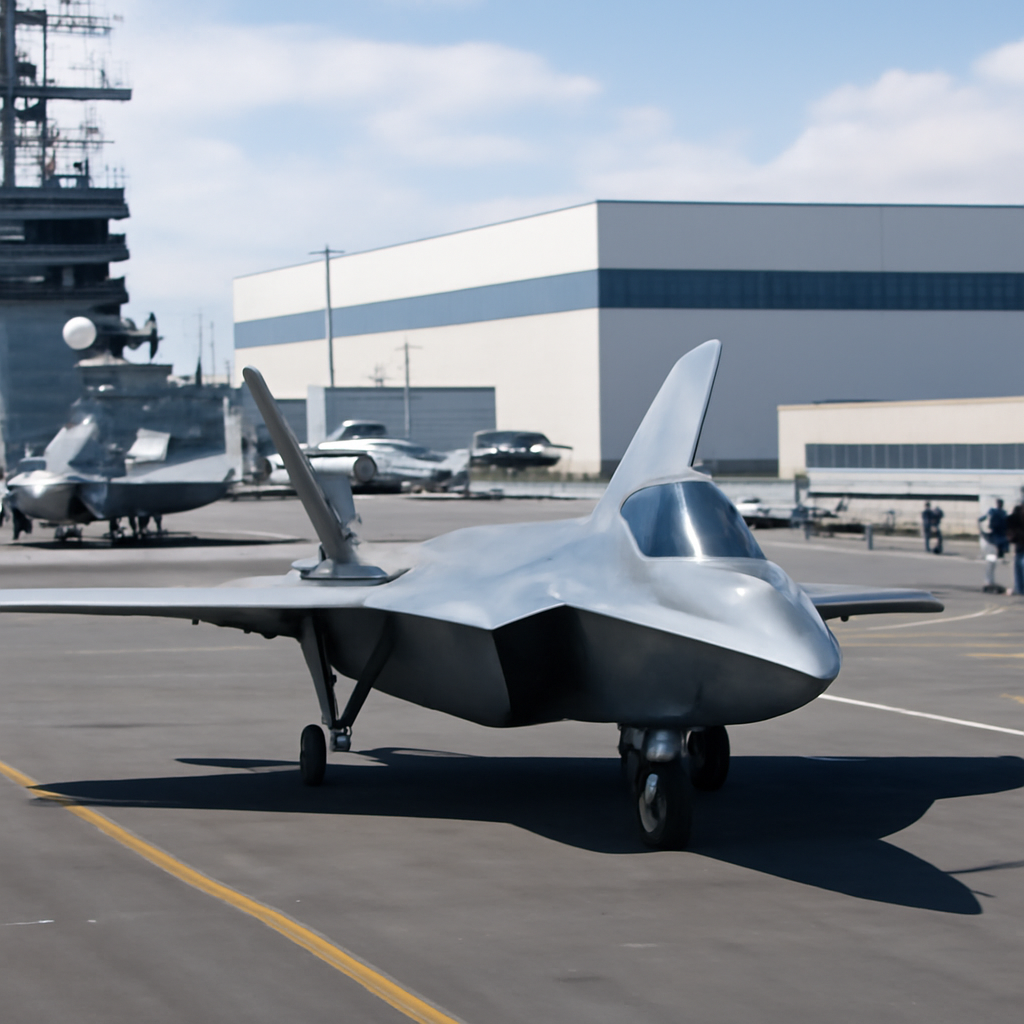
Kongsberg’s acquisition: structure and purpose
Kongsberg announced at the ILA Berlin airshow that it has formalized a 90 percent purchase of Zone 5, following approval from U.S. regulatory authorities. The Norway-based contractor will operate Zone 5 as an independent subsidiary. Executives framed the deal as a fast route to introducing lower‑cost cruise missiles into European markets by marrying Kongsberg’s “exquisite” technologies, such as the Joint Strike Missile (JSM), with Zone 5’s design-for-cost and mass-production capabilities.
Rusty Dagger: design, employment modes, and clearances
Zone 5’s Rusty Dagger (designated AGM-188 under the Family of Affordable Mass Missiles, FAMM) is described as a light, low‑cost cruise missile that reached full production this year. Zone 5’s chief strategy officer, Tom Kanewske, said “well above 1,000 units for Rusty Dagger” will be completed in the weapon’s first year of production, including deliveries for the U.S. Air Force.
The Rusty Dagger can be configured for multiple employment modes: pylon‑launched from fighters, palletized deployment from cargo aircraft, and surface‑launched from land or sea. Zone 5 emphasizes an open‑architecture hardware and software approach that allows sovereign subsystems to be added in under 12 months and supports a franchise manufacturing model that can be parachuted into partner factories.
Range and platform details in the briefing: the Rusty Dagger flies at high‑subsonic speeds and reaches about 250 miles. Zone 5 confirmed the weapon is cleared for use from four fighter types, explicitly naming the F-16 as one, which completed end‑to‑end live‑fire trials at Eglin Test and Training Range earlier in 2026. Kanewske said F‑16 integration during those trials took 72 hours. The missile is also being supplied to Ukraine under the Extended Range Attack Munition (ERAM) program, and Zone 5 is contracted under programs for the U.S. Army and Navy that involve surface launches.

Audit-ready is a season. It shouldn't be.
Evidence in spreadsheets, controls drifting between audits, frameworks multiplying on flat headcount. Nubivance runs continuous compliance on Rapid7 Cyber GRC - SOC 2, HIPAA, ISO 27001, PCI, CMMC.
End the scrambleJSM and Rusty Dagger as a “high‑low” strike mix
Kongsberg and Zone 5 executives outlined a complementary operational concept pairing the stealthy, higher‑cost Joint Strike Missile with massed Rusty Daggers. Kongsberg’s Harald Aarø described the combination as “a very effective future strike solution,” with Rusty Dagger providing cost‑effective standoff volume and JSM offering a better chance to penetrate heavily defended targets by virtue of sophisticated guidance and low observable characteristics. The JSM’s range was presented as more than 215 miles; both missiles operate at high‑subsonic speeds.
One scenario highlighted in the briefings had internal‑carried JSMs on penetrating F‑35s while much larger numbers of Rusty Daggers are launched from fighters’ pylons and from palletized drops off transports outside hostile air‑defense ranges. Kanewske suggested cooperative behaviors between Rusty Dagger and JSM could be developed, reflecting a trend toward leveraging artificial intelligence to improve munition survivability and effectiveness.
Production scale, program contracts, and export posture
Zone 5 is under U.S. Air Force contract for both FAMM (where Rusty Dagger is the AGM-188A) and ERAM, the U.S. Army for the Low‑Cost Containerized Missile (LCCM) program, and the U.S. Navy for the Coalition Heterogeneous Affordable Offensive Strike (CHAOS) program. The U.S. Air Force’s 2027 proposed budget planned to buy nearly 28,000 FAMM munitions over five years; separately, the Pentagon publicly laid out plans to acquire at least 10,000 lower‑cost cruise missiles over three years.
- Program names cited: FAMM (AGM-188), ERAM, LCCM, CHAOS.
- Rusty Dagger production: “well above 1,000 units” in the first year, including U.S. Air Force deliveries.
- Export use: Zone 5 is “the only affordable mass munition that is currently on contract with an export international customer,” Kanewske said, referring to Ukraine.
What this means for Germany, the U.S. services, and Ukraine
Germany: Kongsberg identified Germany as a target for its franchise manufacturing footprint, citing German manufacturing capabilities and naming the country as a likely site for European production to provide “national sovereign capabilities” based on the joint portfolio.
U.S. services: The Rusty Dagger’s rapid integration (72 hours on an F‑16) and open architecture are positioned to meet service demand for massed, lower‑cost standoff munitions; Zone 5 already holds contracts across Air Force, Army and Navy programs focused on affordable, scalable strike weapons.
Ukraine: Zone 5 confirmed Rusty Dagger is being supplied to Ukraine under ERAM. Company executives pointed to Ukraine’s operational use as evidence that the missile is combat‑fielded; additional reporting noted unverified photos circulated by Russian sources purporting to show parts recovered after use in Ukraine.
Conclusion: Kongsberg’s 90 percent acquisition of Zone 5 crystallizes a strategy to combine high‑end, low‑observable missiles like the JSM with massed, low‑cost munitions such as the Rusty Dagger. The companies are betting that marrying stealthy precision and scalable volume — supported by an open architecture and European manufacturing plans — will answer growing demand for thousands, not dozens, of standoff weapons. How quickly partners move from concept to synchronized operational employment, and whether cooperative behaviors between these missile types are realized in the field, are the next concrete milestones to watch.
Source: The War Zone — Kongsberg Bets On High‑Low Cruise Missile Mix With JSM And Rusty Dagger