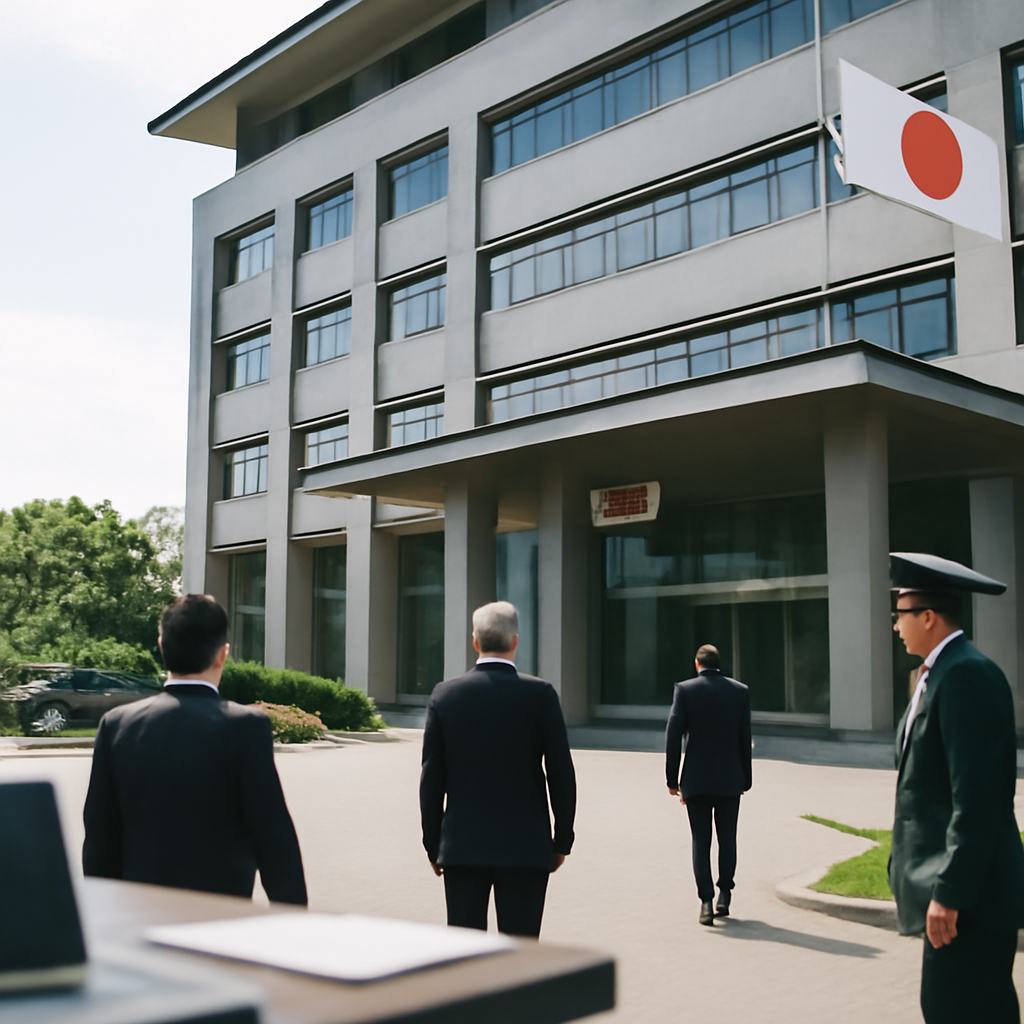
"A 'new way of fighting' (atarashii tatakai-kata)," the Ministry of Defense places at the center of its fiscal year 2027 budget request, signaling a shift in priorities that goes beyond headline numbers.
The FY2027 request: 9.3 trillion yen and an early 2% GDP target
Japan’s Ministry of Defense (MOD) asked for approximately 9.3 trillion yen for fiscal year 2027, a 3.8 percent increase from FY2026. That topline number is the largest defense budget request in the country’s postwar history and, crucially, allowed Japan to reach the 2 percent of GDP defense-spending target ahead of schedule. The figure has drawn attention for its size; the request also offers a preliminary window into how Japan plans to reshape its forces as it prepares revised national documents slated for December.
Operational priorities: nine areas, a focus on emerging technology
The FY2027 request emphasizes three organizing concepts: a "new way of fighting," operational sustainability, and strengthening the industrial and personnel base. MOD identifies nine priority areas for investment, including artificial intelligence, uncrewed systems, stand‑off (counterstrike) capabilities, space, cyber, sea‑lane defense, the defense industrial base, and personnel. The request seeks a better balance between shomen sobi (frontline equipment) and koho (the logistics and support systems that keep a force operating), and explicitly aims to harness emerging technologies such as AI and uncrewed systems.

Audit-ready is a season. It shouldn't be.
Evidence in spreadsheets, controls drifting between audits, frameworks multiplying on flat headcount. Nubivance runs continuous compliance on Rapid7 Cyber GRC - SOC 2, HIPAA, ISO 27001, PCI, CMMC.
End the scrambleIndustrial policy moves: Kure sites and bank guidelines
Beyond procurement line items, MOD and parts of Japan’s private sector have taken concrete steps to buttress the defense industrial base. At the end of August, MOD announced plans to acquire former Nippon Steel industrial sites in Kure, Hiroshima, converting them into mixed‑use facilities that the government can lease to defense companies. In mid‑September, Mitsubishi UFJ Bank released new, more lender‑friendly guidelines for financing defense firms. Together, these moves create new physical capacity and more favorable financing terms for companies that build or supply defense equipment.
Fiscal headwinds: a weak yen and the legacy of underinvestment
The request comes with caveats. The MOD and observers note that a persistently weak yen has eroded Japan’s purchasing power, particularly for imported equipment and components, making the dollar value of the increases less impressive. The yen’s decline, especially since 2022, offsets some of the intended impact of larger nominal budgets. The government also confronts long‑standing consequences of decades of underinvestment: defense spending was largely flat from FY2000 through FY2012 even as a neighboring power accelerated military modernization, a gap Japan now seeks to recover. Those lost years and current exchange‑rate pressures raise a central fiscal question: does the government have the capacity to sustain the scale of investment the nine priority areas will require?
Strategic context: concurrent pressures from regional alignments and allies
The FY2027 request is framed against mounting regional pressures. Tokyo is confronting the need to reverse the "hollowing out" of its defense force while racing to catch up with China, which the source identifies as Japan’s principal strategic threat. The request also references the impact of closer alignment among China, Russia, and North Korea, and uncertainty about the long‑term reliability of the United States’ defense commitments to its allies, including Washington’s capacity to uphold those commitments. The source notes that Japan is not alone in this predicament; other U.S. allies face similar reckonings after years of deepening economic ties with China and modest defense investment.
What this means for policymakers, defense companies, and the United States
- Policymakers and budget officials: will need to craft and protect a multi‑year funding roadmap that prevents the nine priority areas from being funded too thinly, while responding to political pressure to lower taxes and to currency‑driven cost challenges.
- Defense companies and procurement leaders: gain new physical sites in Kure and more favorable bank financing, but must plan for sustained investment cycles and contend with import cost inflation due to the weak yen.
- The United States and allied planners: will see Japan moving to meet its 2 percent GDP goal sooner than planned, but must factor in Tokyo’s dual tasks of rebuilding depleted capabilities and calibrating investments across many concurrent priorities.
The FY2027 budget request is at once encouraging and sobering. It signals that Tokyo is grappling with the scale of transformation required—from munitions and emerging technologies to logistics, industry, and personnel—and that it has begun concrete steps to support industry and financing. But the request also raises clear execution questions: nine concurrent priorities demand sustained funding, the weak yen eats at purchasing power, and decades of underinvestment cannot be reversed in a single budget year. With the National Security Strategy, National Defense Strategy, and Defense Buildup Plan due in December, the real test will be whether Tokyo converts this record request into a protected, efficient, and enduring program of modernization.