"air-to-surface/anti-air missile," reads a line in Japan’s FY2027 defense budget request — wording that, if deliberate, signals a new role for a weapon long described as an anti-ship missile.
Japan’s FY2027 defense budget request
Japan’s Ministry of Defense included the descriptor in its record fiscal year 2027 defense budget request, submitted on August 31, 2026, which seeks ¥8.89 trillion (approximately $56 billion) for the fiscal year beginning April 2027. The phrase appears under a section headed Durability and Resilience, a passage that asks for funds to “secure ammunition and fuel, increase the number of operational units (by addressing parts shortages, etc.), enhance the resilience of facilities (through facility upgrades associated with the formation of new units and the introduction of new equipment, etc.), and strengthen the operational infrastructure (by enhancing manufacturing capabilities, etc.).”
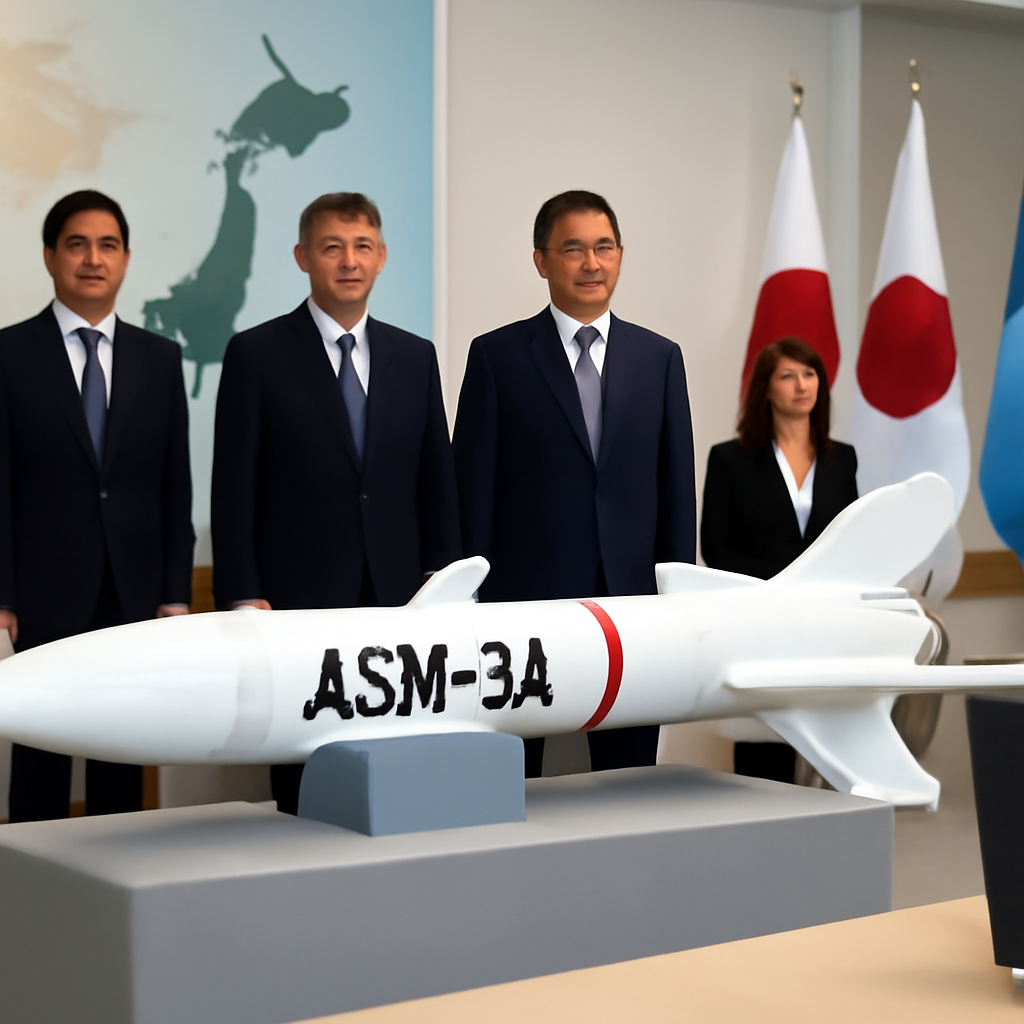
The same subsection lists a wide range of munitions that the ministry wants to secure — from 5.56mm small-arms ammunition and 30mm cannon rounds through 155mm precision artillery rounds to advanced missiles such as the Type 23 ship-launched air-defense missile and the ASM-3 Kai.
ASM-3 Kai: observed features and testing
The ASM-3 is Mitsubishi Heavy Industries’ domestically developed supersonic air-launched anti-ship missile. The improved ASM-3 Kai — “Kai” meaning modified or revised — represents an evolutionary step for the family, although the ministry has not publicly disclosed the full nature of the upgrade.
Open-source reporting cited in the budget dossier notes several technical touchpoints: the weapon reportedly flies more than 400 kilometers, is powered by a ramjet engine that enables sustained high-speed performance (reported around Mach 3), and employs an active/passive radar seeker. The missile is also substantially larger than typical fighter-launched air-to-air missiles, allowing for a larger propulsion system, seeker, and warhead.
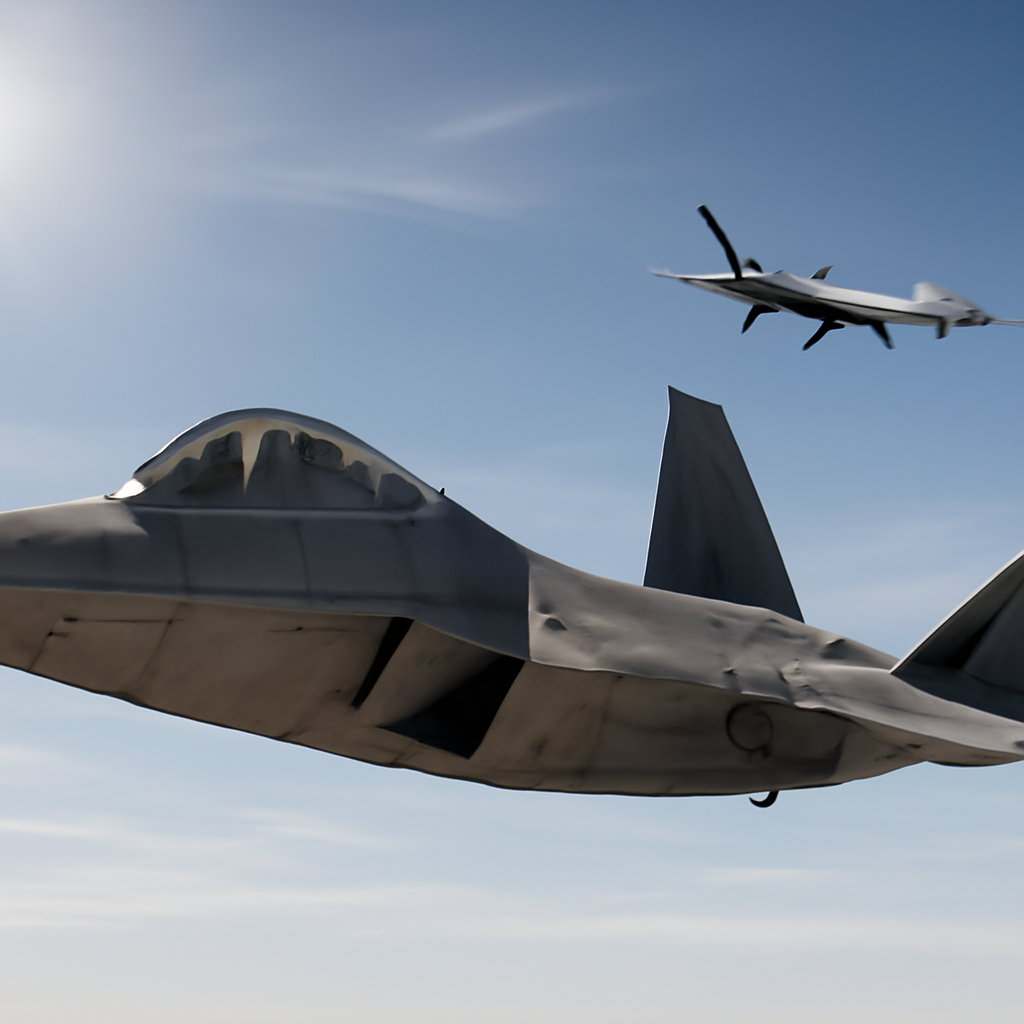
Observers have documented testing of ASM-3 variants on Mitsubishi F-2 fighters. Previous reporting has identified at least five distinct external configurations for the ASM-3 family, and imagery circulated on social platforms shows F-2s flying with ASM-3 or ASM-3 Kai hardware attached.

This site is the portfolio.
OSINTSights runs on Cloudflare Workers, D1, R2, and Vectorize, with an AI pipeline on Hetzner ARM. Nubivance designed, built, and operates it. We do the same for clients.
See what we buildWhy an "anti-air" label matters
The insertion of “anti-air” alongside “air-to-surface” in the budget language raises two non-exclusive possibilities found in the record: either the ASM-3 Kai is being described more broadly within budget taxonomies, or the missile — or a derivative — is intended or being developed for an actual air-to-air mission.
If the missile were configured for an anti-air role, several attributes in the public record would be relevant. The ramjet-powered design and larger airframe could give the weapon sustained speed and longer reach compared with many conventional rocket-boost air-to-air missiles. The reported active/passive radar seeker could enable both active radar engagements and passive homing on emissions — a capability that is particularly suited to targeting emitters such as airborne early warning and control (AEW&C) radars.
Budget language alone does not establish whether the ASM-3 Kai has been tested or validated against airborne targets; TWZ has contacted Japan’s Ministry of Defense seeking clarification. The descriptor could instead denote a variant purpose-designed for anti-aircraft use, or it could be an error in the document.
Other air-launched weapons and F-2 upgrades in the request
The FY2027 request mentions additional air-launched capabilities. It includes procurement language on the AGM-88G Advanced Anti-Radiation Guided Missile-Extended Range (AARGM-ER) and lists the U.S.-made AIM-120 AMRAAM and Japan’s domestically developed AAM-4B in the same part of the document. The AAM-4B is identified in the request as a medium-range weapon equipped with an AESA antenna.
The document also calls for upgrading an initial ten Mitsubishi F-2 fighters to make them compatible with the air-launched version of the Upgraded Type 12 anti-ship guided missile (also referred to as the air-launched Upgraded Type 12/Type 25). Adoption of AARGM-ER and other new weapons would expand the F-2’s and other platforms’ suppression and standoff-strike options.
What this means for Tokyo, the JASDF F-2/F-35 programs, and China’s AEW&C fleet
- Japan’s Ministry of Defense and procurement planners: The budget request reflects a push to broaden standoff strike, air defense, and operational resilience. A decision to field an ASM-3 Kai with anti-air capability would shift procurement and integration priorities — notably payloads, sensor fusion, and platform compatibility for the F-2 and potentially other aircraft.
- Japan Air Self-Defense Force operators of the F-2 and F-35: F-2s are already shown conducting ASM-3 tests and the request explicitly funds F-2 upgrades to carry the Upgraded Type 12. If an ASM-3 Kai anti-air variant is real, operators will need tactics and training to employ a very-long-range missile against airborne targets rather than its traditional anti-ship role.
- China’s AEW&C and airborne support fleet: Public analysis in the request notes that a long-range weapon with an active/passive seeker could be particularly useful against high-value airborne assets such as AEW&C aircraft. The emergence of such a capability could force emitters to operate further from contested areas, reducing on-station sensor reach and command-and-control effectiveness.
For now the record is clear only that Japan’s FY2027 budget uses the term “air-to-surface/anti-air missile” for the ASM-3 Kai and that the missile family combines long range, ramjet propulsion, and an active/passive seeker. Whether that wording reflects a clerical choice, a reclassification, or a deliberate move toward a dedicated air-to-air variant remains to be confirmed by the ministry. TWZ noted the development to the ministry and credited Yoshihiro Inaba for drawing attention to the budgeting language.
https://www.twz.com/air/japans-asm-3-kai-supersonic-cruise-missile-may-have-an-air-to-air-capability