"Balikatan 2026 marked a strategic evolution from a bilateral exercise to a full-scale, multinational mission rehearsal for the defense of the Philippines," Adm. Samuel Paparo said at the exercise's closing ceremony.
The maritime strike: Type 88s fired, a Philippine ship sunk
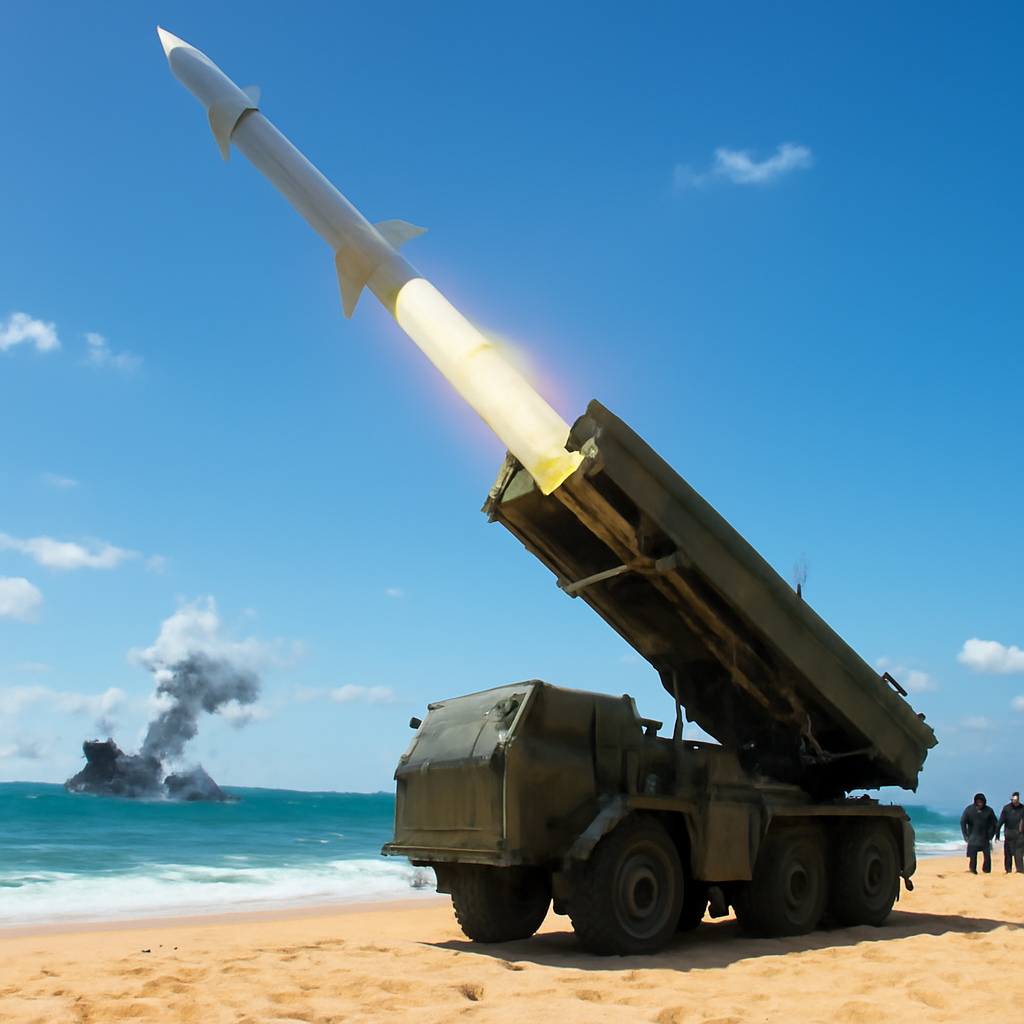
On a sun-baked beach in Paoay, Philippines, Japanese Type 88 surface-to-ship missiles were launched in a live maritime strike that culminated in the sinking of a decommissioned Philippine ship about 46 miles away. “Right on cue, the missiles blazed from their launcher, kicking up sand behind them,” a reporter described, and minutes later cheers from a VIP pavilion confirmed the hit. According to the reporting, this marked the first time Japan has fired the Type 88 outside its own borders and was presented as the culmination of a complex sequence of training events.
U.S. systems and combined rehearsals: Tomahawk, Typhon and NMESIS
The maritime strike was one element in a broader slate of live events during Balikatan. In a different part of the country, the U.S. Army fired a Tomahawk long-range missile from its Typhon launcher the day before the Japanese shot. Near the Japanese Type 88 launcher, U.S. Marines displayed NMESIS, a shore-to-ship anti-missile system. Lt. Col. Ishikawa Daisuke, a Japanese joint staff public affairs officer, said the Type 88 firing “allowed us to validate our tactical integration with the U.S. and Philippine forces…sequencing our capabilities provides that our defense systems can operate seamlessly together, which is essential for defense of the maritime domain.”

This site is the portfolio.
OSINTSights runs on Cloudflare Workers, D1, R2, and Vectorize, with an AI pipeline on Hetzner ARM. Nubivance designed, built, and operates it. We do the same for clients.
See what we buildPhilippine leadership: interoperability, resilience, and civilian control
Philippine defense secretary Gilberto Teodoro Jr. framed the events as an interoperability and resilience exercise. After watching the Type 88 firing, Teodoro told journalists that seeing the system in action made interoperability “something that we can interoperate with in the future.” He emphasized the exercise’s role in disaster response and skill upgrading, saying the culmination “was simple, initial firing, but to get there was very difficult, and we surmounted the obstacle.” Teodoro rejected characterizations of the drills as militarization, asserting they remain “under the control of civilian authorities” and that transparency—apart from operational security—counselled against claims of militarization. Gen. Romeo Brawner Jr., chief of staff of the Philippine military, said the exercise “was never simply about conducting activities” but about strengthening the ability to respond together “in real, complex conditions.”
Critics and Beijing’s reaction: accusations of provocation and a follow-on patrol
Not all observers saw the demonstrations as constructive. Sarang Shidore of the Quincy Institute for Responsible Statecraft argued the live firings and systems on display were “overly provocative,” calling systems like the Type 88, Tomahawk and NMESIS effectively “Taiwan-specific weapon systems” better suited to a major interstate war scenario than to South China Sea contingencies. Shidore warned against treating the Philippines as “simply an extension of Japan…to fight the Taiwan contingency.”
China publicly criticized Japan’s involvement, saying participating countries were “playing with fire.” The reporting notes that, after the criticisms, China sent armed anti-ship bombers over the Scarborough Shoal.
How the Japanese Self-Defense Forces, the Philippine military, and U.S. planners are positioned
- Japanese Self-Defense Forces: The Type 88 firing outside Japan was presented by Japanese officials as a capability demonstration and an integration test with U.S. and Philippine forces. Lt. Col. Ishikawa described the event as validating tactical integration.
- Philippine military and civilian leaders: Defense Secretary Teodoro and Gen. Brawner framed the exercise as enhancing interoperability, disaster-response capacity, and collective readiness under civilian oversight.
- U.S. planners and Indo-Pacific Command: Adm. Paparo characterized Balikatan’s expansion as reflecting the security environment and the “sovereign choices of free nations,” and U.S. units contributed long-range and shore-based systems to the drills.
Taken together, the live firings, equipment displays and political framing turned Balikatan 2026 into a public rehearsal of combined maritime strike capabilities—one that allies presented as interoperability and readiness, and critics portrayed as escalatory. The exercise closes on a clear, stated next step from participating officials: to expand scope and partners. Whether that expansion will alter regional behavior or prompt further operational responses from outside actors remains the explicit contest laid out in this week’s events.



