"We have to ask what happens if the next target is bigger, more critical or more deeply connected to the services millions of people rely on," said Graeme Stewart, head of public sector at Check Point.
The incident: a four‑day blackout at an unnamed UK plant
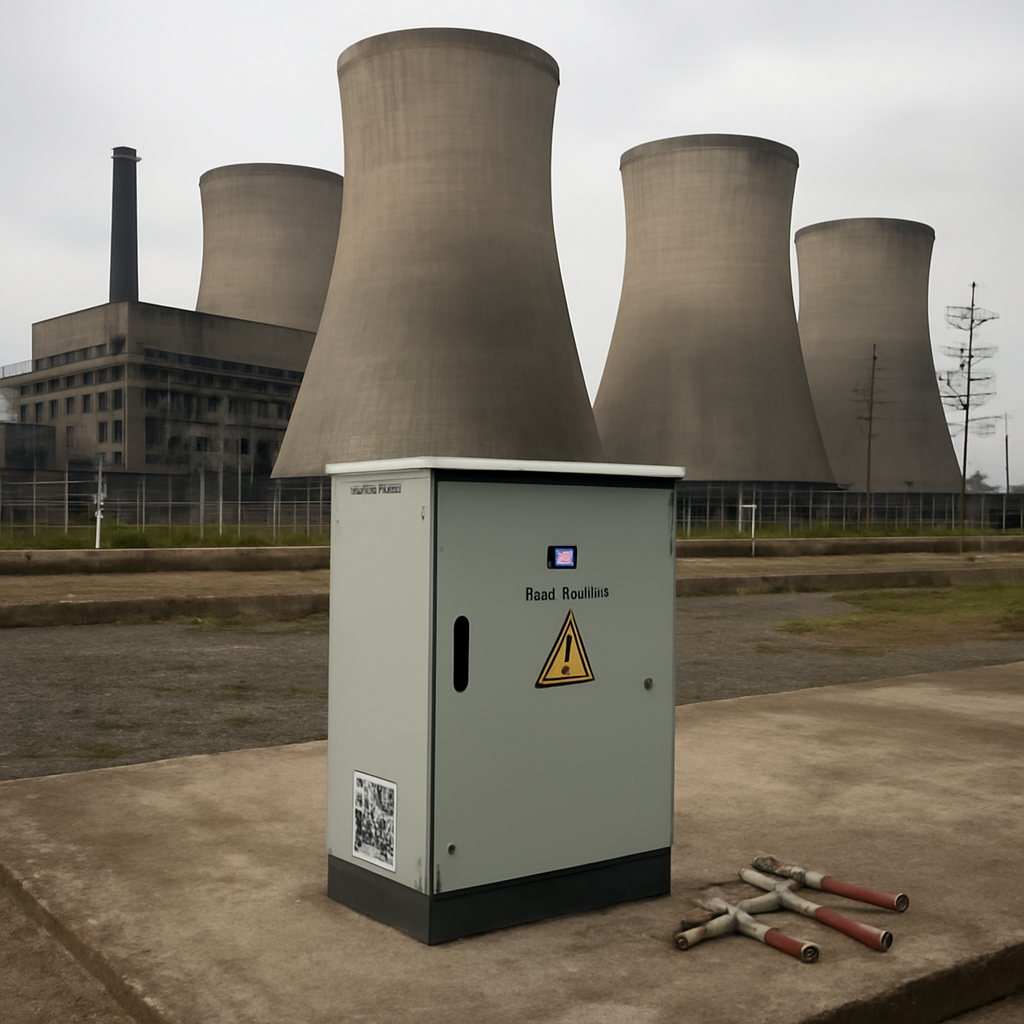
On August 22, The Telegraph reported that Iranian hackers managed to shut down a UK power plant for several days last month. The facility was disabled for four days, the newspaper said, though it has not been revealed which plant was targeted. Because the site was relatively small, the outage reportedly had little impact on the country’s overall power supply.
Parallel operations in the United States and a wider campaign
The UK event coincided with a large‑scale operation aimed at US water plants, according to the same reporting. That parallel activity follows a wave of disruption in late July in which Iran‑backed hackers caused operational problems across at least 12 US states by targeting programmable logic controllers (PLCs) across several critical national infrastructure sectors, including government services and facilities, water and wastewater systems, and energy.

This site is the portfolio.
OSINTSights runs on Cloudflare Workers, D1, R2, and Vectorize, with an AI pipeline on Hetzner ARM. Nubivance designed, built, and operates it. We do the same for clients.
See what we buildSecurity community: visibility gaps and systemic fragility
Security professionals who reviewed the UK breach framed it as a warning, not just about a single outage but about systemic risk. Muhammad Yahya Patel, Huntress vCISO EMEA, warned of a potential visibility gap when it comes to smaller CNI operators. "If smaller energy operators fall outside mandatory cyber‑reporting thresholds, we risk underestimating how frequently this part of our infrastructure is being targeted or successfully compromised," he said. Patel added that resilience, monitoring and rehearsed recovery must "extend across the wider energy ecosystem," and that "the real measure of cyber resilience is no longer simply whether you can prevent an intrusion. It’s whether you can contain one quickly enough that a cyber incident doesn’t become an operational crisis."
Graeme Stewart of Check Point argued the successful breach is a wake‑up call for all CNI providers. He framed the risk as cascading: "Britain’s CNI underpins almost every part of modern life, including electricity, water, transport and communications, and those systems are increasingly digital, interconnected and dependent on one another. A serious attack on one part of that ecosystem has the potential to cause disruption far beyond the original target."
Policy context: UK lawmakers and the ISC assessment
That warning lands against a backdrop of official concern recorded in July 2025, when UK lawmakers cautioned that Iran posed a major cyber threat and identified petrochemical, utilities and finance as likely targets of disruption. An Intelligence and Security Committee (ISC) report observed that the UK was "not a top priority for Iranian offensive cyber activity," but added that "this could change rapidly in response to regional or geopolitical developments."
The government has not publicly backed US military action in the region, the reporting noted, but it has permitted its ally to launch "defensive" operations from British bases hosting American planes—an operational posture that Ministry and intelligence observers will likely weigh alongside the evolving cyber threat picture.
What this means for CNI operators, UK policymakers, and smaller energy operators
- CNI operators and technologists: Expect pressure to test containment and recovery across interconnected systems. As Stewart put it, operators need "to know exactly how they keep functioning when systems are compromised, how quickly an attack can be contained and how they recover without allowing disruption to spread."
- UK policymakers and regulators: The ISC's caveat that the UK is not currently a top priority—but that this could change rapidly—frames a policy question about thresholds for mandatory reporting and the scope of regulatory oversight, particularly for smaller operators that may fall below current reporting lines.
- Smaller energy operators and service providers: Patel’s warning highlights a concrete risk: falling outside mandatory cyber‑reporting thresholds can conceal the frequency and success rate of attacks. These operators may need to assess their visibility, incident rehearsals and connections to larger grids to avoid becoming the weakest route in.
For some in the security community, the breach was not a surprise. James Griffiths, a former military and GCHQ advisor and founder of UtopianKnight Consultancy, described the event as "unfortunately inevitable," pointing to what he characterised as under‑investment and legacy, aged systems running core power functions.
The facts as reported are stark: a four‑day outage at an unnamed, relatively small plant; coincident operations targeting US water infrastructure; and recent, wide‑ranging PLC attacks across US critical sectors. Taken together, those incidents frame a cold question now circulating in British cyber and infrastructure circles: as Stewart put it, "The question now has to be whether Britain is genuinely ready if something more serious follows."