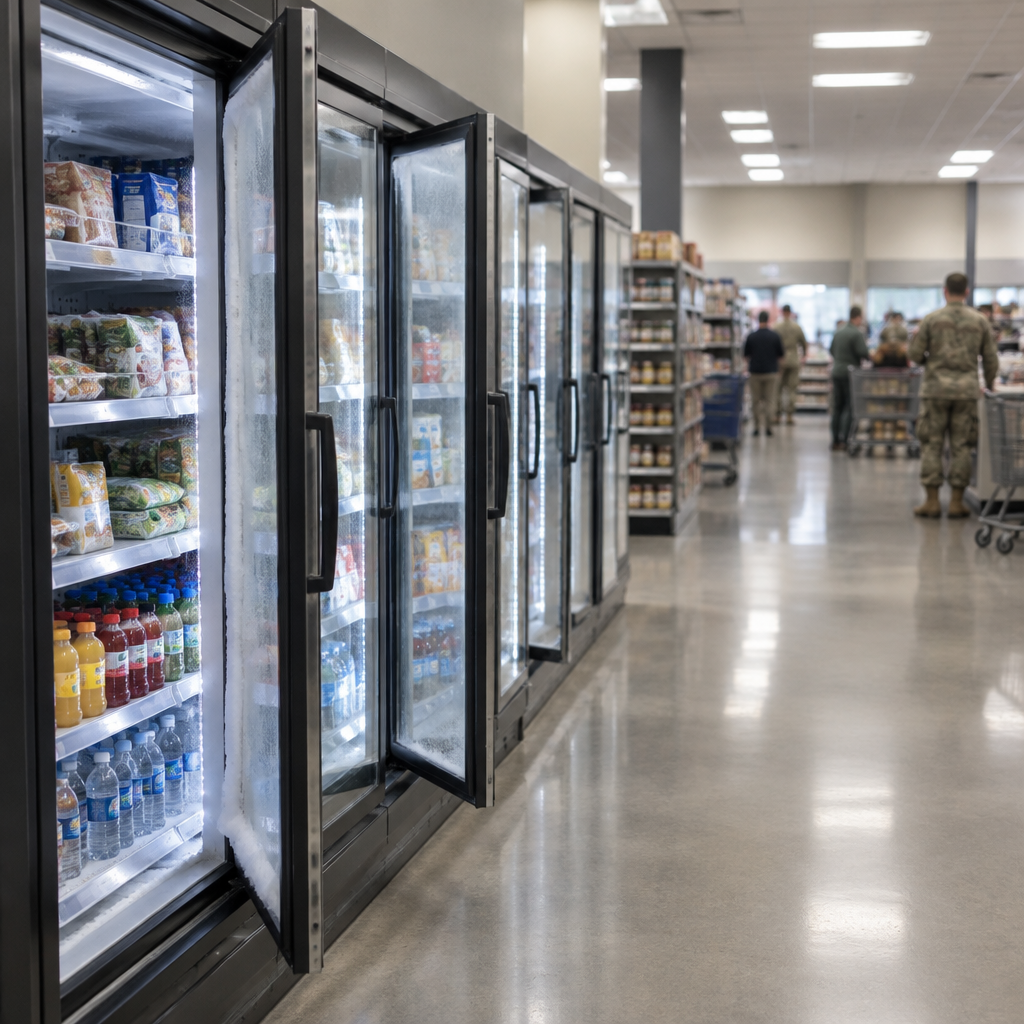
About six on-base commissaries experienced freezer failures after intrusions that U.S. officials now suspect were the product of Iran-linked hackers, according to two people familiar with the matter.
The outages: what was affected and when
The incidents began around late August and targeted freezers at military bases around the United States, causing them to malfunction and force spoilage or interruption of supplies at roughly six commissaries — the on-base grocery stores serving military personnel, the officials said. The two people spoke on the condition of anonymity to convey sensitive knowledge about the intrusions.
Separately, earlier this month hackers overrode temperature controls on commercial refrigeration equipment at some 350 French establishments, forcing supermarkets to discard spoiled food. French authorities are working with officials examining the U.S. freezer incidents, according to the reporting.
Why U.S. officials suspect Iran and how this fits a pattern
U.S. officials suspect Iran-linked hackers are behind the commissary freezer outages, a suspicion that, if confirmed, would demonstrate Tehran’s ability to disrupt certain military-related equipment inside the United States through cyber means. The assessment, as reported, also lines up with a broader pattern of suspected Iranian activity: the article notes Tehran is suspected to have backed recent attacks on U.S. water‑treatment equipment, and that U.S. officials previously attributed the theft of Trump campaign material during the 2024 presidential campaign to Tehran.
The reporting cautions that the assessment of Iranian responsibility could change as investigators learn more.

Audit-ready is a season. It shouldn't be.
Evidence in spreadsheets, controls drifting between audits, frameworks multiplying on flat headcount. Nubivance runs continuous compliance on Rapid7 Cyber GRC - SOC 2, HIPAA, ISO 27001, PCI, CMMC.
End the scrambleHow the intrusions may have been carried out
Investigators have not publicly disclosed a specific intrusion vector for the freezer systems. The article cites that various digital vulnerabilities tied to freezer controls can expose such equipment to hacking and sabotage and that it is not clear exactly how the cyberintruders may have accessed the systems. The Food and Agriculture Information Sharing and Analysis Center — an industry group that shares cyber threat intelligence on the nation’s food supply — has warned attackers can target internet-accessible industrial controls that may not have optimal cyberdefenses in place.
Who is investigating: Cyber Command, Defense Department law enforcement, and France
U.S. Cyber Command and various Defense Department law enforcement units are probing the freezer incidents. French authorities are also working with officials examining the matter, following the temperature-control overrides at hundreds of French commercial refrigeration sites earlier this month. The joint attention reflects concern about the computers that control everyday equipment used to store and handle food — systems that, when compromised, can spoil supplies or interrupt distribution.
How Cyber Command, the Food and Agriculture ISAC, and military commissaries are responding
- Cyber Command and Defense Department law enforcement units: These organizations are conducting active investigations into the intrusions and assessing attribution. The article states they are probing the incidents and coordinating with international partners.
- Food and Agriculture Information Sharing and Analysis Center (FA‑ISAC): The FA‑ISAC has issued warnings — cited in the reporting — that internet-accessible industrial controls for food-related equipment can be targeted when cyberdefenses are inadequate. That public notice frames the technical risk investigators are examining.
- Military commissaries and base logistics: The affected commissaries experienced operational disruption and spoilage as a result of the freezer malfunctions. The incidents have drawn attention to the vulnerability of equipment used to store and handle food on military installations.
The incidents underline a narrower but consequential domain of cyber risk: attacks aimed not at classified networks or traditional command-and-control infrastructure, but at the industrial controls embedded in daily logistics. Authorities are still gathering evidence; the article emphasizes investigators may adjust their assessments as new information emerges. The reporting also notes the geopolitical context — that the Trump administration is reportedly planning follow-up strikes on Iran after the U.S. midterm elections next week — a detail that frames why attribution and response carry political as well as operational weight.
Original story: https://www.defenseone.com/threats/2026/11/officials-suspect-iran-series-cyberattacks-military-base-freezers/416992/