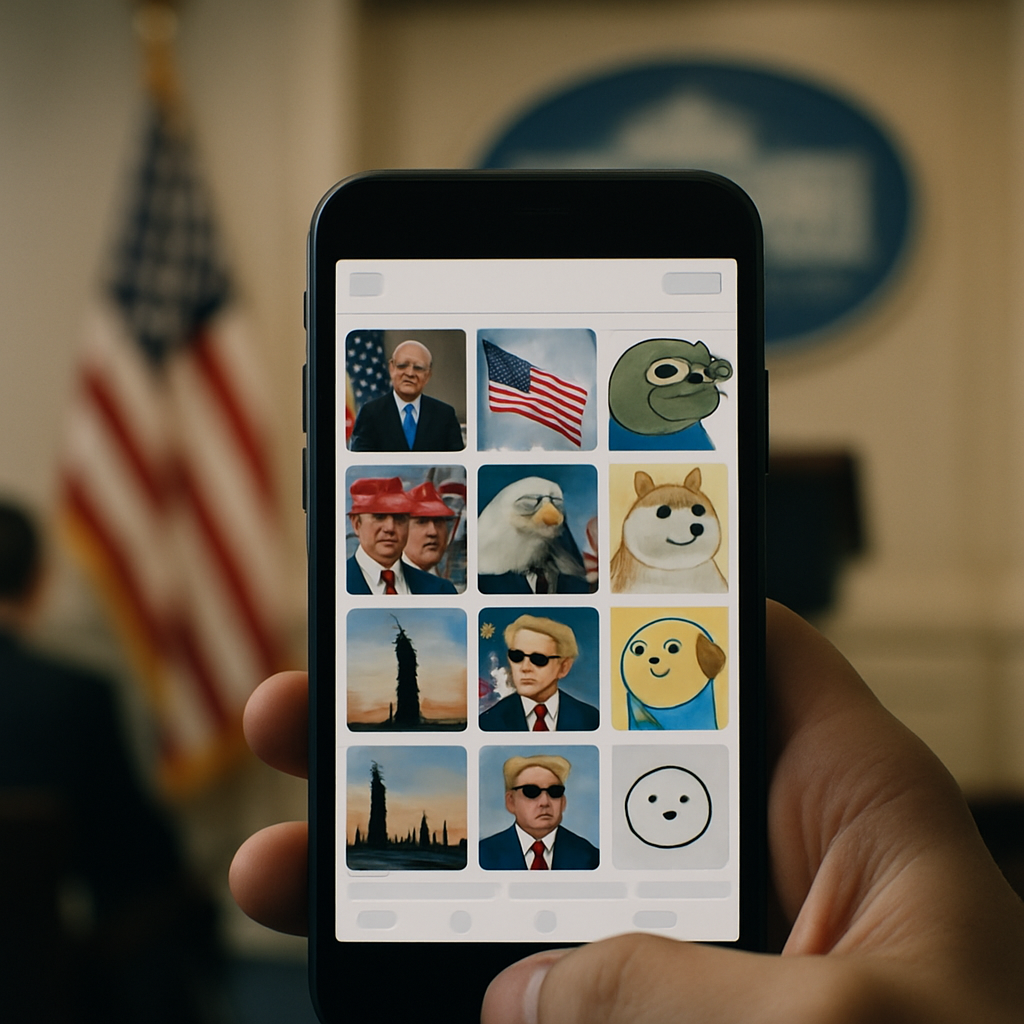
The White House has been posting clips from the video game Call of Duty and SpongeBob SquarePants memes — content that US Press Secretary Karoline Leavitt said “generated more than 2 billion impressions.”
Two different objectives: the White House’s highlights reel versus Iran’s narrative
Since hostilities began on 28 February, both Iran and the United States have weaponised internet culture. The White House’s posts, drawn from American cultural references, are aimed at a domestic audience: young American men already inclined to support their country, and inclined to view war through “swagger and bravado,” the source says. Those clips are not presented as attempts to make a policy case or to win over opponents; they are a mobilising highlight reel.
Iran’s campaign, by contrast, casts the same conflict as absurd and criminal, driven by hidden motives. Its messaging includes Lego animations that mock Western leaders and portray US forces retreating, English-language rap and skateboarding videos, and social-media posts by Iranian embassies designed to provoke or troll the United States. The goal is narrative persuasion for a global audience — to undermine support for the war and to make a mockery of the US military and President Donald Trump himself.
Iran’s use of cultural intelligence: Lego, rap and universal formats
Iran’s choices — Lego aesthetics, rap, skateboarding — are presented not as accidental but as the product of audience research. The Lego form leverages nostalgia, humour and entertainment to package geopolitical narratives inside recognisable formats, extending reach beyond already-converted supporters to people who might encounter the content as pure entertainment. The source notes Iran has been testing sarcastic, humorous formats for years and that its references are “contemporary and universal.”
By contrast, the White House’s cultural references are described as narrowcasting: video-game material more familiar inside the United States and tied to gendered cultural frames. The source reports some have argued those references “went out of fashion 10 years ago,” reducing their cross-border resonance.

This site is the portfolio.
OSINTSights runs on Cloudflare Workers, D1, R2, and Vectorize, with an AI pipeline on Hetzner ARM. Nubivance designed, built, and operates it. We do the same for clients.
See what we buildState-organic integration and attribution ambiguity
Iran’s operation blurs the line between state-directed information and grassroots content. Many of the viral Lego videos carry the logo “Explosive News Team,” a self-described student-run independent group; others have been attributed to the Revayat-e Fath Institute, linked to Iran’s Islamic Revolutionary Guard Corps. Iranian embassies on the platform X, from London to Harare to New Delhi, have riffed off one another in ways that look organic. The open question — coordinated, partly coordinated or genuinely spontaneous — creates deliberate attribution uncertainty.
The source warns that such ambiguity can lead to badly calibrated responses. The remedy urged is analytical infrastructure: investment in open-source intelligence, platform monitoring and analysis, and doctrine to guide action when attribution is uncertain.
Unintended consequences: domestic backlash from veterans and military families
The US approach’s gamification of conflict has produced pushback from a cohort the government cannot afford to alienate: veterans and military families. The source reports that these groups argue the content trivialises combat and sacrifice. The lesson for middle powers is practical — stress-test messaging with communities whose credibility and trust are essential before deploying content that reframes real-world violence as entertainment.
What this means for middle powers, defence and veterans
- Middle powers: The meme war is not a novelty they can ignore. The source argues they should ask not whether they could run Iran’s campaign, but whether they could withstand it — treating hostile information operations as a national risk.
- Defence, intelligence and policy agencies: Are asked to build safeguards and analytical tools that operate under attribution uncertainty — investing in open-source intelligence, platform monitoring and doctrine to guide responses.
- Veterans and military families: Need to be consulted and their concerns stress-tested up front, because domestic credibility losses can be more damaging than any adversary’s information operation.
The meme war, the source concludes, is a defining frontier warfighting function. “Strategic information dominance doesn’t require military might.” Iran, with a coherent persuasion architecture and culturally universal formats, has a story; the United States, with high-volume highlights, has a reel. That asymmetry is the real lesson for nations now shaping their information-defence posture.