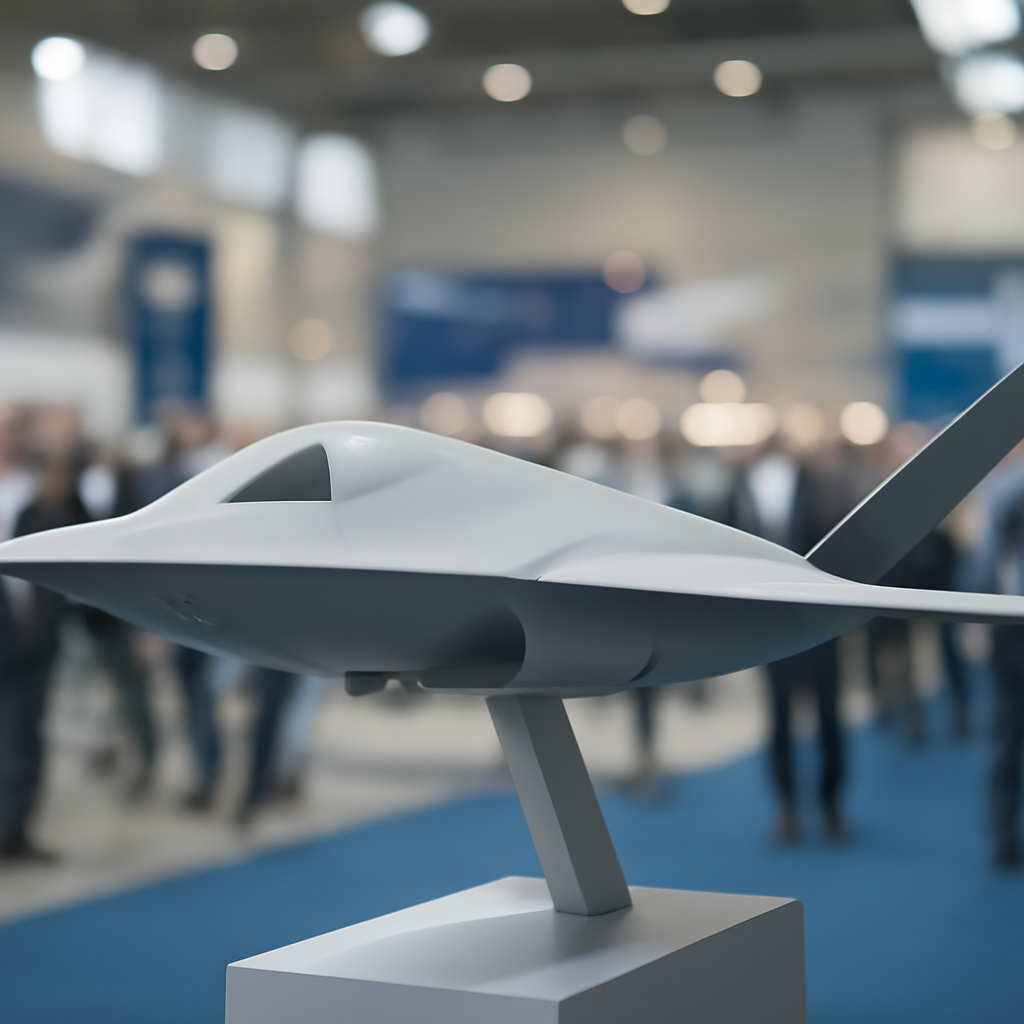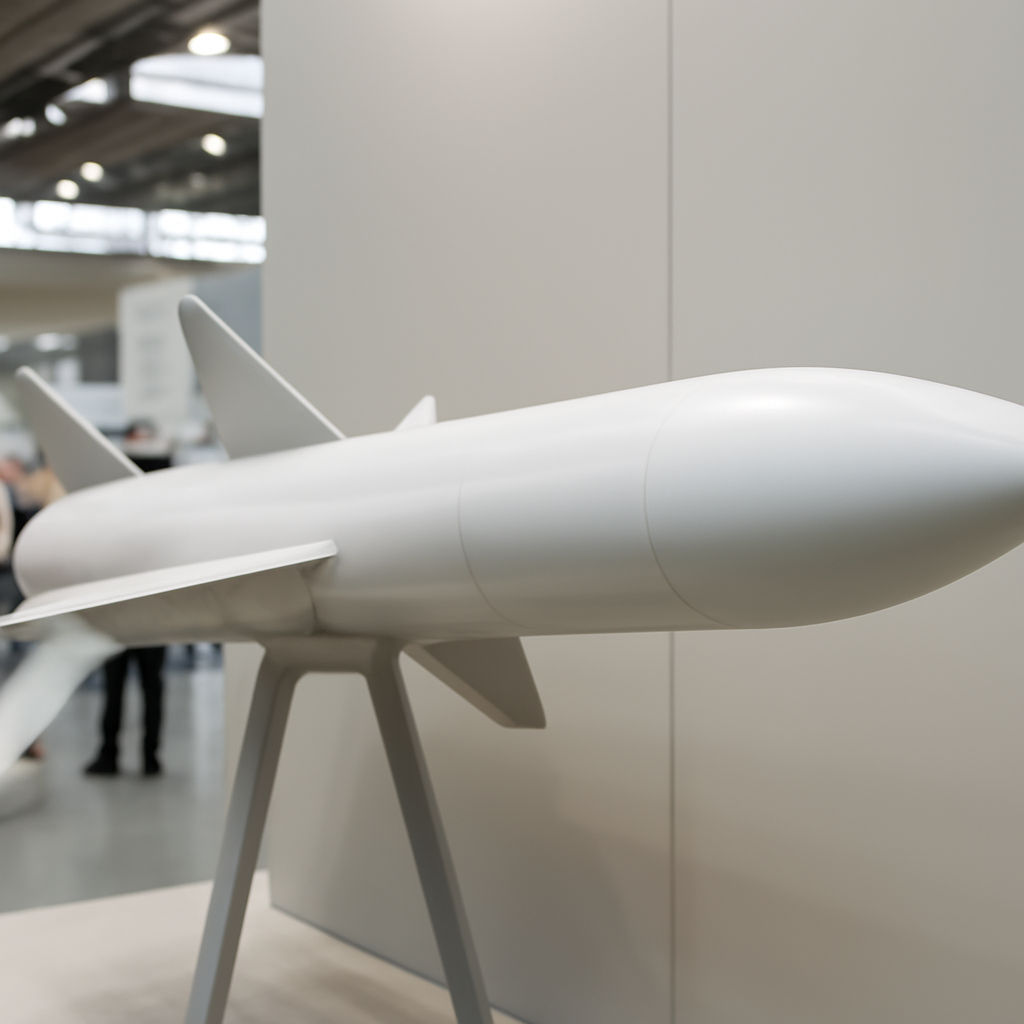
More than 300 kilometres (186 miles) is the reach Indra now claims for a new, low-cost cruise missile it unveiled at a Spanish drone trade fair on Sept. 16.
Indra’s Squall: a new entrant
Spanish defense manufacturer Indra introduced the system, dubbed Squall, for the first time at the Unvex drone trade fair in Spain on Sept. 16, according to the company. Indra’s press release described Squall as a low-cost cruise missile designed to strike targets at distances exceeding 300 kilometres (186 miles). The company did not specify a price point in the release.
Platform integration and flight profile
Indra said Squall can be integrated into both land and naval platforms, indicating the company envisions flexibility across deployment types. The missile is described as capable of flying at low altitudes to evade enemy radars — a profile commonly used to reduce detectability — and the firm said it can be fitted with anti-jamming and anti-spoofing guidance and navigation systems.

This site is the portfolio.
OSINTSights runs on Cloudflare Workers, D1, R2, and Vectorize, with an AI pipeline on Hetzner ARM. Nubivance designed, built, and operates it. We do the same for clients.
See what we buildFrom surgical strikes to "mass attacks"
Indra positioned Squall as suitable for a range of operational concepts. In its materials the company said the system could support “surgical strikes involving a small number of units” as well as “mass attacks,” in which many missiles would be launched simultaneously with the explicit purpose of overwhelming adversarial defenses. That dual framing signals an intent to market the weapon both for precision missions and for use in saturation attacks.
Drizzle effector drone: a companion capability
Alongside Squall, Indra unveiled another system, the Drizzle effector drone. The company described Drizzle as developed to neutralize drones and to strike “light assets” at a maximum distance of 130 kilometres, which Indra translates as roughly 80 miles. The pair — a longer-range cruise missile and a shorter-range effector drone — were presented together at Unvex.
What this means for the Spanish Armed Forces, procurement leaders, and adversarial defenses
- Spanish Armed Forces: To date, the Spanish Armed Forces have no formal or publicly known requirement for such a missile. That absence means any adoption would require a new formal requirement and procurement process before operational use.
- Procurement leaders and defense buyers: Indra’s omission of a price point leaves procurement officers with a key unknown: whether the system will meet the “low-cost” threshold the company claims. Given Indra’s own framing — from single-shot precision to saturation attacks — buyers will have to weigh cost per unit against intended operational concepts.
- Adversarial defenses and planners: Indra explicitly framed mass deployment as a way to overwhelm “adversarial defenses.” The company’s emphasis on low-altitude flight and anti-jamming/anti-spoofing navigation signals that counter-detection and resilience to electronic interference are central design priorities.
Indra’s unveiling of Squall and Drizzle comes amid, as the company put it, a broader market shift: over the last year, defense firms have been producing models they market as low-cost weapons. Indra linked that wave to lessons from “drone and missile attrition wars such as the war in Ukraine and the Iran conflict,” arguing that reliance on expensive missiles can be unsustainable against cheaper, higher-attrition threats.
The facts on the table are straightforward: a new, marketed cruise missile with a stated range beyond 300 kilometres; an effector drone with a 130-kilometre reach; claims of low cost and of integration across land and naval platforms; and no published price or formal Spanish military requirement. Whether those claims translate into procurement, deployment, or operational change will depend on decisions not yet reflected in the public record.