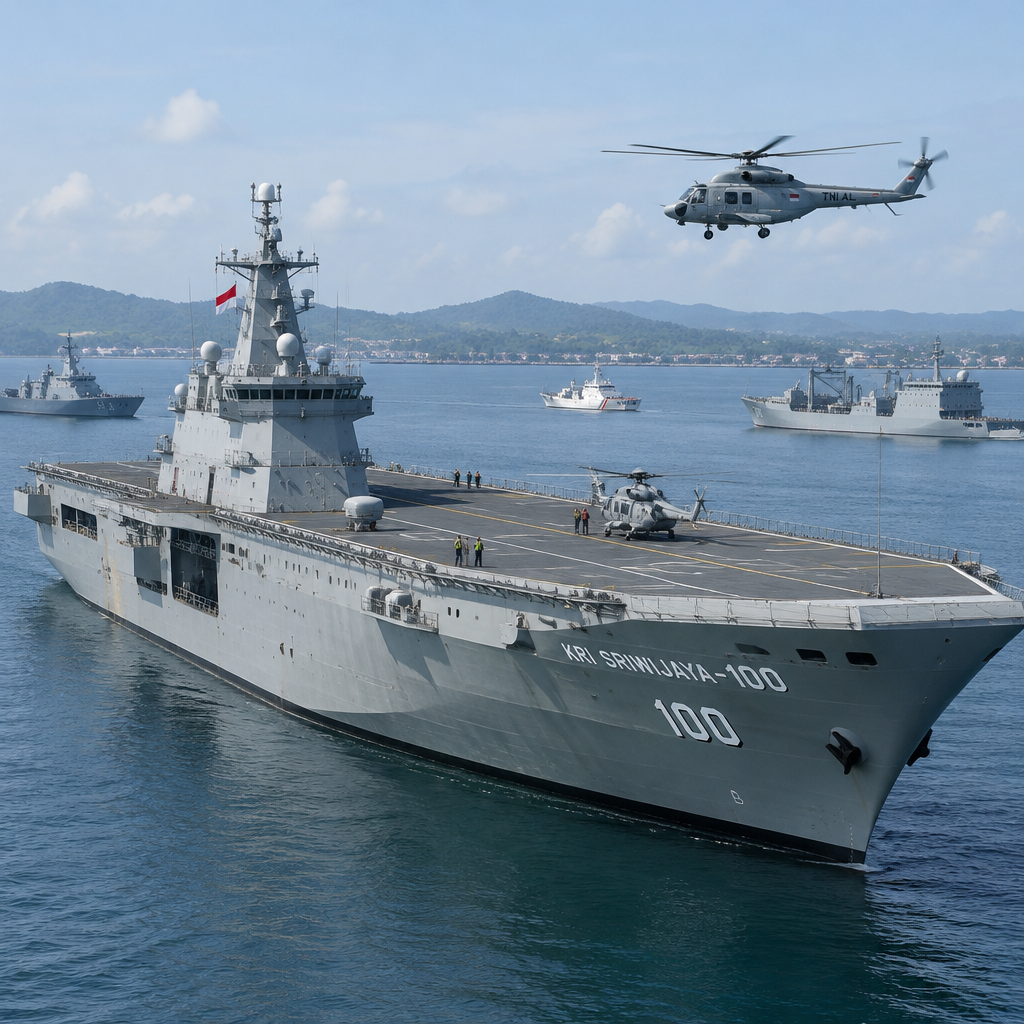
"military operations other than war, particularly disaster response and humanitarian assistance, primarily using helicopters and unmanned aerial vehicles," Chief of Naval Staff Admiral Muhammad Ali said of the carrier’s initial concept of operations.
KRI Sriwijaya-100 and Indonesia’s expanding maritime reach
On September 24 the Indonesian Navy (TNI AL) commissioned KRI Sriwijaya-100, formerly ITS Giuseppe Garibaldi of the Italian Navy, making Indonesia the fifth navy in Asia to operate an aircraft carrier. The ship joins a wider program of fleet growth that includes new surface combatants and submarines, signaling a shift in Jakarta’s maritime posture.
That posture is framed by scale: according to the Indonesian Ministry of Marine Affairs and Fisheries, Indonesia has roughly 6.4 million square kilometers of maritime territory that includes three Archipelagic Sea Lanes and sits near strategic shipping routes. The U.S. Energy Information Administration reported that the Strait of Malacca carried approximately 23.2 million barrels of oil per day in the first half of 2025, equivalent to 29 percent of global seaborne oil trade — underlining why sustained naval presence and operational reach are central concerns for Jakarta.
PT PAL, Naval Group, and the mix of foreign transfer and domestic construction
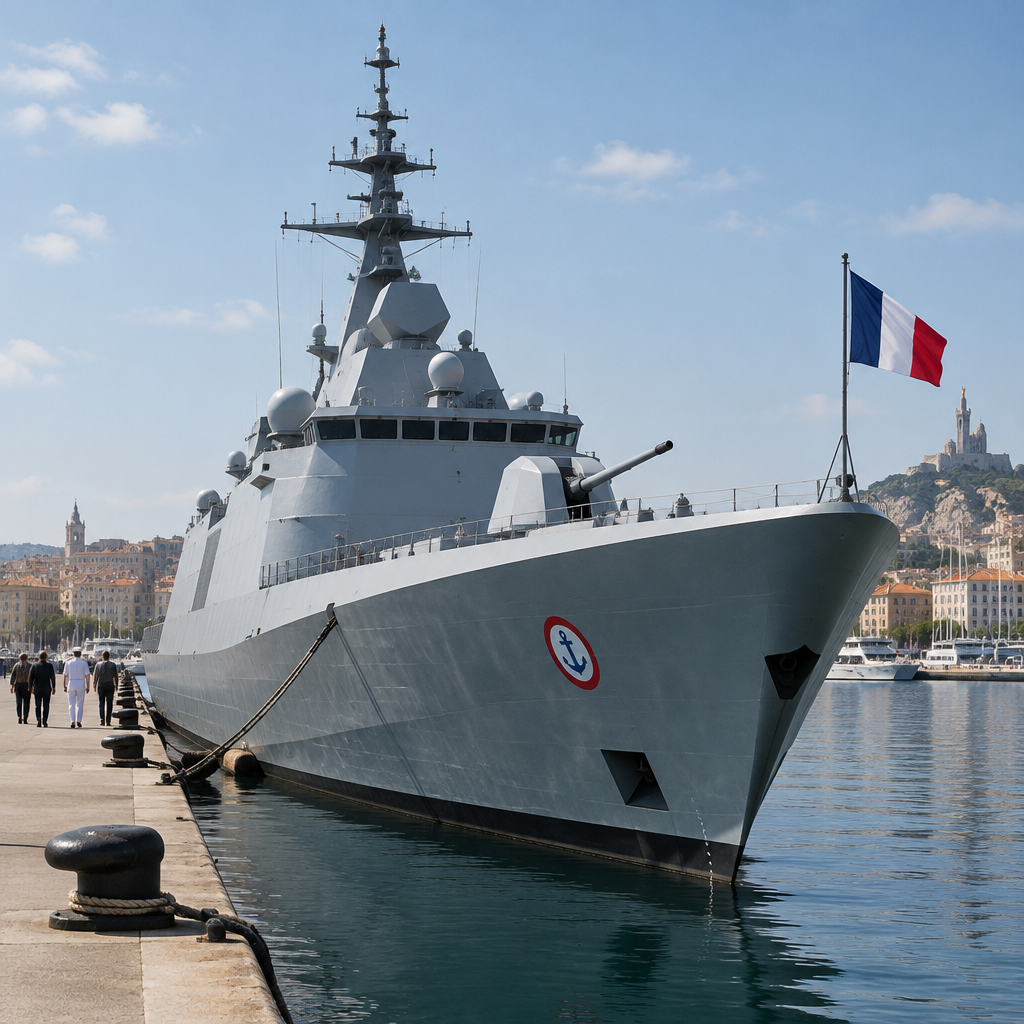
Jakarta’s fleet expansion combines acquisitions with domestic construction. Two multi-role Pattugliatore Polivalente d’Altura (PPA) combatants — KRI Brawijaya-320 and KRI Prabu Siliwangi-321 — were built for the Italian Navy and acquired by Indonesia. Separately, PT PAL in Surabaya is constructing the Merah Putih frigates with integrated combat management systems, radars, and weapons, supporting both capability and local shipbuilding capacity.
In the submarine domain, PT PAL is cooperating with France’s Naval Group to build two Scorpène Evolved submarines. The contract includes lithium-ion batteries, the SUBTICS combat management system, and the ability to launch Exocet SM39 anti-ship missiles, and is presented as transferring expertise in submarine construction to domestic industry.

This site is the portfolio.
OSINTSights runs on Cloudflare Workers, D1, R2, and Vectorize, with an AI pipeline on Hetzner ARM. Nubivance designed, built, and operates it. We do the same for clients.
See what we buildFitted‑For‑But‑Not‑With: modern hulls but missing warfighting layers
The PPA case highlights the difference between platform arrival and combat readiness. Brawijaya and Prabu Siliwangi were delivered in a Light+ configuration: modern radars and a 127mm main gun were present, but the ships were delivered without missile complements. Although designed to accept Aster 30 surface‑to‑air missiles and Teseo Mk‑2E anti‑ship missiles, both vessels arrived in a Fitted‑For‑But‑Not‑With state.
The TNI AL has outlined plans to upgrade the PPAs to a Full configuration, potentially installing missiles at domestic shipyards. The source material stresses that phased procurement gives flexibility, but that full combat readiness requires follow‑on contracts, funding, weapons integration, and testing — continuity that is necessary for the intended air‑defense and anti‑surface warfare roles to materialize.
Carrier operations hinge on escorts, sensors, and logistics
Admiral Muhammad Ali framed Sriwijaya-100’s early role toward non‑combat missions, but the source points out a wider truth: if the carrier’s role expands into less permissive environments, effective use will depend on coordinated escorts and support. A carrier strike group requires vessels capable of air defense, anti‑surface and anti‑submarine warfare, electronic warfare, command functions, and logistical support to protect the carrier and sustain operations.
That requirement makes the PPA delivery choices more salient: escort ships require not merely space for future missiles but operational sensors, weapons, munitions, and integrated communications today. The source contrasts this with recent frigate designs in Europe — France, Greece, and Sweden — which emphasize full three‑dimensional warfare suites, electronic warfare, cyber hardening, and defenses against uncrewed systems, illustrating how modern naval platforms are judged by integrated combat systems as much as by tonnage.
What this means for the TNI AL, Jakarta, and the defense industrial base
- TNI AL: Will need to coordinate platform deliveries with weapons procurement, training, and sustainment to transform new hulls into operational task groups; the carrier’s utility beyond humanitarian roles depends on that integration.
- Jakarta (national planners): Faces decisions about funding follow‑on missile contracts, weapons integration at domestic shipyards, and investments in logistics and interoperability to sustain presence across 6.4 million square kilometers of maritime territory.
- Defense industrial base (PT PAL and partners): Gains capabilities and experience from building Merah Putih frigates and Scorpène Evolved submarines, but will be tested by the technical and programmatic demands of integrating complex combat systems and foreign missile packages.
The arrival of KRI Sriwijaya-100, new frigates, PPAs, and Scorpène submarines represents a substantive expansion of Indonesia’s maritime toolkit. But the strategic value of those platforms, the source emphasizes, will depend on whether weapons procurement, sensors, personnel training, and logistics keep pace with hull numbers — and whether Jakarta can turn fitted‑for‑but‑not‑with promises into fully integrated combat capability.