“On May 6, Indonesia signed a framework contract with the Turkish company Baykar for the delivery of an initial 12 Bayraktar Kızılelma high-performance uncrewed combat aerial vehicles (UCAVs) and the establishment of production and maintenance facilities in Indonesia,” the report states — a compact, concrete step that underscores how far Jakarta’s air-power procurement has tilted toward Türkiye.
Baykar Kızılelma deal and local production
The May 6 framework contract with Baykar covers an initial delivery of 12 Bayraktar Kızılelma UCAVs and the establishment of production and maintenance facilities in Indonesia. The agreement extends earlier cooperation with technology transfer, joint research and development, training, and local maintenance, repair and overhaul (MRO) capacity. It also includes an option to produce up to 48 Kızılelma locally.
Turkey as a central supplier across platforms
Türkiye has become a major source of military aircraft and systems for the Tentara Nasional Indonesia (TNI), with Jakarta signing four major contracts that involve at least six different crewed and uncrewed combat aircraft types. The bilateral defense industrial collaboration dates to April 2011 and now spans air, land and sea capabilities — from I-class guided-missile frigates and Atmaca antiship missiles to Khan (Bora-1) short-range ballistic missiles, Trisula-O/Trisula-U air‑defense systems, Harimau (Kaplan MT) medium tanks and planned submarine cooperation.

This site is the portfolio.
OSINTSights runs on Cloudflare Workers, D1, R2, and Vectorize, with an AI pipeline on Hetzner ARM. Nubivance designed, built, and operates it. We do the same for clients.
See what we buildUncrewed systems: joint ventures, co-production, and Republikorp
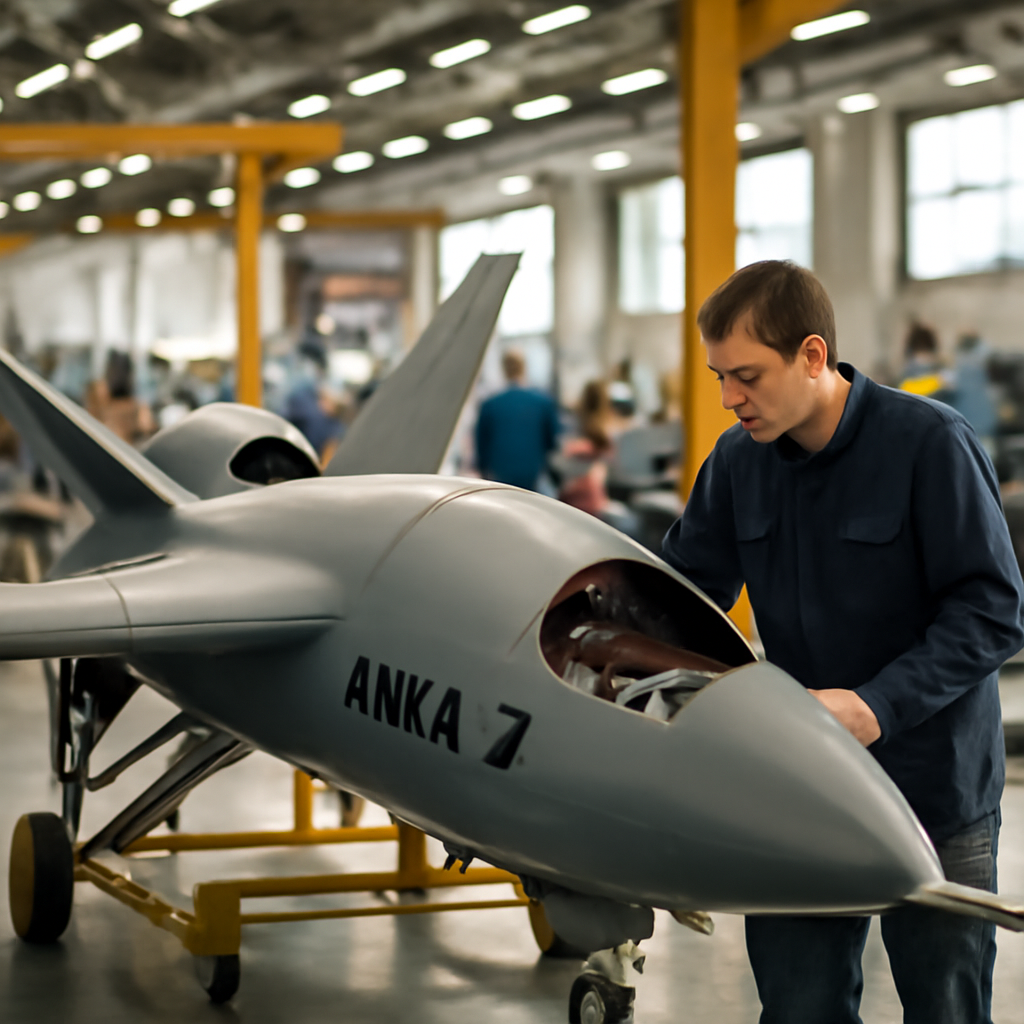
Indonesia has rapidly expanded its UCAV inventory. Between 2024 and 2026 Jakarta signed for four Baykar UCAV models — the Bayraktar TB-2, the carrier-capable TB-3, the Akıncı, and the Kızılelma — and previously received Turkish Aerospace Industries (TAI)’s Anka-S in 2023. The private defense holding PT Republik Aero Digintara (Republikorp) signed a joint venture with Baykar for co-production and delivery of 60 TB-3 and nine Akıncı UCAVs to TNI-AU, while TAI and state-owned PTDI agreed in 2023 for 12 Anka-S UASs, half to be assembled locally. The Baykar Kızılelma agreement extends that ecosystem approach, with explicit technology transfer and MRO commitments.
Kaan fighter program and Indonesia’s industrial ambitions
Indonesia has joined the development tracks of two future fighters: South Korea’s KF-21 Boramae (joined in 2016) and Türkiye’s Kaan (joined in 2025). According to the source, “In June 2025, Indonesia and Türkiye signed an implementation contract involving 48 TAI Kaan fighters on the sidelines of the International Defense Industry Fair in Istanbul on July 26, 2025.” That $10 billion deal makes Indonesia the first international customer for the type. Türkiye positions Kaan as the “most strategic defense project” tied to a vision of defense independence; the platform’s roadmap includes a transition to a domestically produced TF35000 turbofan engine (planned for 2036), an Aselsan Murad-600A GaN AESA radar, distributed aperture and electro-optical systems, an Aselsan electronic warfare suite, AI-driven sensor fusion, and Roketsan weapons, designed to maximize indigenous content and reduce dependence on U.S.-sourced components.
Financing constraints, program risk, and past precedents
Jakarta’s procurement record shows ambitious diversification but also financing and sustainment shortfalls. Defense spending has been steady at 1 percent of GDP, with $4.2 billion allocated for procurement in 2025. The source notes Indonesia struggled to meet a contractual 20 percent share (about $1.2 billion) of the KF-21 program development cost, leading to a renegotiation that reduced Indonesia’s share to around 7.5 percent and left Seoul and KAI covering unpaid costs. Indonesia also failed to finalize a 24-aircraft Boeing F-15ID deal signed as a memorandum of understanding in 2023; Boeing subsequently cancelled the acquisition when Jakarta did not move to complete the purchase. The report warns that the Boramae and Kaan remain unproven and years from entry into service, and that managing two complex fighter programs could exceed Indonesia’s domestic industry capacity without substantial external assistance.
What this means for the TNI-AU, Republikorp, and Indonesia’s defense industry
- TNI-AU: Gains rapid access to multiple uncrewed platforms (TB-2, TB-3, Akıncı, Anka-S, Kızılelma) and a path toward next-generation crewed fighters (Kaan and Boramae), but faces challenges in integrating disparate systems and sustaining diverse logistics and training pipelines.
- Republikorp and PTDI: Stand to expand local manufacturing, MRO, and systems-integration capabilities via joint ventures and assembly agreements, climbing the industrial ladder if technology transfer and funding are delivered as contracted.
- Indonesia’s defense planners: Must reconcile ambitious industrial participation and technology-transfer demands with constrained procurement budgets, the practical limits of local experience (PTDI’s most complex project to date being N219 and CASA CN-235-200 production), and the risk of program mismanagement or financing shortfalls.
The Indonesia–Türkiye axis now reads as more than transactional procurement; it is a strategic bet on co‑production, technology transfer and an indigenous defense ecosystem. The facts on the table are unmistakable: concrete contracts for UCAVs and fighter participation, explicit transfer and local-production clauses, and a budget reality that already forced painful renegotiations in other programs. Whether Jakarta’s Turkish turn will deliver a coherent, sustainable air force or a costly array of partially realized projects will depend on the discipline of program management, the delivery of promised technology transfer, and financing choices laid out in the coming years.