What is at stake is whether Japan, South Korea, India, Australia and Indonesia can deter China without the United States — and the short answer, as the region’s recent moves show, is a qualified no.
U.S. posture, regional signaling, and diplomatic movement
Last month, the United States changed the name of U.S. Indo-Pacific Command to just Pacific Command, a reversal from its 2018 decision. That move, the source reports, reinforced concerns that "the United States is uninterested in the Indo-Pacific." The change comes against a backdrop in which "the priorities of the second Trump administration have shifted radically from those of Trump’s first administration," eroding trust among regional partners.
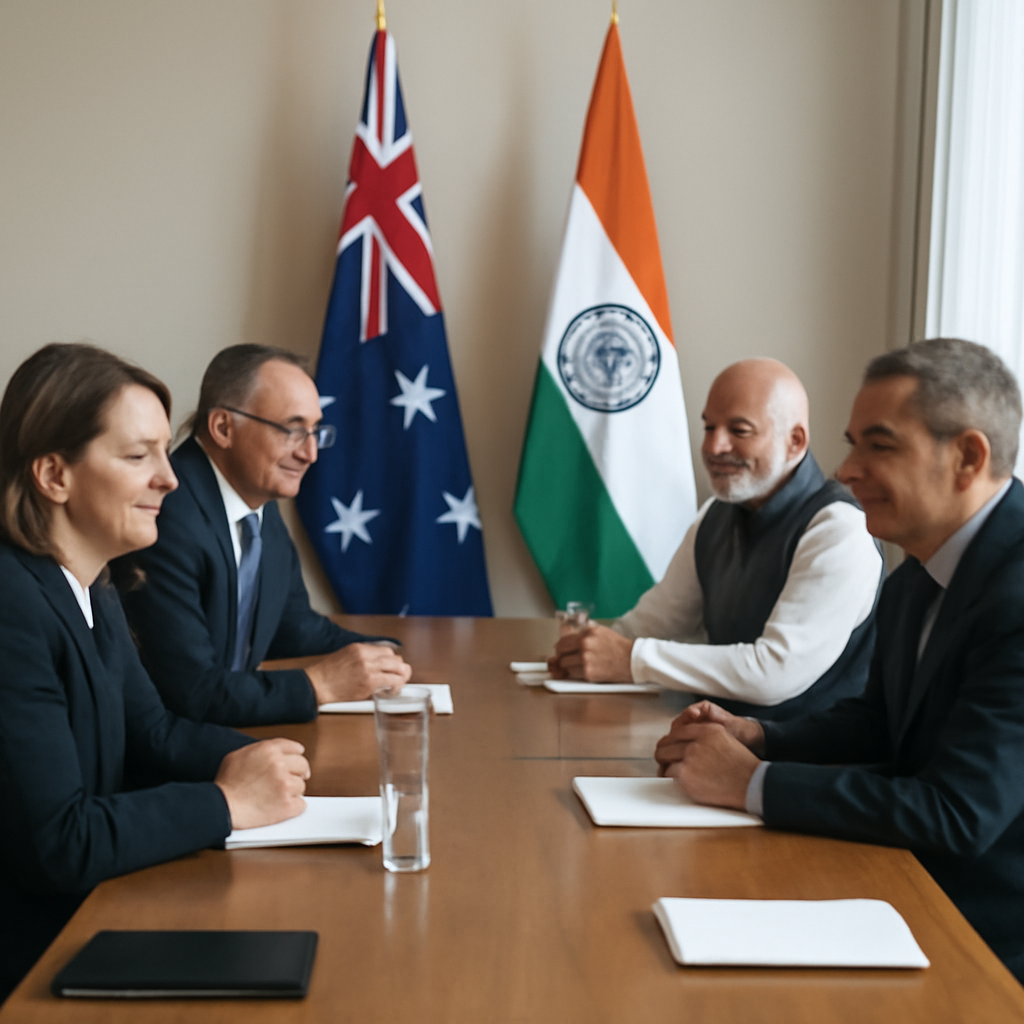
At the same time, regional capitals have been intensely active. Indian Prime Minister Narendra Modi completed a three-country tour of Indonesia, Australia, and New Zealand. South Korean President Lee Jae-myung visited India and Vietnam in April and is described as being in Mongolia at the moment. Japan’s Prime Minister Takaichi Sanae made visits to Vietnam, Australia, and South Korea in May and visited India in the first week of July. Those calendars underline that Asia is not waiting for Washington to move first.
What these five countries can already do: denial at sea
Japan, South Korea, India, Australia, and Indonesia "sit astride the First Island Chain, as well as the Malacca, Sunda and Lombok straits — the sea lanes carrying most of China’s energy imports." Collectively, the source says, they can "deter by denial at sea."
- Japan is fielding counterstrike missiles and is operating a defense budget reaching 2 percent of GDP.
- Seoul plans to lift defense spending from 2.3 to 3.5 percent of GDP by 2035 and benefits from "one of the world’s most productive defense industries."
- India can keep a large share of Chinese forces pinned on the Himalayan frontier and is exporting BrahMos batteries to Jakarta.

Audit-ready is a season. It shouldn't be.
Evidence in spreadsheets, controls drifting between audits, frameworks multiplying on flat headcount. Nubivance runs continuous compliance on Rapid7 Cyber GRC - SOC 2, HIPAA, ISO 27001, PCI, CMMC.
End the scrambleWhat they cannot do alone: major war and nuclear deterrence
The source is clear that, "minus the United States," the five cannot deter a major war. There is "no mutual defense obligation among any of the five, no unified command, no shared war plan, and no substitute for U.S. extended nuclear deterrence over Tokyo and Seoul." The piece also notes South Korea’s forces "remain fixed on Pyongyang," limiting Seoul’s ability to redirect units to a wider regional contingency.
Four practical areas where cooperation can begin
The analysis identifies four primary, pragmatic areas for immediate cooperation — fields where the countries can add tangible capability even without Washington’s leadership:
- Maritime domain awareness: "A shared operating picture across two oceans is the most cost-effective way to achieve collective capability."
- Logistics and access: widen reciprocal access and mutual logistics agreements so "ports, airfields and fuel are usable during a crisis."
- Defense-industrial co-production: examples are already in play — Korean K9 guns are being built in India as the Vajra; Hanwha is delivering Huntsman howitzers and Redback vehicles to Australia; and Australia’s first Japanese-built Mogami frigate is expected to arrive in 2029 with a shipbuilding base planned.
- Collective resilience against economic coercion: the partners must "achieve a level of independence in the critical mineral supply chain," because the source calls economic dependence "Beijing’s true battleground."
Institutions, uneven ties, and divergent threat perceptions
The source emphasizes that the necessary institutional apparatus remains "uneven." Australia and Japan form the core: a Reciprocal Access Agreement and a Framework for Strategic Defense Coordination took effect in December 2025 "across all levels and situations." India maintains 2+2 dialogues with Tokyo and Canberra but not with Seoul or Jakarta. The Japan–South Korea relationship remains "hampered by historical issues," making intelligence-sharing "politically precarious."
Threat perceptions also diverge sharply: Tokyo views an "existential maritime challenge," New Delhi frames a "continental" problem, Canberra sees China as a "distant but growing threat," Seoul prioritizes North Korea, and Jakarta "refuses to identify a specific threat" even while buying BrahMos missiles and continuing to strengthen trade with Beijing.
What this means for Japan, South Korea, and India
- Japan: must reconcile its maritime-focused posture and counterstrike investments with building interoperable logistics and domain awareness with partners that have different priorities.
- South Korea: faces a dual focus — retaining forces oriented on Pyongyang while attempting to deepen industrial and operational ties that could contribute to regional denial efforts.
- India: can leverage continental pressure on China along with defense exports (BrahMos) to help shape a maritime-denial architecture, while expanding 2+2 dialogues with like-minded partners.
The picture the source paints is not of a single alliance stepping into Washington’s shoes, but of a network of states knitting together capabilities where they can: domain awareness, logistics, co-production, and economic resilience. "India, Japan, and Australia – the Quad minus the U.S. – need to cast a wider net of strategic institutional embeddedness" and extend that web to South Korea, Indonesia, Vietnam, and the Philippines. If the United States does indeed "drift away from the Indo-Pacific," the source argues, it will be that web — not any single alliance — that may evolve into a regional deterrent.