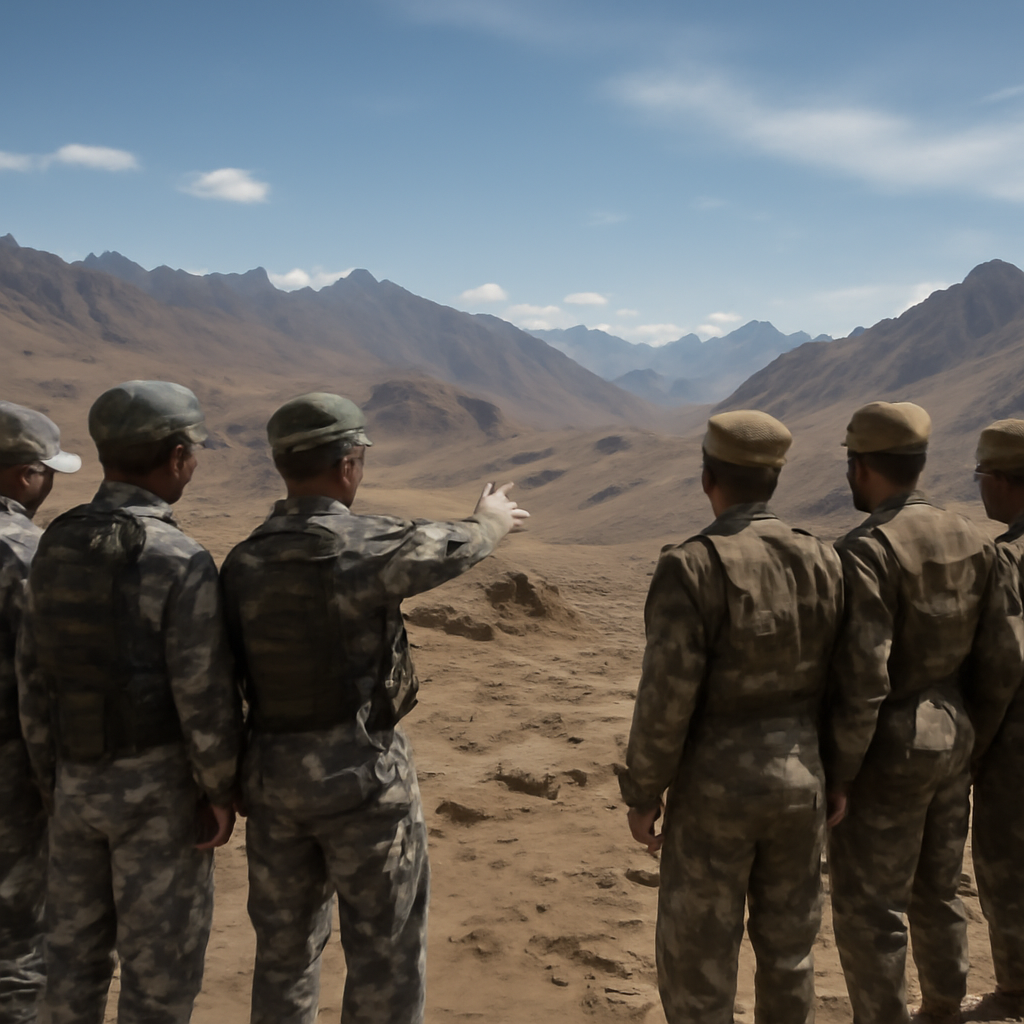
How do you measure preparedness when the single most lethal arm of the battlefield is in short supply? The Diplomat’s recent report frames the problem starkly: artillery is central to modern combat, and the Indian Army “has about 226 field artillery regiments today and plans to increase that to 270 regiments.”
What the numbers say
The publicly reported figures are concise: about 226 field artillery regiments are in service now, and there is a planned increase to 270 regiments, according to The Diplomat. Those two numbers — current strength and the stated expansion target — form the factual core of the account.
Why this matters
If artillery truly occupies the role described in the report’s framing, then regiment counts are not an abstract accounting exercise. They touch directly on the capacity to deliver sustained fire, shape battlespace, and support maneuver forces. Even with only the numeric snapshot offered, the gap between present and planned strength invites questions about readiness, prioritization, timelines, and procurement rhythm.

Audit-ready is a season. It shouldn't be.
Evidence in spreadsheets, controls drifting between audits, frameworks multiplying on flat headcount. Nubivance runs continuous compliance on Rapid7 Cyber GRC - SOC 2, HIPAA, ISO 27001, PCI, CMMC.
End the scrambleViews and stakes from different perspectives
- Policymakers: The reported plan to raise regiments to 270 will require choices about budgets, industrial output, and force structure. Decisions will need to balance near-term operational requirements against longer-term modernization.
- Military planners and users: For commanders and soldiers, regiment counts translate into how commanders can allocate firepower across sectors and how much redundancy exists in sustained operations. Reported shortfalls imply trade-offs in coverage and surge capacity.
- Technologists and industry: Increasing regiment numbers entails procurement of hardware, ammunition stocks, and supporting systems. The arithmetic of regiments drives demand signals for industry and affects priorities for development and production.
- Adversaries and deterrence: From an external viewpoint, reported capability shortfalls or expansion plans can influence perceptions of deterrence, escalation dynamics, and calculations about windows of advantage.
Questions left open
The Diplomat’s brief report supplies two concrete figures and a force goal, but it leaves many practical details unspecified: the timeline for the increase, the mix of equipment included within each regiment, how reserves and training pipeline factor in, or how supporting logistics and ammunition stocks will scale. Those gaps matter because raw regiment counts are one input among many that determine effective combat power.
Facing the fact that there are about 226 regiments today and an aim of 270 tomorrow, policymakers and planners must ask: how quickly can the gap be closed, at what cost, and with what operational consequence if it is not? The answers will shape whether the announced increase becomes a substantive strengthening or remains an aspirational target.