Indian Airpower’s Reality Check: Confirmed Losses Amid Escalating Tensions with Pakistan
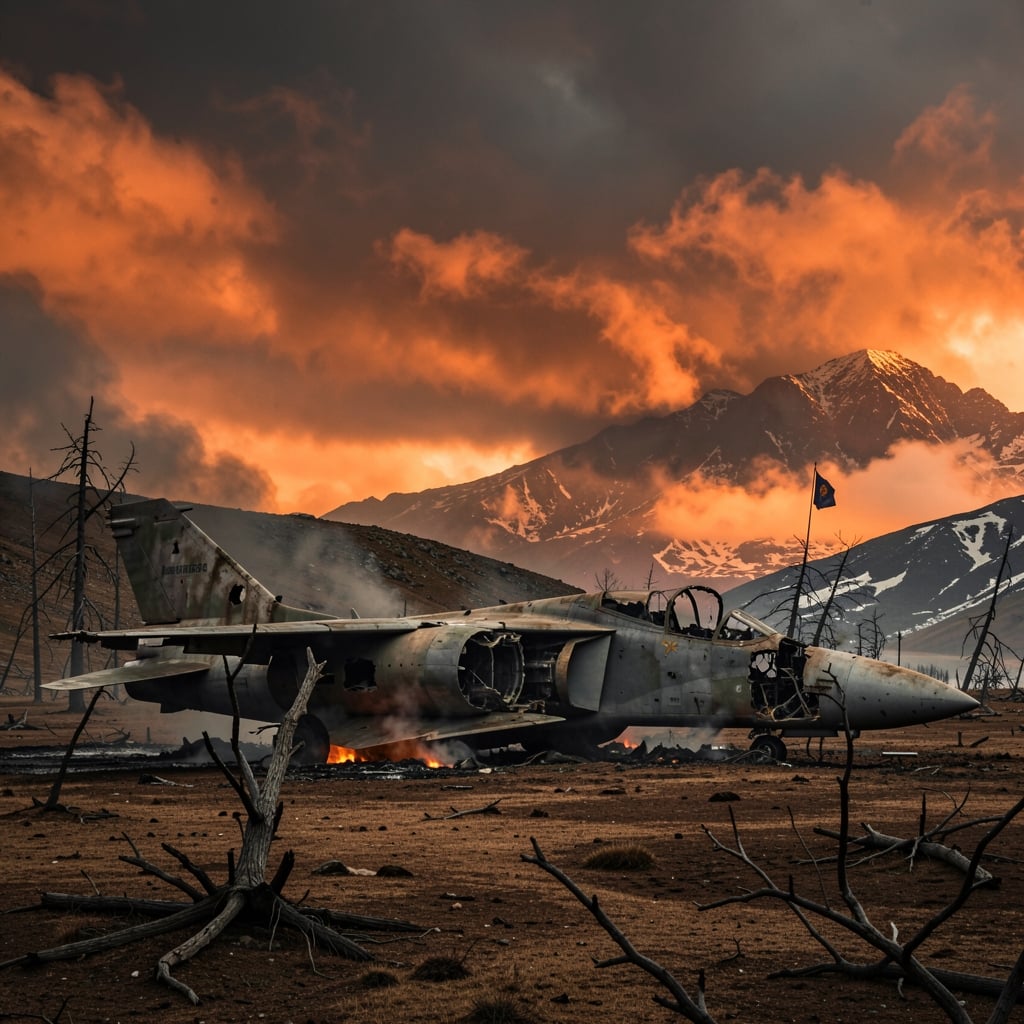
In a candid admission that resonates beyond the corridors of military command, India’s top defense official confirmed, for the first time, that fighter jets were lost during the May clashes with Pakistan. Speaking at the prestigious Shangri-La Dialogue in Singapore, Chief of Defense Staff General Anil Chauhan stated, “The number isn’t important, but the reason they were downed…” His comment, though left incomplete in public reporting, underscores the complex calculus of risks inherent in contemporary aerial warfare.
This revelation arrives amid a backdrop of simmering tensions between India and Pakistan—a relationship historically punctuated by rivalry, contested borders, and episodic clashes. While Islamabad had previously maintained that six Indian aircraft were shot down, the Indian military firmly dismissed these claims as inaccurate. The acknowledgment of losses by India, without delving into detailed technicalities, signals a shift toward greater transparency over aerial combat realities while simultaneously reinforcing the seriousness of hostilities.
The context of the May clashes is both complex and multifaceted. Over the past several years, the region has witnessed a tit-for-tat exchange of air sorties and ground maneuvers, with both sides vying to assert dominance in contested airspace. Analysts have observed that the dynamics of air warfare in South Asia have evolved significantly since the Cold War era, driven by advanced radar systems, beyond-visual-range missiles, and a relentless pursuit of technological superiority. In this environment, the loss of even a single platform is more than a statistic—it is a symbol of both tactical vulnerability and the high stakes associated with modern combat.
Historically, India and Pakistan have approached military engagements with guarded rhetoric and a strategic use of information. The current admission by General Chauhan, however, introduces an element of candor that is as significant as it is rare. According to data collated by the Indian Ministry of Defence, while precise figures have often been classified, recent operational assessments have indicated that losses incurred during recent clashes were due largely to advanced countermeasures employed by adversaries. This is underscored by the defense sector’s repeated emphasis on technological readiness and the integration of electronic warfare capabilities, which both nations have been rigorously developing in parallel.
International defense observers, including senior officials from the United States Indo-Pacific Command and representatives from NATO’s defense panels, have noted that such acknowledgments can reshape diplomatic calculations. As both India and Pakistan assert their strategic interests in the region, their respective military decisions and operational disclosures play a significant role in shaping regional security dynamics. The nuanced balance of deterrence, credibility, and restraint is visible in the choice of language used by military officials on both sides of the border.
Experts in the field have offered a measured perspective on these developments. Professor Ajay S. Mathur of the Centre for Air Power Studies in New Delhi explained that “the admission of losses, however limited, provides a critical reference point for future strategic planning and resource allocation, both in terms of pilot training and technological upgrades.” Mathur’s observations echo those made by defense analysts at the Institute for Defence Studies and Analyses (IDSA) and other strategic think tanks, which have repeatedly underlined the evolving nature of air combat in a nebulous geopolitical landscape.
This latest disclosure also has implications for broader policy and public perception. By choosing not to dispute every element of Islamabad’s narrative, the Indian military may be aiming to downplay strategic vulnerabilities while simultaneously preparing domestic and international audiences for the complexities of aerial combat. This subtle admission, framed within a responsible yet determined public discourse, underscores the balance between operational secrecy and accountability in modern warfare.
Looking forward, the trajectory of air warfare in South Asia is likely to be defined by rapid technological shifts and an ever-increasing focus on multilateral dialogue. As India continues to invest in next-generation aircraft and advanced defensive systems, the challenges posed by adversaries who are equally modernizing will remain a formidable concern. Both defense sector analysts and policymakers are watching closely, anticipating further enhancements in both hardware and doctrine that could better safeguard national interests and deter aggression.
In a landscape where every confirmed loss carries profound implications, the greater question remains not just how many aircraft are lost or shot down, but why these platforms are compelled to sacrifice themselves under the pressures of modern warfare. As the global community observes the evolving security posture in South Asia, the human cost behind these statistics is as real as the technological and strategic calculations influencing each sortie. What remains clear is that the true measure of military resolve extends far beyond numbers, resting instead on the persistent quest for stability amidst uncertainty.