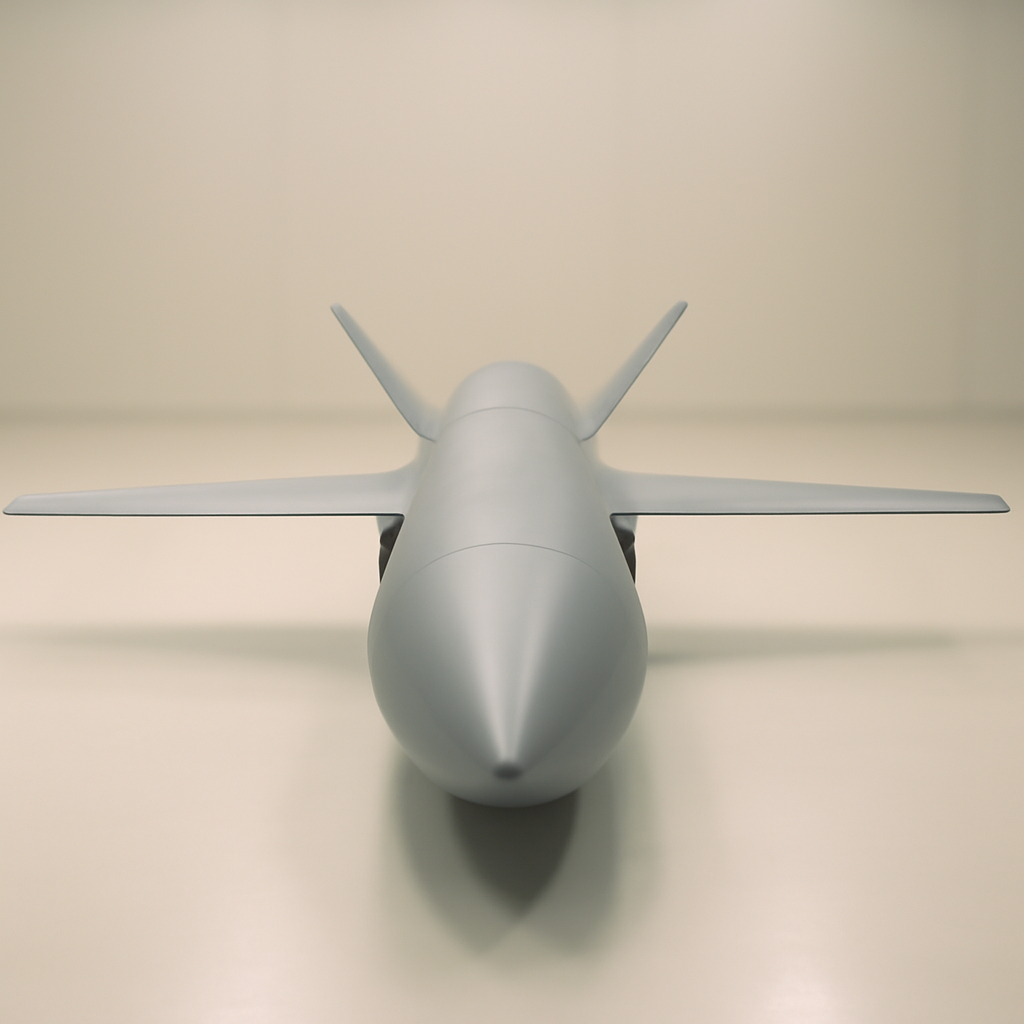
"neutralizing wide variety of aerial threats including fighter jets, missiles, UAVs and large enemy aircrafts within a wide range and altitude envelope," the Defense Research and Development Organization (DRDO) said after the maiden flight.
DRDO’s M1 test on July 23
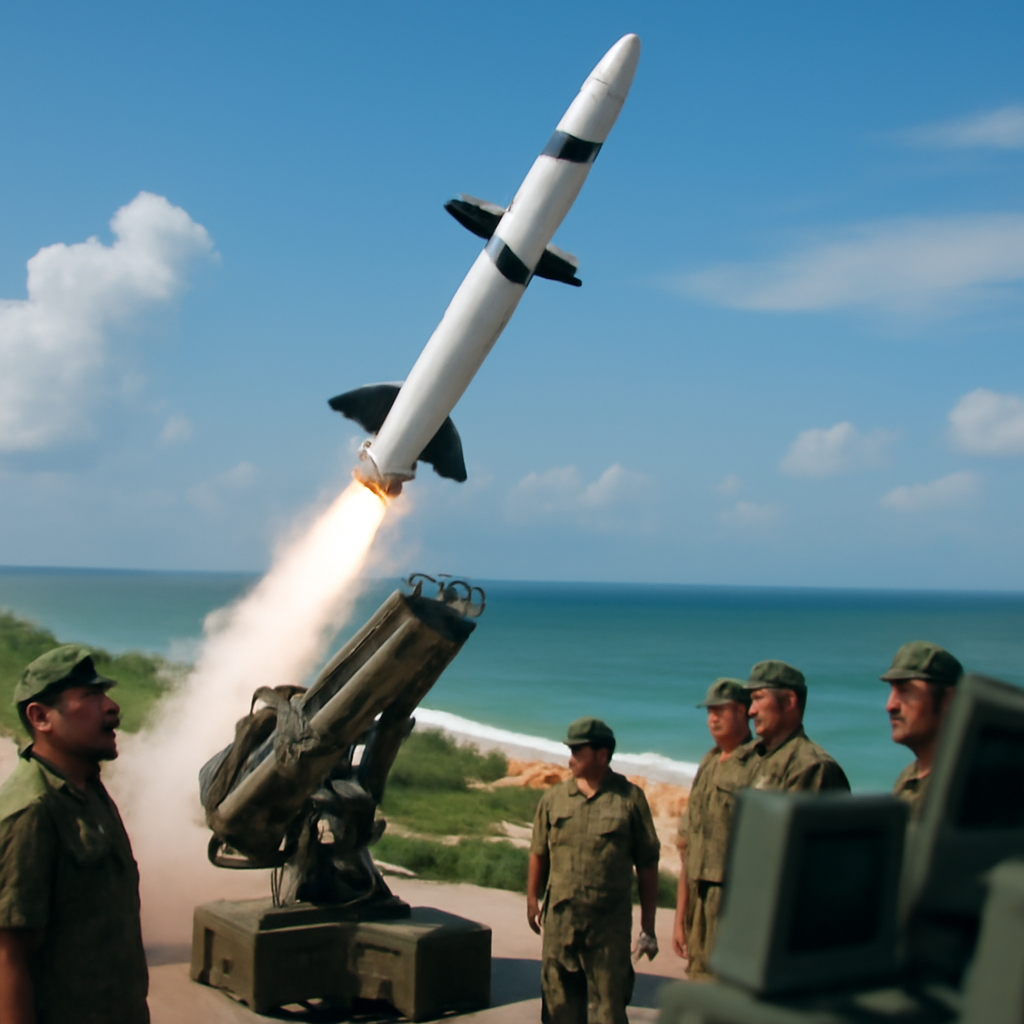
On July 23, DRDO carried out the maiden test of the M1 long-range surface-to-air missile (SAM) from APJ Abdul Kalam Island off the coast of Odisha. The missile engaged and successfully intercepted an electronic target designed to simulate a high-speed, high-altitude aerial threat, the agency reported. DRDO described the launch as part of Project Kusha and called it an important development in India’s multi-layered air defence architecture.
Project Kusha: three interceptors, one kill vehicle, and a timeline
Project Kusha is developing three long-range interceptors: M1 to engage targets up to 150 km, M2 with a range of 250 km, and M3 to engage targets at distances of 350–400 km. DRDO says the same kill vehicle will be used across the family, with range augmented by different booster stages. Development is expected to be completed in the next couple of years, and induction of Kusha interceptors is targeted by 2030. The broader multi-layer long-range air defence architecture under Mission Sudarshan Chakra is slated to be in place by 2035.

Audit-ready is a season. It shouldn't be.
Evidence in spreadsheets, controls drifting between audits, frameworks multiplying on flat headcount. Nubivance runs continuous compliance on Rapid7 Cyber GRC - SOC 2, HIPAA, ISO 27001, PCI, CMMC.
End the scrambleHow Kusha fits into India’s layered air-defence picture
The Kusha family is being integrated into an architecture of command-and-control systems, radars and sensors plugged into the Indian Air Force’s Integrated Air Command and Control System (IACCS). The Indian Army’s and Navy’s air-defence networks are also linked to IACCS to build a common air picture and to look deep into airspace beyond national borders to track incoming threats.
At present, India’s long-range air-defence tier includes the Russian S-400 Triumf, with an interception range cited at 400 km. Five S-400 regiments were contracted in 2018 under a $5.43 billion deal; deliveries have been delayed, with the fourth regiment delivered and the fifth expected by year-end. After the four-day conflict in May 2025 under Operation Sindoor, the Defence Ministry approved procurement of five additional S-400 regiments and negotiations are underway.
Beyond the S-400, the Barak-8 (also called MR-SAM on land and LR-SAM at sea) covers a medium range of about 70 km; at shorter ranges India fields the Akash systems and the Israeli Spyder quick-reaction systems. DRDO and analysts in the source argue the three Kusha interceptors will bridge the existing gap between systems such as Barak-8 and the 400 km S-400, creating greater depth and redundancy in the long-range net.
Industrial partners and indigenous technologies
DRDO named Bharat Dynamics Limited and Solar Industries as the chosen development-cum-production partners for Project Kusha. Bharat Electronics Limited is the development partner for various radars and control systems. Officials involved in the project said the entire Kusha project — including seekers, actuators, and computing systems — is indigenous.
DRDO also reported progress on radar technology, working on Gallium Nitride (GaN)-based Active Electronically Scanned Array (AESA) radar systems, which the agency said significantly improve efficiency and precision.
Short-range systems, evolving threats, and the anti-ballistic layer
DRDO is simultaneously developing short-range air-defence systems: a Quick Reaction SAM and a man-portable very short-range air-defence system (VSHORAD). The agency framed these programs as critical to counter cruise missiles, loitering munitions and unmanned systems that have changed the modern battlefield.
For ballistic-missile threats, the source notes India has an indigenous Anti-Ballistic Missile (ABM) capability: Phase‑I — designed to engage ballistic missiles with ranges up to 2,000 km — has been validated, and Phase‑II, for missiles up to 5,000 km, is under development. Project Kusha is expected to be able to address certain classes of ballistic and hypersonic threats, complementing the broader ABM efforts.
What this means for the Indian military, defense partners, and Pakistan and China
- Indian Air Force, Army, and Navy: Kusha will be integrated into IACCS-linked networks to extend the joint services’ ability to detect and engage threats at greater standoff distances, providing time to respond and the potential to neutralize threats far from population centers and high-value assets.
- Bharat Dynamics Limited, Solar Industries, and Bharat Electronics Limited: these companies are positioned to move from development into production roles for Kusha components, while continuing work on radars and control systems; indigenous seekers, actuators and computing systems are central to the program’s stated aim of self-reliance.
- Pakistan and China: the source explicitly frames Project Kusha as adding depth against persistent medium- and long-range ballistic-missile threats from Pakistan and China, while noting that S-400 systems previously played significant roles during Operation Sindoor — including an offensive engagement of a Pakistani early-warning aircraft beyond 300 km.
Defense Minister Rajnath Singh called the test flight an “important milestone,” noting that only a handful of nations can develop a long-range SAM system. For now, Project Kusha remains a work in progress: development and induction timelines place initial fielding around 2030 and a full Mission Sudarshan Chakra by 2035, while contracted S-400 regiments continue to be inducted and new S-400 procurement negotiations are underway. In practice, Kusha is likely to complement existing long-range systems and build redundancy rather than immediately replace imports.