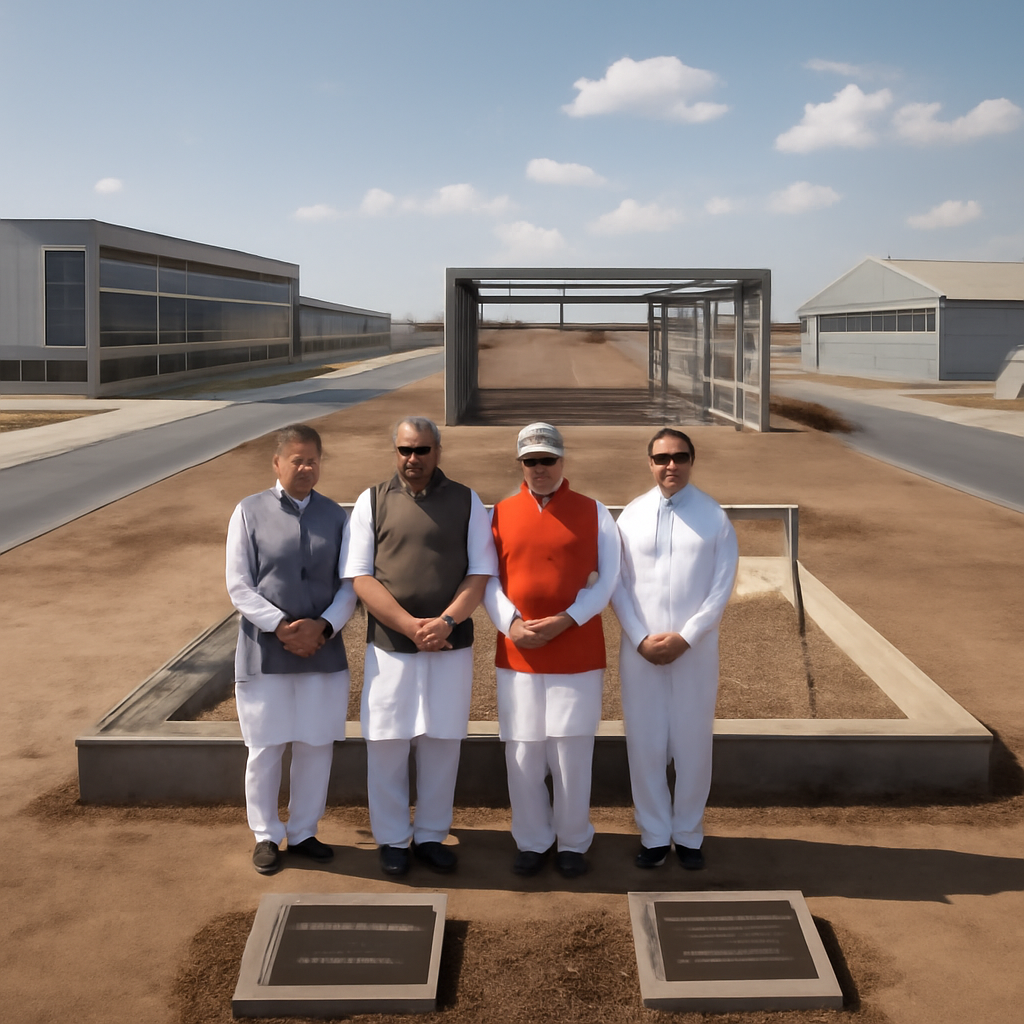
"Andhra Pradesh is set to emerge as a major hub of aerospace and defense production," Defense Minister Rajnath Singh declared on May 15 as he and Andhra Pradesh Chief Minister Chandra Babu Naidu laid foundation stones for a suite of aerospace and naval projects across the state.
Puttaparthi: a Core Integration and Flight‑Testing center for AMCA
At Puttaparthi the foundations were laid for a Core Integration and Flight‑Testing Center explicitly tied to the Fifth‑Generation Advanced Medium Combat Aircraft (AMCA) program and "other future indigenous platforms." The state and central presentations described Puttaparthi as becoming a strategic defense hub of national importance through the AMCA project, part of a wider push to modernize and strengthen defense capabilities.
Visakhapatnam: Naval Systems Manufacturing Facility co‑located with operational commands
A Naval Systems Manufacturing Facility will be built at T Sirasapalli village near Visakhapatnam and co‑located with the Naval Dockyard, INS Eksila and the Eastern Naval Command Headquarters. The project is billed as the first time critical propulsion sustainment capability will be placed into India's private sector at that location, aiming to deliver sustainment and manufacturing workstreams previously carried out abroad.

Audit-ready is a season. It shouldn't be.
Evidence in spreadsheets, controls drifting between audits, frameworks multiplying on flat headcount. Nubivance runs continuous compliance on Rapid7 Cyber GRC - SOC 2, HIPAA, ISO 27001, PCI, CMMC.
End the scrambleBharat Forge MoU and the Marine Gas Turbine Facility (MGTF)
On May 19 Pune‑headquartered Bharat Forge signed a memorandum of understanding with the Andhra Pradesh government to establish India’s first private‑sector Marine Gas Turbine Facility at Visakhapatnam, to be developed through Bharat Forge Aerospace within the Andhra Pradesh Defense Manufacturing Corridor. The MoU frames the facility as strengthening India's indigenous naval propulsion ecosystem and supporting long‑term defense self‑reliance objectives.
The facility is described in two phases. Phase 1 will deliver a full marine gas turbine repair and overhaul complex, hot‑section restoration of blades, vanes and combustion liners, component manufacturing, an NDE laboratory, and a 72‑hour turnaround capability for the Naval Dockyard at Visakhapatnam. Phase 2 will establish a Marine Gas Turbine Development and Assembly Hall, a full‑spectrum hot test cell scalable across all propulsion ratings, and—explicitly for the first time on Indian soil—the development and qualification of an indigenous Marine Gas Turbine. The project is said to create approximately 750 direct and indirect jobs and to serve as a regional hub for navies from friendly nations.
Drone City, Orvakal, and Andhra Pradesh's emerging ecosystem
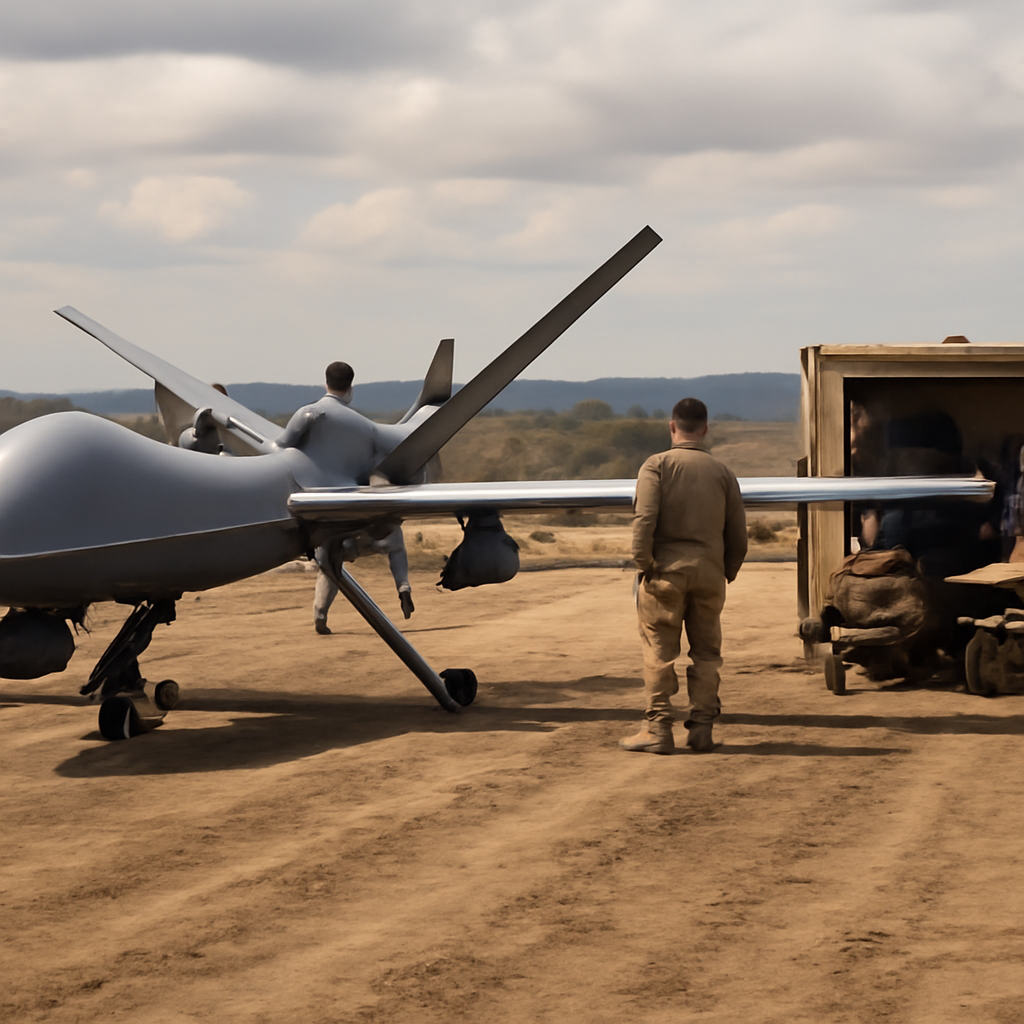
Five drone manufacturing and technology companies were virtually inaugurated for Drone City in Orvakal. Chief Minister Naidu highlighted that the drones used in Operation Sindoor were manufactured and tested in Andhra Pradesh, a point offered as an example of the state's existing defense‑technology capability. Naidu also described a broader strategic ecosystem in the state: Sriharikota as a space hub, Nagayalanka for missile capabilities, Puttaparthi for defense strength and Visakhapatnam as a naval hub.
What this means for the Naval Dockyard, Bharat Forge, and Andhra Pradesh's economy
- Naval Dockyard and Eastern Naval Command: The MGTF promises a 72‑hour turnaround capability for the dockyard and indigenous repair, overhaul and development capacity for marine gas turbines—components the source identifies as the propulsion backbone of the Indian Navy’s frontline service combatants. The reporting links recent supply‑chain disruptions to impacts on fleet repair‑and‑overhaul cycles and operational readiness, and positions the MGTF as a response to that vulnerability.
- Bharat Forge (private‑sector producers): The MoU places a major propulsion sustainment and development effort into the private sector for the first time at Visakhapatnam, including hot‑test infrastructure and development halls. The company’s Aerospace Division frames the work as bringing repair, overhaul and indigenous development on Indian soil in the private sector.
- Andhra Pradesh government and regional economy: The projects sit inside a defense manufacturing corridor that offers preferential tax and excise rates intended to attract public and private R&D and production. The state government projects about 750 jobs from the MGTF and highlights an integrated regional cluster—space, missile, aircraft, naval—that it argues will transform Andhra Pradesh into a "defense shield" for the nation.
The program as presented ties specific facilities—flight testing for AMCA at Puttaparthi, drone manufacturing at Orvakal, and marine‑turbine sustainment and development at Visakhapatnam—into a contiguous narrative of indigenization. Officials framed the MGTF as both a remedy to recent supply‑chain disruption and a strategic step away from reliance on foreign propulsion systems: "India’s warships have traditionally been propelled by engines built abroad. That dependence ends at Visakhapatnam," the reporting states.
Next steps within the projects are explicit in the announcements: construction and phased capability delivery at Visakhapatnam, flight‑test and integration work at Puttaparthi tied to the AMCA program, and operationalizing Drone City with the newly inaugurated firms. The Bore‑forged claim of a regional hub for friendly navies and the stated goal of qualifying an indigenous Marine Gas Turbine on Indian soil mark concrete milestones that, if achieved, will materially alter the defense industrial footprint described in these announcements.