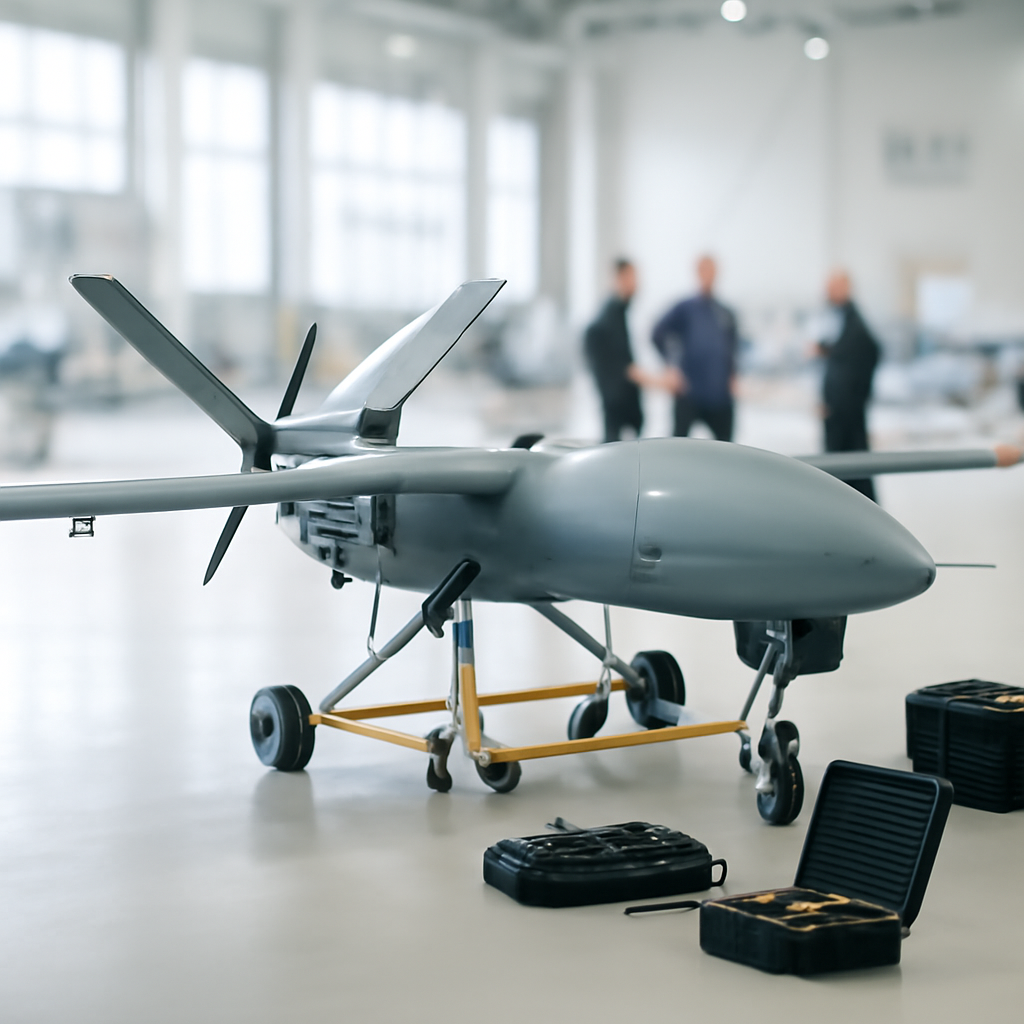
The X-36 was tiny and slow: 380 km/h and 565 kg — yet its silhouette may now be casting a long shadow over Nevada.
Area 51 infra‑red footage and the Project Fear release
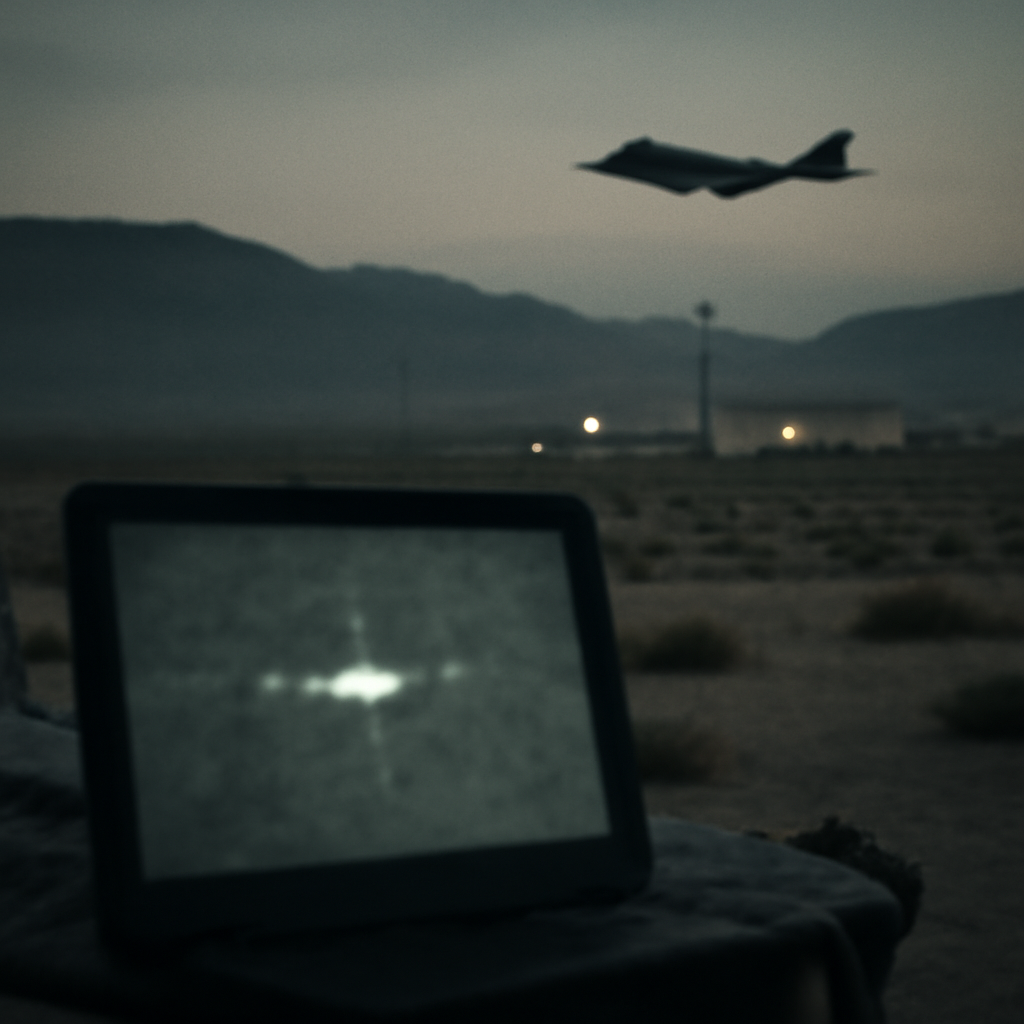
This month a set of infra‑red images taken close to the flight‑test facility known as Area 51 was published by YouTube creators Project Fear. The footage shows an unknown aircraft and has been vouched for by Anders Otteson, who previously brought attention to another classified aircraft in January. Observers comparing the imagery with known designs report a three‑aspect match that links what is visible over Nevada to both a modern program and a little‑remembered 1990s demonstrator.
Three aspects that tie the image to the F-47 hypothesis
The comparison rests on three specific points laid out in the reporting. First, the unknown aircraft appears to be twin‑engined — a characteristic consistent with the premise that the Boeing F-47, described in the piece as “the US Air Force’s future air‑dominance centrepiece,” would be a large penetrating counter‑air design intended for deep attack at long range, a mission set likely to favour two engines.
Second, the photographed shape — a lean fuselage with sharply swept, aft‑set wings — looks optimised for supersonic cruise. The source links this aerodynamic layout to the Pentagon’s adaptive‑engine program, which has run alongside the Next Generation Air Dominance (NGAD) effort that produced the F-47. That adaptive‑engine work is explicitly intended to deliver supersonic cruise without the high subsonic fuel‑burn penalties seen in earlier fighters.
Third, and most visually striking, the unknown aircraft is described as a “pretty good ringer” for the 1990s X‑36 demonstrator: a configuration that demonstrated that a supersonic, stealthy shape without vertical tails could nevertheless be controlled at low speed. The X‑36 itself is documented in the report as having been small and slow — again, 380 km/h and 565 kg — and powered by an engine from the AGM‑129 Advanced Cruise Missile for the purposes of the demonstrator program.

Audit-ready is a season. It shouldn't be.
Evidence in spreadsheets, controls drifting between audits, frameworks multiplying on flat headcount. Nubivance runs continuous compliance on Rapid7 Cyber GRC - SOC 2, HIPAA, ISO 27001, PCI, CMMC.
End the scrambleAlan Wiechman, McDonnell Douglas Phantom Works, and a lineage of stealth
The reporting traces a direct human and institutional line from the X‑36 era into modern work. It highlights the late Alan Wiechman, who led McDonnell Douglas’s, later Boeing’s, stealth efforts from the mid‑1980s until his retirement in 2014 and reached the rank of vice‑president of special technology innovation. Wiechman’s work at McDonnell Douglas was placed under the company’s advanced‑prototyping division, Phantom Works, where a stealth‑focused team pursued both extreme stealth concepts and techniques to reduce radar cross‑section on conventional designs.
The piece recounts how that Phantom Works team contributed to the F/A‑18E/F Super Hornet and studied F‑15 treatments, and how Wiechman later was noted in his 2023 obituary as having been “most recently” an adviser on stealth to the USAF Rapid Capabilities Office. The Bird of Prey and X‑36 designs are described as complementary: the Bird of Prey aiming at daylight invisibility and the X‑36 exploring tail‑less supersonic control.
General Electric, adaptive engines, and fluidic thrust vectoring
The connection between airframe shape and propulsion is made explicit in the reporting. General Electric’s advanced programs lead at the time, Harvey Maclin, is named as an advocate for a new engine architecture — the Controlled Overall Pressure‑ratio Engine — that evolved from GE’s variable‑bypass F120. That lineage is presented as a direct ancestor of today’s adaptive engines and a technological match for an X‑36‑like combat aircraft because it could switch from turbofan mode for subsonic flight to turbojet mode that enables supersonic cruise without afterburning.
The piece also describes fluidic thrust vectoring — injecting air into an engine exhaust on one side or the other — as a proposed yaw control solution that would avoid external control surfaces that degrade stealth. That idea was discussed as part of the same era of development that linked body‑shape experiments to engine concepts capable of supporting stealthy, supersonic flight.
What this means for the USAF, Boeing/McDonnell Douglas, and engine developers
- U.S. Air Force (USAF) and Rapid Capabilities Office: The imagery, if indeed showing an F‑47 prototype or a pre‑development aircraft shaped like the F‑47, would represent a visible return on decades of stealth and propulsion work; the report ties past advisory roles (Wiechman’s obituary) and programmatic lines (NGAD, adaptive engines) directly into what the footage may depict.
- Boeing/McDonnell Douglas/Phantom Works: The narrative in the piece frames Phantom Works’ 1990s research — and Wiechman’s stewardship — as possibly informing current test articles, suggesting that legacy design choices from McDonnell Douglas’s stealth group could have been preserved into contemporary demonstrators.
- Engine developers and GE proponents: The argument connects GE’s past-controlled‑pressure engine concepts and Harvey Maclin’s advocacy for fluidic control to present adaptive‑engine aims, implying that propulsion advances remain central to realizing a tail‑less, supersonic, stealthy combat aircraft.
The infra‑red clip over Area 51 has rekindled a lineage: a small 1990s tail‑less demonstrator, the Phantom Works culture that cultivated parallel stealth and production‑cost thinking, and propulsion concepts that aimed to make supersonic cruise practical for stealth fighters. Whether the airborne silhouette seen near Groom Lake is an F‑47 prototype or a pre‑development shape borrowing X‑36 lessons, the footage — vouched for by an independent observer — is a concrete prompt to reappraise how ideas from the 1990s may have been carried forward into the NGAD era.