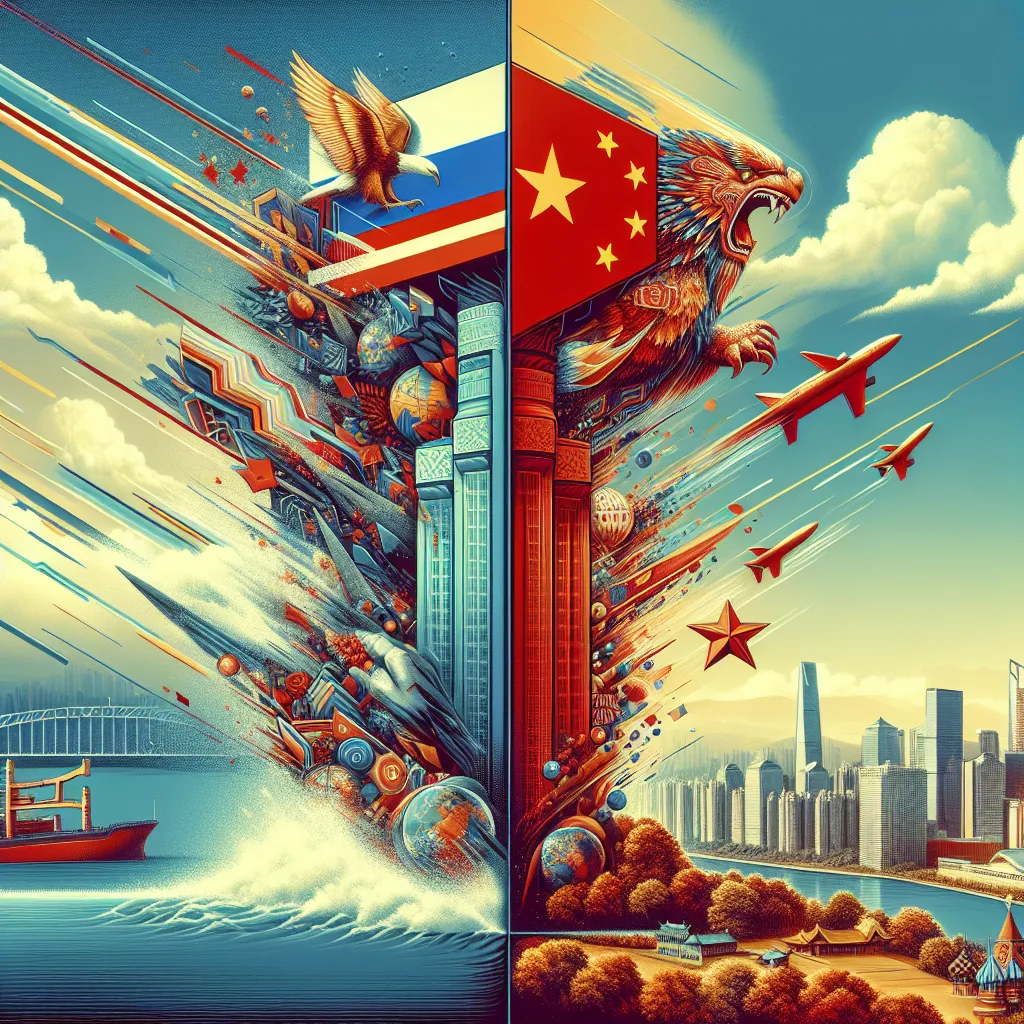
Chinese Gambit: The Hidden Leverage Over Russia’s Strategic Fate
In a world where alliances are as much dictated by necessity as ideology, the growing entanglement between China and Russia offers a fresh narrative on global power dynamics. As Russia’s invasion of Ukraine deepens its reliance on China for critical trade and technological support, a calculated maneuver by Beijing could dramatically alter Moscow’s precarious position on the world stage.
Over the past several years, the spiral of geopolitical realignment has driven Russia into a closer orbit with China. Following sweeping international sanctions imposed after the incursion into Ukraine, Moscow found itself isolated from traditional markets in the West. Adapting swiftly, Russian policymakers pivoted to the East, leveraging Beijing’s expansive trading networks. The result is a relationship that, while mutually beneficial in the short term, is underpinned by a growing economic, military, and technological dependency that may ultimately recalibrate power balances in a region already volatile with historical mistrust and contemporary strategic rivalries.
Recent trade figures illuminate the scale of this shift. In 2023 alone, Russia exported over $250 billion worth of crude oil, refined petroleum products, natural gas, coal, and gold—commodities that sustain its economy and fund its military endeavors. A substantial portion of these exports has flowed to China, a powerhouse whose appetite for energy and raw materials seems insatiable. With China acting as both customer and creditor, the Kremlin’s strategic autonomy has increasingly become entangled with Beijing’s own economic and political ambitions.
Historically, Russia’s energy exports have underwritten its national budget and its global influence. However, the emergency pivot to Chinese markets has introduced subtle but significant vulnerabilities. While Moscow benefits from alleviating the pressure of Western sanctions, it simultaneously cedes a degree of control over the very lifeline that supports its ambitions. For China, leveraging such an economic dependency could become a potent diplomatic tool. If Beijing were ever to tighten or redirect its support, the repercussions for the Russian state would be immediate and profound.
This relationship, built in the crucible of geopolitical isolation and economic necessity, raises fundamental questions about the nature of modern alliances. Consider the following factors that underscore the complexity of China’s influence:
- Economic Reliance: Russia’s vast energy exports and natural resource sales to China account for a significant share of its national revenue, placing Moscow at the mercy of Beijing’s market demands and pricing strategies.
- Military and Technological Dependencies: Sanctions and technological embargoes from Western nations have forced Russia to lean on Chinese advancements in military technology and cyber capabilities, potentially hindering independent innovation.
- Strategic Leverage: As noted by international policy analysts from institutions such as the International Energy Agency and the Council on Foreign Relations, China’s growing influence over Russian economic infrastructure could ultimately constrain Moscow’s future geopolitical choices.
At the heart of this unfolding story is the conundrum of mutual benefit versus long-term strategic risk. Analysts at well-regarded research outlets like Reuters and the Financial Times have remarked that China’s pragmatic approach to international trade and diplomacy allows it to balance economic interests against broader global responsibilities. Yet, as Beijing’s role as Russia’s crucial economic partner intensifies, its potential to shift policy as a calculated countermeasure could bring unexpected jolts to the Kremlin’s strategic posture.
Policy experts emphasize that while the China-Russia nexus has thus far been a lifeline for Moscow, it also exemplifies the delicate interplay between dependence and dominance. “The very support that sustains Russia might also constrain its operational freedom,” noted a senior official from the International Energy Agency in recent briefings. Such cautionary insights suggest that Beijing’s actions in the coming months could serve as a de facto referendum on what Russia can count on amid its ongoing conflicts and isolation.
When considering what lies ahead, several potential scenarios deserve attention. A deliberate shift in China’s policies—be it through regulatory changes affecting energy trade, bolstered sanctions against secondary suppliers, or strategic recalibrations in military technology transfer—could send ripples through the already tenuous fabric of Russian statecraft. Indeed, traditional allies might one day discover that mutual benefit has transformed into an uneven bargain.
Looking forward, the geopolitical landscape is likely to remain in flux as China continues to weigh the long-term benefits of its current strategy against the inherent risks of further entanglement with an increasingly isolated Russia. Economic policymakers in Beijing must carefully assess whether maintaining an extensive, and potentially coercive, support system for Moscow could jeopardize its own global ambitions. Simultaneously, Moscow might be compelled to seek alternative partners in a world where reliance on any single economic savior can prove to be a strategic liability.
In the intricate game of global diplomacy, each decision is a calculated risk. As nations navigate the treacherous waters of economic dependency, military strategy, and technological competition, the story of China and Russia stands as a stark reminder of the unpredictable nature of alliances. If China moves—whether to tighten its grip or extend its support—the fall of Russia’s longstanding operational autonomy could well be a foretaste of broader geopolitical upheavals.
Ultimately, the dynamics between these two major powers invite a deeper reflection on the nature of alliances in the 21st century. When economic imperatives meet strategic vulnerabilities, can any nation truly remain insulated from the cascading effects of global interdependence? As the world watches with bated breath, one thing remains clear: in this high-stakes arena, even the smallest move could determine the fate of empires.



