A single Chinese government agency has reportedly signed up for 600 of the machines.
Huawei’s Qingyun HM650: a claimed 100 percent Chinese PC
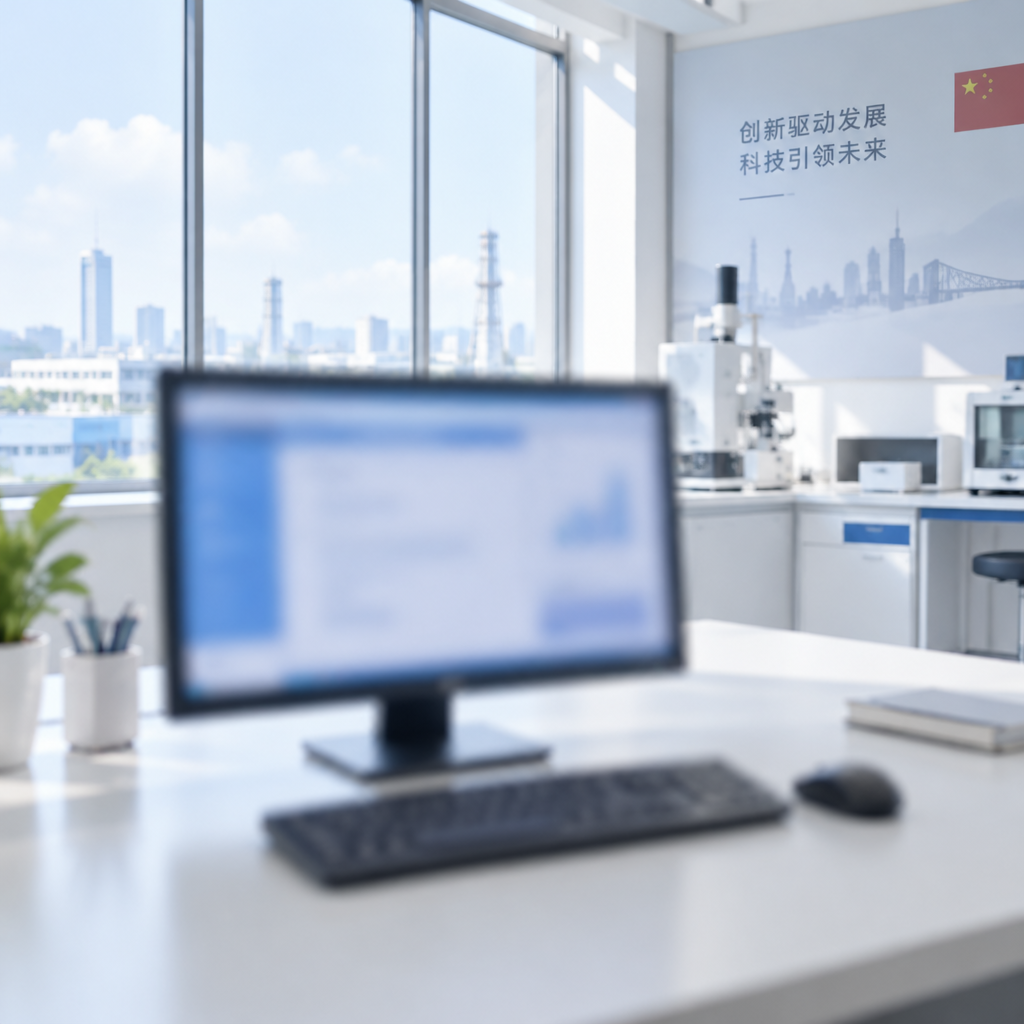
Huawei last week launched the Qingyun HM650, a desktop PC the company says uses only parts made in China. According to the announcement reported by The Register, the HM650 runs a newly developed enterprise version of HarmonyOS and ships with Huawei’s own Kirin X90 processor — described as a ten-core, 20-thread chip with a clock speed of 2.3 GHz. Huawei has reportedly claimed local companies manufactured 100 percent of the components in the machine.
The question of design provenance and The Register’s caveat
The Register notes an important ambiguity in Huawei’s claim: it is unclear whether all those components use Chinese designs. The uncertainty arises because many non-Chinese companies still operate factories in China; manufacturing location does not necessarily equate to domestic design or supply-chain independence. The source flags that distinction without resolving it.

This site is the portfolio.
OSINTSights runs on Cloudflare Workers, D1, R2, and Vectorize, with an AI pipeline on Hetzner ARM. Nubivance designed, built, and operates it. We do the same for clients.
See what we buildHow Beijing’s procurement policy and one 600-unit order change the calculus
China’s government has ordered all government entities to shift from Wintel boxes to local alternatives, a policy that creates a very large, concentrated buyer for domestic PC makers. That context helps explain why a single government agency signing up for 600 HM650s is not merely a curiosity: losing out on a chunk of Chinese government procurement would matter to foreign processor vendors. The Register points out that China’s government is an enormous buyer, and losing the chance to bid for its business is unlikely to be helpful for outsiders.
Why Intel, AMD and Qualcomm are named as potential losers
The Register frames the HM650’s debut as “bad news for Intel, AMD, and Qualcomm.” The reasoning in the source is straightforward: all three firms are exposed to a shrinking PC market, which the source attributes in part to the rising cost of memory. If China’s procurement shifts toward locally sourced alternatives — and if those alternatives can be declared “100 percent Chinese” in manufacture or design — then opportunities for the three vendors to supply chips into that large government sector would be reduced.
Japan’s ¥10 billion emergency cyber package
Separately, Japan’s government announced last Friday an emergency funding package of ¥10 billion (reported as $63 million) to strengthen national cyber-defences. The package follows a wave of cyberattacks that have disrupted railways, retailers, KFC’s logistics provider, and cloud computing operators. The emergency funding aims to help Japanese government agencies use AI to address infosec basics, to build tools that let the National Cybersecurity Office aggregate information about cyberattacks, and to provide support to victims.
Vietnam’s 28‑nanometer security chip, Lenovo’s senior move, and Apple’s education sale
- Vietnam announced what it called the nation’s first domestically‑designed security chip: a 28‑nanometer device that apparently integrates encryption algorithms in silicon. The chip is already in use on secure USB storage devices used by Vietnam’s government for government and defense agencies and the Communist Party. Hanoi says the chip needs more testing before it will be entrusted with state secrets, but hailed it as an important step toward sovereign security capabilities. The nation hopes to use the chips for the national digital signature certification system and critical infrastructure systems in electricity, water, oil and gas, and telecommunications.
- Lenovo shifted Amar Babu, who led its Asia‑Pacific operations for over five years, to the role of mobile business group general manager and global president at Motorola. The company credited him with turning AP into “a more balanced and diversified business and a key growth engine.” According to Lenovo’s announcement, “Across the portfolio, AP maintained its #1 PC position, while our mobile business achieved notable growth, with Motorola reaching nearly 9 percent market share in India and the #2 smartphone OEM in Japan.” Lenovo has not named a new leader for its APAC outpost.
- Apple disclosed on its Q4 earnings call that it sold 172,000 MacBook Neos to the Department of Education in the Philippines, its largest-ever sale of Macs into the education market, CEO John Ternus said. The machines will be deployed to teachers and staff.
Taken together, these items sketch a region in which governments are actively reshaping procurement, security, and industrial strategy. Huawei’s claim of a “100 percent Chinese” PC lands at the confluence of those policy choices: if Beijing’s order to move government entities off Wintel machinery translates into sustained purchases, that would immediately alter demand dynamics for foreign silicon suppliers and accelerate opportunities for homegrown platforms. At the same time, Japan’s emergency funding and Vietnam’s self‑described sovereign chip demonstrate parallel moves by governments to harden infrastructure and assert control over critical hardware and software.
For readers who want to read the original reporting: The Register — Huawei says it’s made a 100 percent Chinese PC