"Just to be clear, we do not buy equipment in the hopes of using it," Defence Secretary Meghan Quinn told a Senate committee as Canberra debated a A$1.2 billion purchase of 75 M1A2 Abrams main battle tanks.
The Senate hearing and the central question
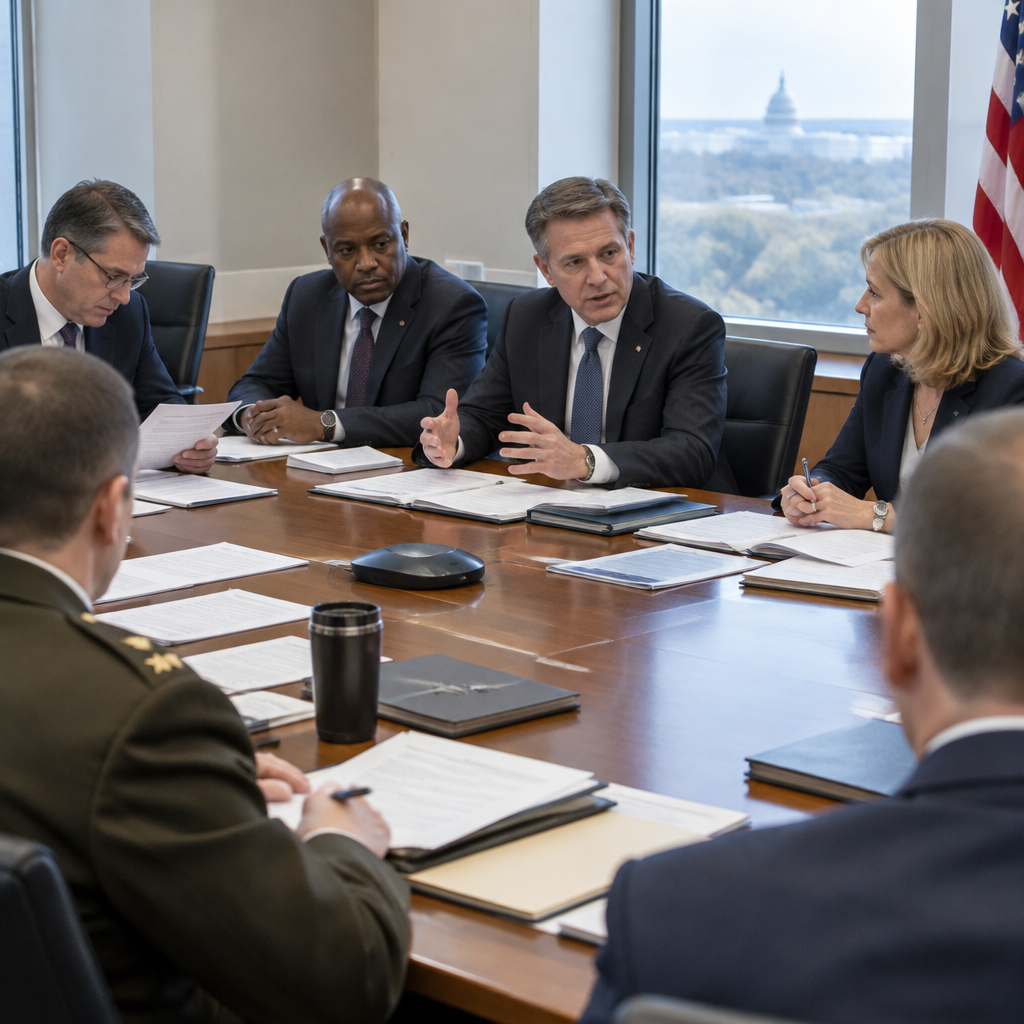
The acquisition surfaced during a Senate committee hearing where Senator Fatima Payman asked why Defence was investing heavily in a capability that had not been used in combat by Australia for more than 50 years, noting that Australia “hadn’t deployed tanks in combat since the Vietnam War.” The exchange framed a core tension in procurement debate: should capability be judged by recent usage or by the strategic options it creates?
How Defence explained the purchase: deterrence and strategic denial
Chief of Army Lieutenant General Susan Coyle told senators that tanks remain “an important part of our capability of the Australian Army in order for us to be able to fight and win the land combat battle,” describing them as “an incredibly potent capability” that “form a part of our deterrence.” Defence Secretary Meghan Quinn placed that view within the government’s stated doctrine, saying the National Defence Strategy is built around strategic denial and deterrence and that credible military capability is intended to make potential adversaries think twice before engaging in armed conflict.

Audit-ready is a season. It shouldn't be.
Evidence in spreadsheets, controls drifting between audits, frameworks multiplying on flat headcount. Nubivance runs continuous compliance on Rapid7 Cyber GRC - SOC 2, HIPAA, ISO 27001, PCI, CMMC.
End the scrambleWhat the Abrams purchase actually is
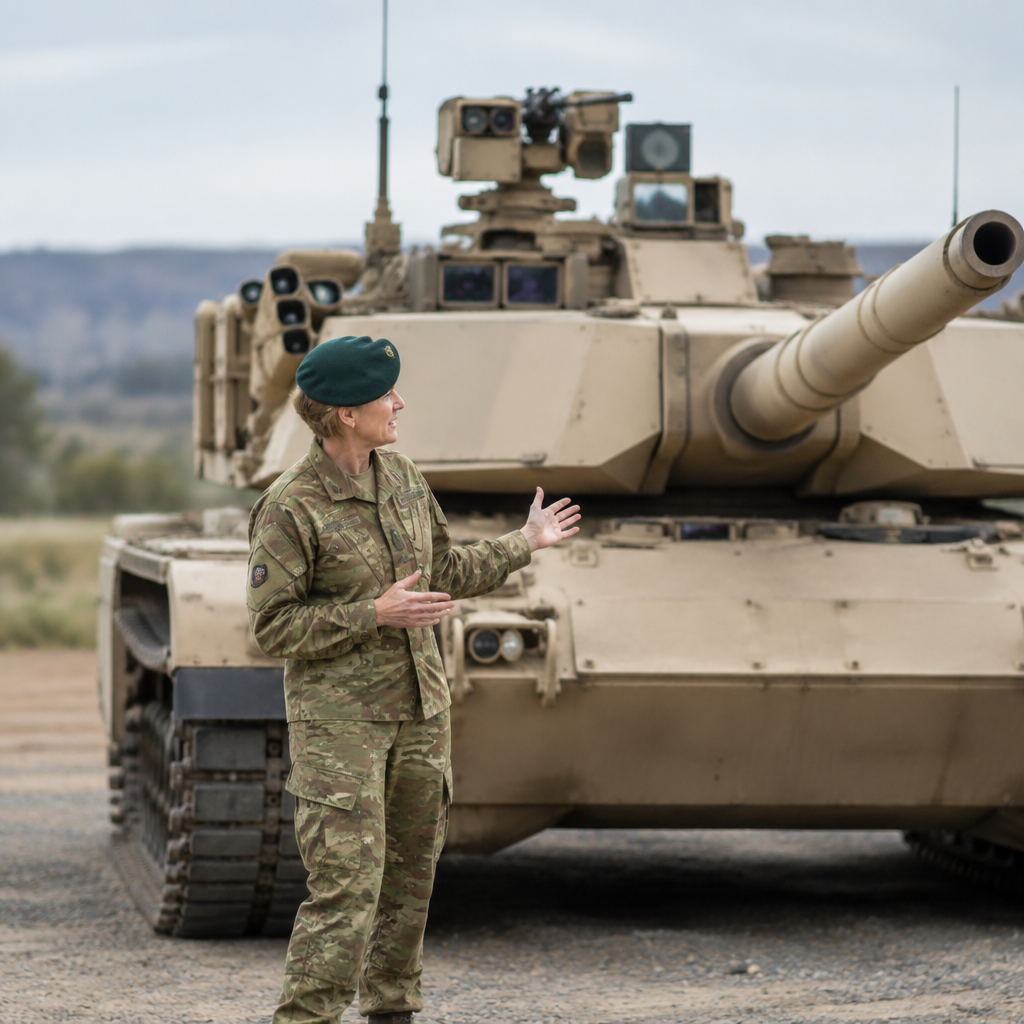
Defence characterised the A$1.2 billion purchase not as the introduction of an entirely new capability but as an upgrade of an established, proven armoured capability that has served Australia and its allies. The Land 907 heavy armour upgrade project, of which the 75 Abrams are a part, also includes assault‑breaching vehicles, armoured recovery vehicles, joint assault bridges and associated training and simulation systems—items Defence describes as essential to enabling armour to manoeuvre, overcome obstacles and remain operational in contested environments.
History, doctrine and the changing battlefield
The written record invoked by Defence connects the purchase to past Australian operations. Australia’s tank experience was cited from M3 Stuart light tanks at Buna and Sanananda in 1942–43, Matildas supporting infantry during the amphibious campaign at Balikpapan in 1945, to Centurions supporting Australian infantry in Vietnam, including at the Battle of Binh Ba in 1969. Those historical examples, Defence argues, show the value of integrating armour with infantry and engineers in difficult terrain and close combat.
At the same time, the source material acknowledges that the battlefield has changed. It notes the proliferation of drones, loitering munitions, precision‑guided weapons and anti‑tank missiles has “fundamentally changed the threat environment for heavy armour,” increasing vulnerability. Nevertheless, contributors cited in the hearing and related analysis — including the Australian Army Research Centre’s “The Lessons of Ukraine for the Australian Army” (2016) and analyst William Leben — conclude that modern protection systems, artillery, reconnaissance and electronic warfare keep high‑quality armour and artillery relevant as part of a combined‑arms force.
What this means for policymakers, the Australian Army, and defence procurement
- Policymakers and strategy writers: The purchase is presented as an instrument of deterrence and strategic denial: the measure of value stated in the hearing is not platform count or past usage but the options and credible capability the equipment provides.
- The Australian Army: The acquisition is framed as continuing investment in a combined‑arms land system and supporting an army optimised for littoral manoeuvre and long‑range strike, as directed by the 2026 National Defence Strategy.
- Defence procurement leaders: The argument advanced to senators is that investment should be judged by the capability generated—integrated force elements, training and simulation—and not by the headline cost of individual platforms.
The Senate exchange crystallised a persistent procurement question: do major platforms retain value if they are primarily instruments of deterrence rather than frequently used tools of war? Defence officials at the hearing answered by reorienting the evaluation away from recent combat deployments and toward the combat power, integration and strategic options the upgraded armoured force is intended to provide. The next practical test for that argument will be how Australia implements Land 907’s supporting systems and how those investments are measured against the deterrent and operational effects Defence has described.
https://www.aspistrategist.org.au/just-to-be-clear-we-do-not-buy-tanks-in-the-hope-of-using-them/