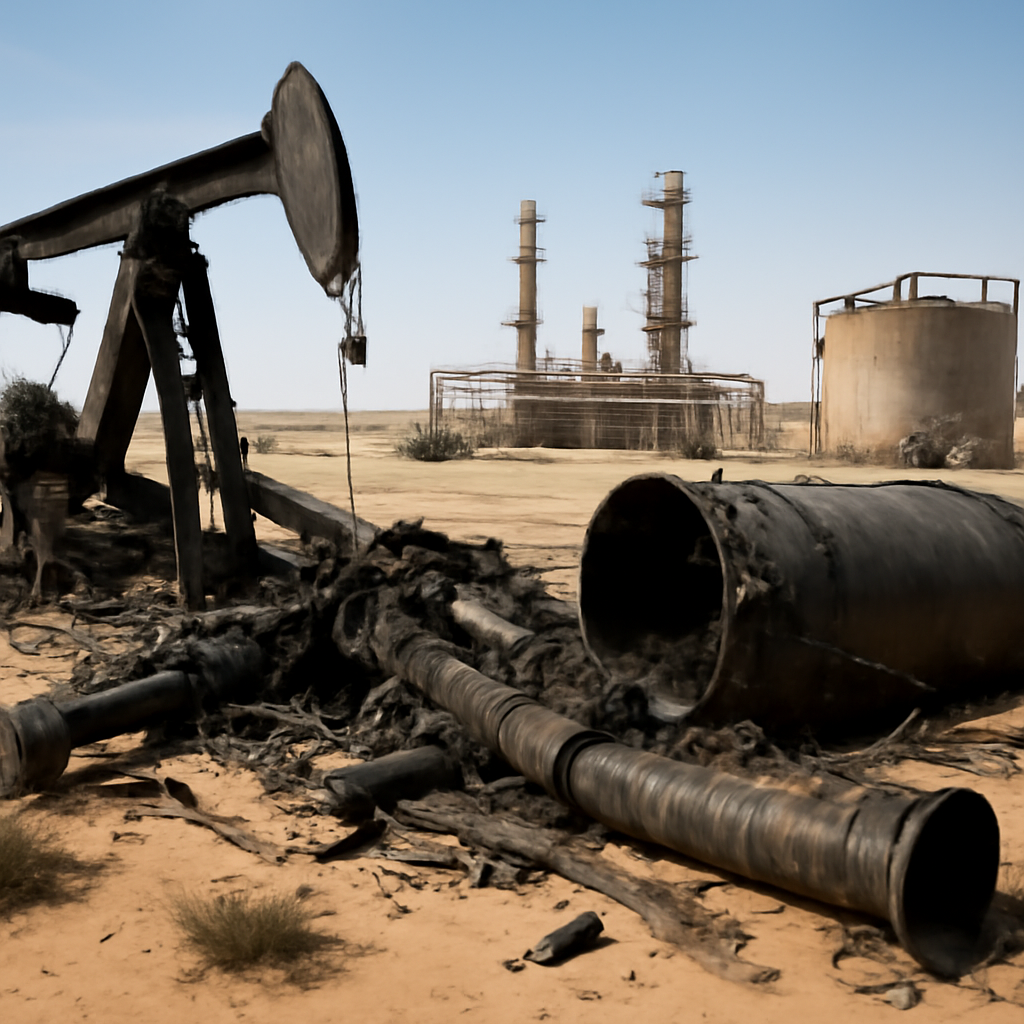
"The strikes were precise, by God’s grace, and direct, causing major damage to those facilities,” Houthi spokesman Brig. Gen. Yahya Saree wrote on Telegram after what he described as a “qualitative, large-scale military operation” against multiple Saudi energy and military sites.
Brig. Gen. Yahya Saree on the Houthi operation
Saree claimed the operation used “dozens of ballistic missiles and drones” to hit Aramco facilities in Abha, Najran, Jazan’s Economic City and the Khamis Mushait Air Base, and said the strikes were “in response to the Saudi aggression that targeted our people and our country with 121 air strikes over the past three days.” The Houthi statement framed the attacks as both punitive and precise.
Saudi Ministry of Energy and Maj. Gen. Turki Al‑Maliki respond
Saudi authorities confirmed the attacks and reported fires at several locations in the Kingdom’s southern region that led to “a temporary halt in some operations,” the Saudi Ministry of Energy said on X. The anti‑Houthi coalition spokesman, Maj. Gen. Turki Al‑Maliki, called the strikes “senseless” and said they targeted civilian and economic sites in Abha, Khamis Mushait, Jazan and Najran, causing injuries to 73 civilians, “including women and children.” Al‑Maliki said the Joint Forces Command of the Coalition would “take all necessary operational measures to deter this Terrorist Militia and resolutely confront its hostile approach.”

Audit-ready is a season. It shouldn't be.
Evidence in spreadsheets, controls drifting between audits, frameworks multiplying on flat headcount. Nubivance runs continuous compliance on Rapid7 Cyber GRC - SOC 2, HIPAA, ISO 27001, PCI, CMMC.
End the scrambleAramco’s Jazan refinery, satellite data, and operational effects
Videos circulating on social media showed flames at the Saudi Aramco facility in Jazan after the attack; NASA’s Fire Information for Resource Management System (FIRMS) registered multiple thermal anomalies in and near the Jazan refinery, a bulk plant and near King Abdullah Airport. The Ministry of Energy reported that specialized field teams had begun containing the fires, securing sites and assessing damage. The source described a temporary halt to some operations at targeted energy-sector facilities.
CENTCOM maritime operations and destroyed Iranian crude carriers
Separately, U.S. Central Command (CENTCOM) said it had executed strikes on Iranian-linked tankers tied to the Islamic Revolutionary Guard Corps (IRGC) after Iranian missile attacks on U.S. warships. CENTCOM first reported permanently disabling the crude carriers M/T Downy and M/T Stark 1 and destroying M/T Kylo (also known as the “Noxen”). In an update on Sept. 8, CENTCOM said it destroyed five additional Iranian crude oil carriers — M/T Kaviz, M/T Charminar, M/T Horizon 1, M/T Riesco in the Gulf of Oman and M/T Derya near Kharg Island — after the IRGC targeted a U.S. Navy warship with ballistic missiles. CENTCOM said crews were directed to abandon ship before the vessels were struck and rendered inoperable, and described the tankers as part of a “multibillion‑dollar shadow network that funds the IRGC and its regional proxies.”
Adm. Brad Cooper, CENTCOM’s commander, framed the strikes as a deliberate economic response: “Let the message to the IRGC be clear: If you shoot at two of our ships, we will impose an even higher economic cost — taking out three of yours.” CENTCOM also reported maintaining a maritime blockade and, as of Sept. 6, redirecting 92 commercial vessels, disabling 3 and boarding 2 to ensure compliance.
What this means for policymakers, commercial shippers, and oil markets
- Policymakers and military planners: The source documents active kinetic reciprocal strikes — Houthi attacks on Saudi energy infrastructure and CENTCOM strikes on Iranian tankers — that have widened the operational footprint from land to sea. CENTCOM actions and the coalition’s stated intent to “respond to the sources of the threat” signal continued military escalation rather than immediate de‑escalation.
- Commercial shippers and oil exporters: The piece notes Saudi Arabia has diverted “millions of barrels of oil per day” through pipelines to its Yanbu port on the Red Sea to mitigate disruptions near the Persian Gulf. The Houthis’ blockade of the Bab al‑Mandeb Strait and strikes on Red Sea shipping create the risk that these alternative routings could also be threatened, imperiling flow through the Bab al‑Mandeb and the Suez Canal.
- Oil markets and end consumers: Oil prices reacted immediately. The article reported Brent crude trading at nearly $98 per barrel at noon on Tuesday — a roughly $10 per‑barrel gain since Aug. 26 — with analysts quoted as saying markets are pricing in more prolonged disruptions to the two vital arteries of the region: the Strait of Hormuz and the Red Sea. U.S. President Donald Trump publicly linked victory in the Iran conflict to an expectation that oil prices would fall, writing on Truth Social that “Oil prices will drop precipitously… when we WIN the war with Iran.” Iran’s president, Masoud Pezeshkian, for his part, said Iran “will continue this resistance with full strength.”
The combined picture in the source is one of simultaneous escalation on multiple fronts: strikes on energy infrastructure inside Saudi Arabia, satellite and social‑media evidence of fires at the Jazan refinery, and aggressive maritime actions that have rendered Iranian tankers inoperable. That confluence has already pushed prices higher and left critical maritime routes — the Bab al‑Mandeb and the Suez transits that feed Europe and Asia — vulnerable to further disruptions. The next factual hinge in this story will be whether the coalition’s promised operational measures, CENTCOM’s maritime campaign, or further Houthi or Iranian strikes alter the flow of oil through those routes.