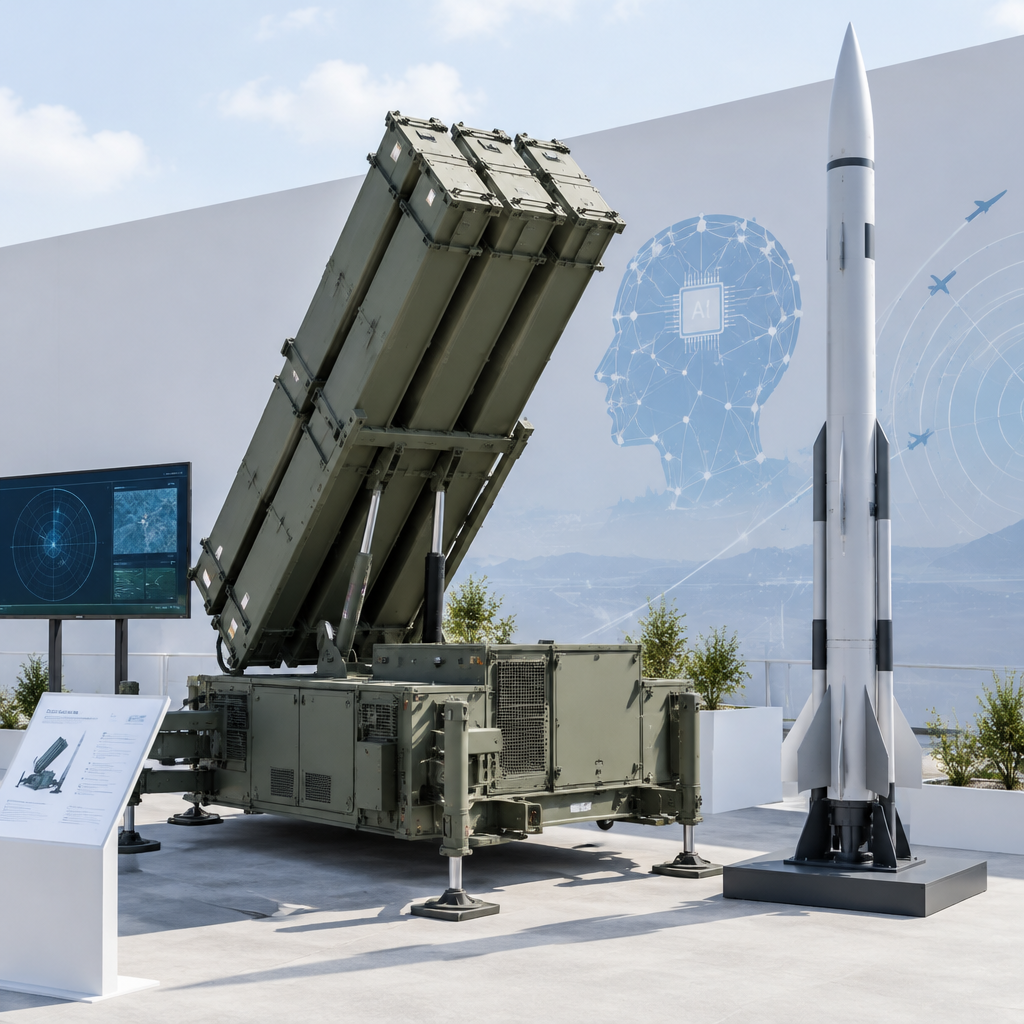
“Our AI links existing sensors and effectors in real time and adds our interceptors, AD-1 and AD-2,” Helsing President and co‑Founder Niklas Köhler said in the announcement.
Contra: an AI-controlled autonomous air defence system
In Washington, Helsing — described in the company release as Germany’s highest‑profile defense tech startup — unveiled Contra, which the firm bills as an “AI-controlled autonomous air defence system designed to protect countries from scaled drone and missile attacks.” Helsing says Contra can integrate with existing air‑defence interceptors and counter‑drone systems and that the package is intended to protect against large, simultaneous attacks.
AD‑1 Inferno and AD‑2 Ambush: two new container‑launched interceptors
Alongside Contra, Helsing introduced two interceptor designs intended to be deployed from containers. The AD‑1 Inferno is jet‑powered and, according to the release, “capable of aerial loitering, swarming, and repeated re‑engagements.” The AD‑2 Ambush uses a solid‑rocket motor, can reach Mach 2.5, and has a stated range of 20 kilometres (around 12.5 miles). Helsing said the two designs complement the Contra concept and that customers might procure the missiles together with the system.

Audit-ready is a season. It shouldn't be.
Evidence in spreadsheets, controls drifting between audits, frameworks multiplying on flat headcount. Nubivance runs continuous compliance on Rapid7 Cyber GRC - SOC 2, HIPAA, ISO 27001, PCI, CMMC.
End the scrambleIntegration, autonomy, and claimed scale
Helsing’s announcement emphasizes software‑first integration: the company says its AI links “existing sensors and effectors in real time” and adds the company’s own interceptors to the sensor‑effector picture. The firm claims the combined system can track and engage “hundreds or thousands of drone and missile threats at the same time” and that the combination of jet and rocket propulsion, a “low‑cost all‑weather radar seeker,” and dual supply chains enables “autonomous fire superiority up to ten kilometres high — affordable and at industrial scale.”
Pricing claims, supply chains, and the NATO context
Helsing declined to provide hard cost estimates for AD‑1 and AD‑2, saying only that the price will “significantly [undercut] those of existing missile interceptors.” The company also highlighted “two independent European supply chains” as part of its pitch. The announcement landed amid what the release called “a major push across NATO nations for lower‑cost interceptors,” noting that Anduril, Lockheed Martin and CHAOS Industries have all rolled out options “in the last few weeks.”
What this means for technologists, procurement leaders, and NATO planners
- Technologists and security teams: Helsing’s emphasis on real‑time AI linking of sensors and effectors frames the project as an integration and software challenge as much as a hardware one. Teams charged with testing autonomous engagement algorithms will be watching for demonstrations of the claimed multi‑threat tracking and engagement scale.
- Procurement leaders and affected enterprises: Helsing’s refusal to provide hard cost figures, paired with the claim that AD‑1 and AD‑2 will “significantly [undercut] those of existing missile interceptors,” makes pricing and lifecycle cost the central criteria for any acquisition decision. The container‑launched form factor and the company’s focus on European supply chains will figure prominently in procurement assessments.
- NATO planners and defence buyers: with multiple vendors — including Anduril, Lockheed Martin, CHAOS Industries and now Helsing — marketing lower‑cost interceptor options, planners will need to weigh vendor claims about integration, demonstrated performance, and interoperability against budgetary pressure to field cheaper interceptors quickly.
Helsing’s announcement pairs ambitious performance claims with few public specifics on cost and field‑tested performance. The company has positioned Contra and the AD‑1/AD‑2 interceptors as a software‑driven, containerized approach to a pressing procurement need — lower‑cost interceptors that can operate in large numbers against swarming threats. Whether the launch will translate into orders, demonstrations, and deployable capabilities will depend on the data Helsing produces on cost, integration, and operational validation.
Original reporting: https://breakingdefense.com/2026/10/helsing-rolls-out-contra-air-defense-design-plus-two-new-inteceptors/