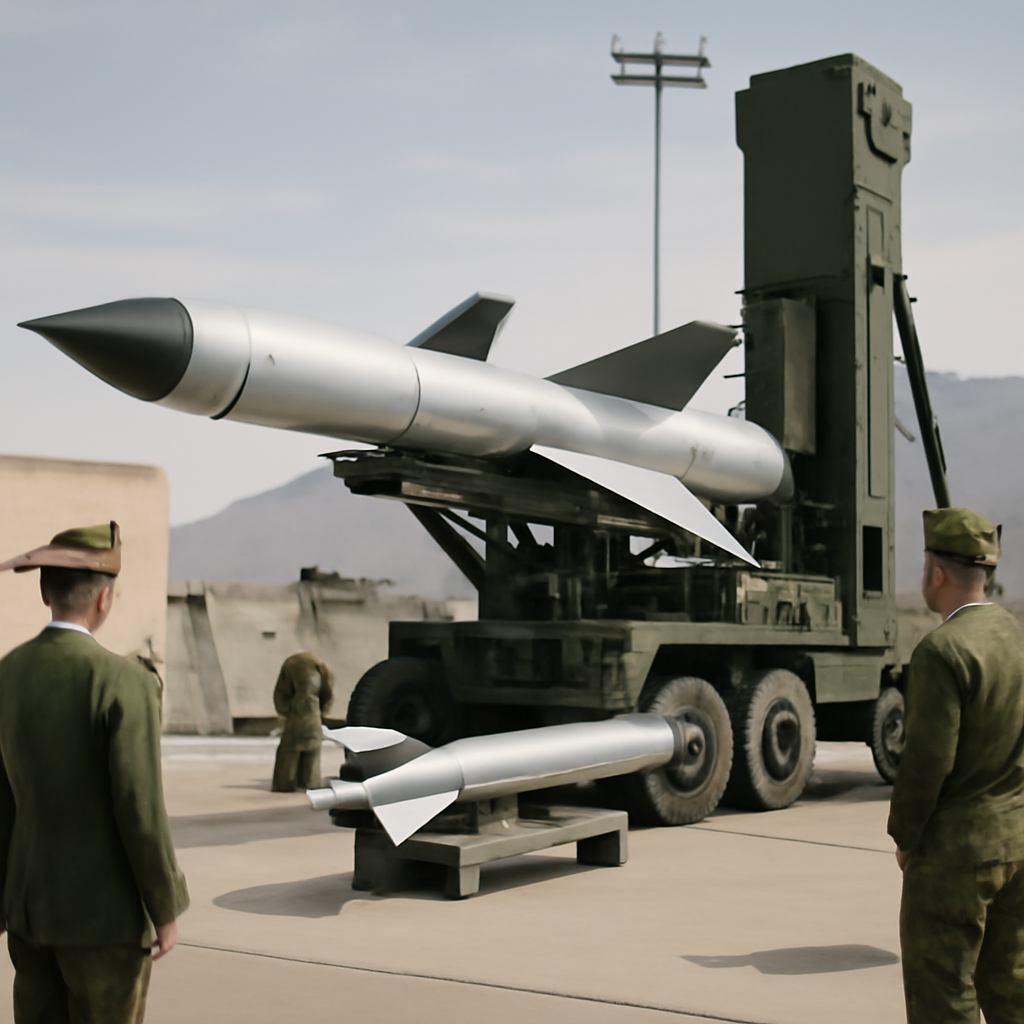
"is capable of engaging targets at extended ranges with high precision and lethality," the Inter Services Public Relations (ISPR) said after a launch on 06 October — language that framed Pakistan’s public account of a new extended‑range variant of the Fatah-4 ground‑launched cruise missile.
The 06 October launch and ISPR’s claims
On 06 October, Pakistan test‑fired the Fatah‑4‑ER, described by ISPR as an extended‑range version of the Fatah‑4 ground‑launched cruise missile (GLCM). ISPR said the test “validated additional technical parameters of various sub‑systems incorporated for improved accuracy and enhanced survivability,” but did not disclose the missile’s range, dimensions, weight, or warhead mass.
Visible design changes: folding wings and production implications
Launch footage released after the test shows a larger missile with folding wings mounted outside the fuselage. That external, foldable stabilizer arrangement differs from earlier Babur‑line designs in which folding surfaces stowed inside the fuselage, and the source material interprets this as a deliberate simplification. Analysts cited in the report say external stabilizers indicate a design trade‑off that can reduce manufacturing complexity, potentially lower unit cost, and free internal volume for fuel — factors that point toward greater range and faster, cheaper production.

The cyber insurance questionnaire just landed. Now what?
SOC 2, HIPAA, insurance renewals - someone has to own security strategy. Nubivance provides fractional CISO leadership without the full-time salary.
Get a security leadLineage and baseline Fatah‑4 specifications
The Fatah‑4 family is derived from the Babur series. The baseline Fatah‑4 — developed by the National Engineering and Scientific Commission (NESCOM) and fielded by the Pakistan Army Rocket Force Command (ARFC) — has a stated range of 750 km, weighs 1,530 kg, measures 7.5 m in length with a 0.5 m diameter, and cruises at Mach 0.7. The ARFC states the Fatah‑4 carries a 330 kg blast‑fragmentation warhead and can achieve accuracy within a 5 m circular error probable (CEP). The Fatah‑4 and its extended‑range variant are subsonic cruise platforms intended as heavier conventional strike effectors rather than strategic weapons.
Scalability, commonality, and the wider family of effectors
NESCOM’s approach emphasizes a standardized core platform that can be adapted for multiple roles across services. The Fatah‑4 and the Harbah NG (an anti‑ship cruise missile counterpart) are closely derived from the Babur line, and NESCOM has pursued standardization to spread overhead costs across variants and services. The same analysis points to a broader doctrine that pairs larger subsonic missiles like Fatah‑4/Fatah‑4‑ER with smaller, low‑cost cruise missiles and loitering munitions.
Examples cited include the Sarfarosh — a much smaller subsonic cruise missile with the same reported 750 km range but a total weight of 160 kg and a maximum warhead capacity of 30 kg — and other low‑cost cruise missile (LCCM) concepts, tailless delta loitering munitions, and one‑way attack (OWA) drones. The report describes how these systems could be used in mixed salvos: smaller designs acting as decoys or saturation assets while larger missiles attack selected targets.
What this means for the Pakistan Army, Pakistan Navy, and Pakistan Air Force
- Pakistan Army: The ARFC’s adoption of heavier subsonic effectors and the Fatah‑4‑ER’s simplified design suggest a push for scalable, higher‑volume strike options that balance warhead weight and range; production economy and platform standardization are explicit objectives.
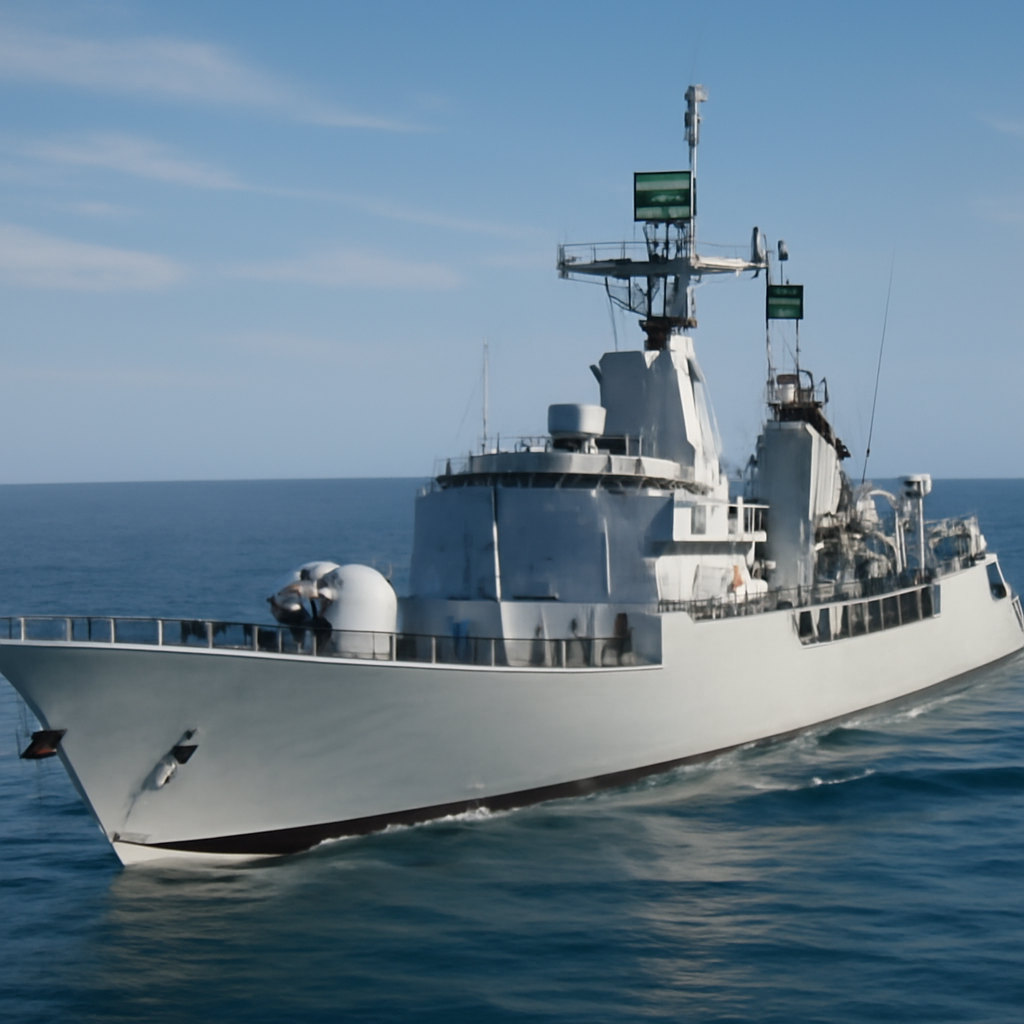
- Pakistan Navy: The report notes the possibility that standardization could enable extended‑range Harbah ASCM variants or coastal supersonic cruise missiles based on the Fatah‑4‑ER and Fatah‑3 families, implying naval adaptations of the Army’s design lineage.
- Pakistan Air Force: The PAF already deploys longer‑range air‑launched munitions such as the Taimur ALCM and the CM‑400AKG, but the report highlights NESCOM work on the Rasoob 250 ALCM (displayed at IDEAS 2024) and raises the prospect that future ALCM families could aim for 1,000+ km — a move that would allow the PAF to consider similar extended‑range air‑launched options.
The launch of the Fatah‑4‑ER marks another step in a documented trajectory: NESCOM and the Pakistan Army have been standardizing platforms, simplifying airframes, and pursuing a mix of large and small effectors since before May 2025 — a trend accelerated, the report says, by operational experience and by procurement of imaging satellites (three electro‑optical, one SAR, and one hyperspectral) that support space‑based targeting infrastructure. Yet ISPR’s public statement left basic performance details undisclosed, so while the external design choices visible on film point toward longer range and cheaper production, the precise specifications and operational role of the Fatah‑4‑ER remain unspecified.
Source: Quwa — Pakistan Test Fires New Fatah-4 ER Land-Attack Cruise Missile