"The maritime security environment in the North Arabian Sea and wider Indian Ocean has become increasingly complex and unpredictable," Admiral Naveed Ashraf told Quwa, framing a Pakistan Navy agenda that ties force modernization directly to the protection of commerce, deterrence and regional engagement.
Admiral Naveed Ashraf on operational priorities
Admiral Ashraf set out clear, near-term priorities: ensure maritime security and uninterrupted Sea Lines of Communication (SLOCs); maintain credible deterrence against threats from the sea; and contribute to regional stability through collaboration. He said the Pakistan Navy has maintained a continuous presence in the North Arabian Sea and Gulf of Oman under Operation Muhafiz‑ul‑Bahr, launched in March 2026, to reassure and assist national and international shipping. He also noted Pakistan’s leadership role in facilitating dialogue between the US and Iran as part of a broader diplomatic approach to stabilising the maritime environment.
Force development: multi-domain, networked and capability-led
Ashraf framed current procurement and doctrine as capability-driven rather than platform-driven. He described force development that spans surface, sub‑surface and air domains and emphasises maritime domain awareness, unmanned capabilities, cyber and space‑enabled support, and C4ISR integration. Doctrinally, the Navy is evolving toward multi‑domain operations to shorten decision timelines and provide flexible options across the spectrum of conflict. Indigenous technology absorption and sustained operational readiness feature as central objectives alongside acquisition.

Audit-ready is a season. It shouldn't be.
Evidence in spreadsheets, controls drifting between audits, frameworks multiplying on flat headcount. Nubivance runs continuous compliance on Rapid7 Cyber GRC - SOC 2, HIPAA, ISO 27001, PCI, CMMC.
End the scrambleSubsurface focus: Hangor-class, AIP and indigenous skills
The Hangor‑class programme is presented as a strategic multiplier: submarines equipped with Air Independent Propulsion (AIP), advanced weapons and sensors and stealth features are meant to increase endurance and operational reach. Crucially, Admiral Ashraf emphasised that submarine construction at Karachi Shipyard is strengthening indigenous skills and technology absorption in complex naval engineering. The Navy’s long‑term aim, he said, is to progressively build national capacity to construct, maintain and develop increasingly sophisticated underwater capabilities. He also foresees autonomous and uncrewed underwater systems gradually complementing conventional submarines where persistence and reduced risk are advantageous.
Surface and aviation: integration, Jinnah‑class and the Naval Air Arm
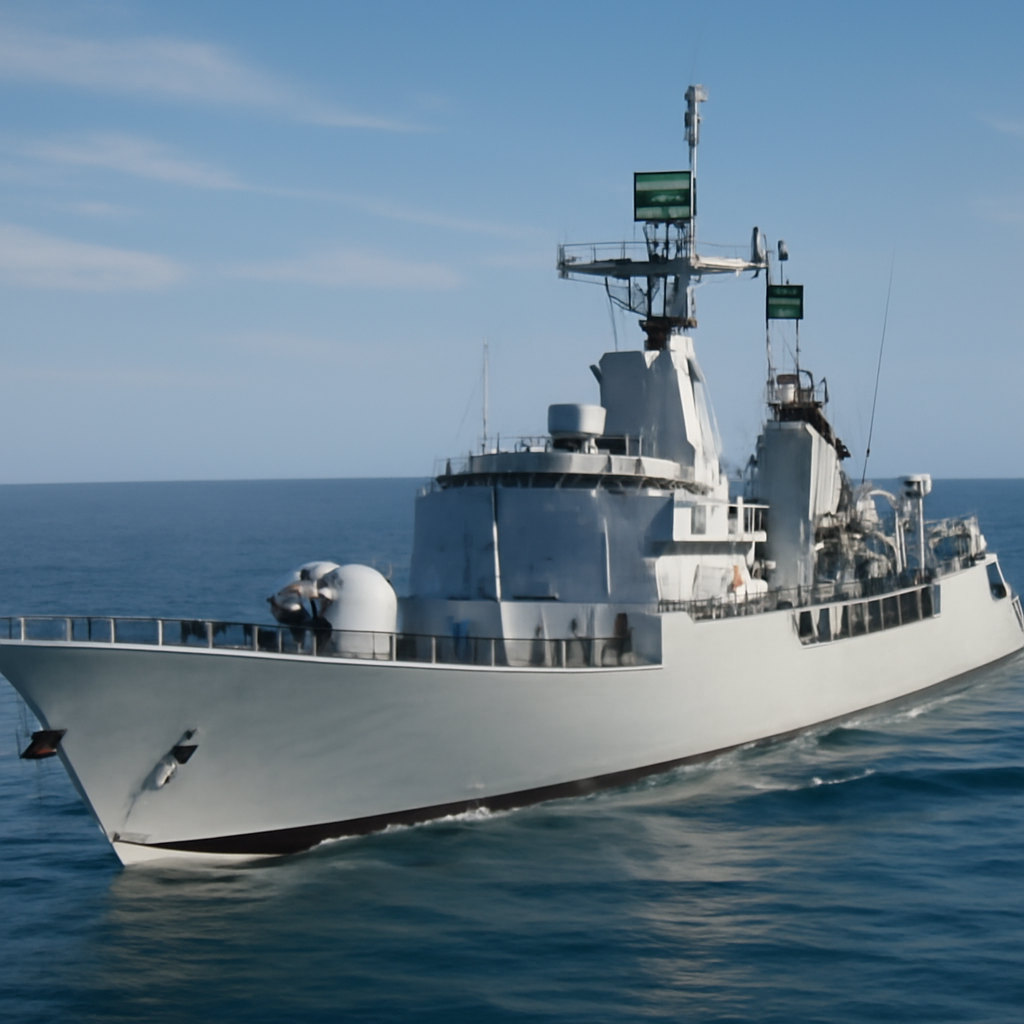
On the surface side, the Jinnah‑class frigate marks a step toward indigenous frigate‑sized design and construction, building on experience from the MILGEM programme. As Type‑054A/P, MILGEM and OPV inductions consolidate, Ashraf envisions a balanced, network‑enabled, multi‑mission surface force focused on integration of sensors, weapons, unmanned systems and data networks rather than simply fleet numbers.
Naval aviation is a parallel focus. The Sea Sultan LRMPA programme and induction of TECNAM Sentinel training/light aircraft are described as milestones in a wider plan to field a Naval Air Arm composed of long‑range maritime patrol aircraft, rotary platforms and unmanned systems. Ashraf highlighted manned–unmanned teaming, AI‑enabled sensor fusion, MESH networks and secure communications as the architecture for future naval aviation, and he expects closer work between the Naval R&D Institute/Platform Design Wing, national aerospace parks, local industry, academia and international partners to develop mission systems and autonomous technologies.
What this means for international partners, Pakistan’s shipbuilders, and naval personnel
- International partners: The Pakistan Navy signals openness to cooperation—through Exercise AMAN, AMAN Dialogue, PIMEC and the Joint Maritime Information Center—and seeks technology transfer and trusted joint ventures that build local capacity.
- Pakistan’s shipbuilders and industry: The Navy presents an invitation to foreign investment and public‑private partnership focused on transfer of technology, supply‑chain development and progressive indigenous design and maintenance capability, citing submarine and MILGEM construction at Karachi Shipyard under foreign transfer arrangements as precedent.
- Naval officers and sailors: Admiral Ashraf stressed people remain decisive; training and education are being adapted to produce professionally competent, technologically adept and intellectually agile personnel anchored in values he named as Faith, Character, Courage and Commitment.
Admiral Ashraf’s closing message framed the Navy’s trajectory in diplomatic as well as military terms: Pakistan Navy will "continue to be a reliable maritime partner, a contributor to regional peace and stability and a credible guardian of Pakistan’s interests at sea." He added a succinct principle for engagement — "We seek cooperation with all and confrontation with none but our commitment to the defence of Pakistan remains absolute." That combination of outward partnership and inward deterrence will shape how the Navy translates new platforms, domestic shipbuilding and networked systems into operational posture across the North Arabian Sea and beyond.