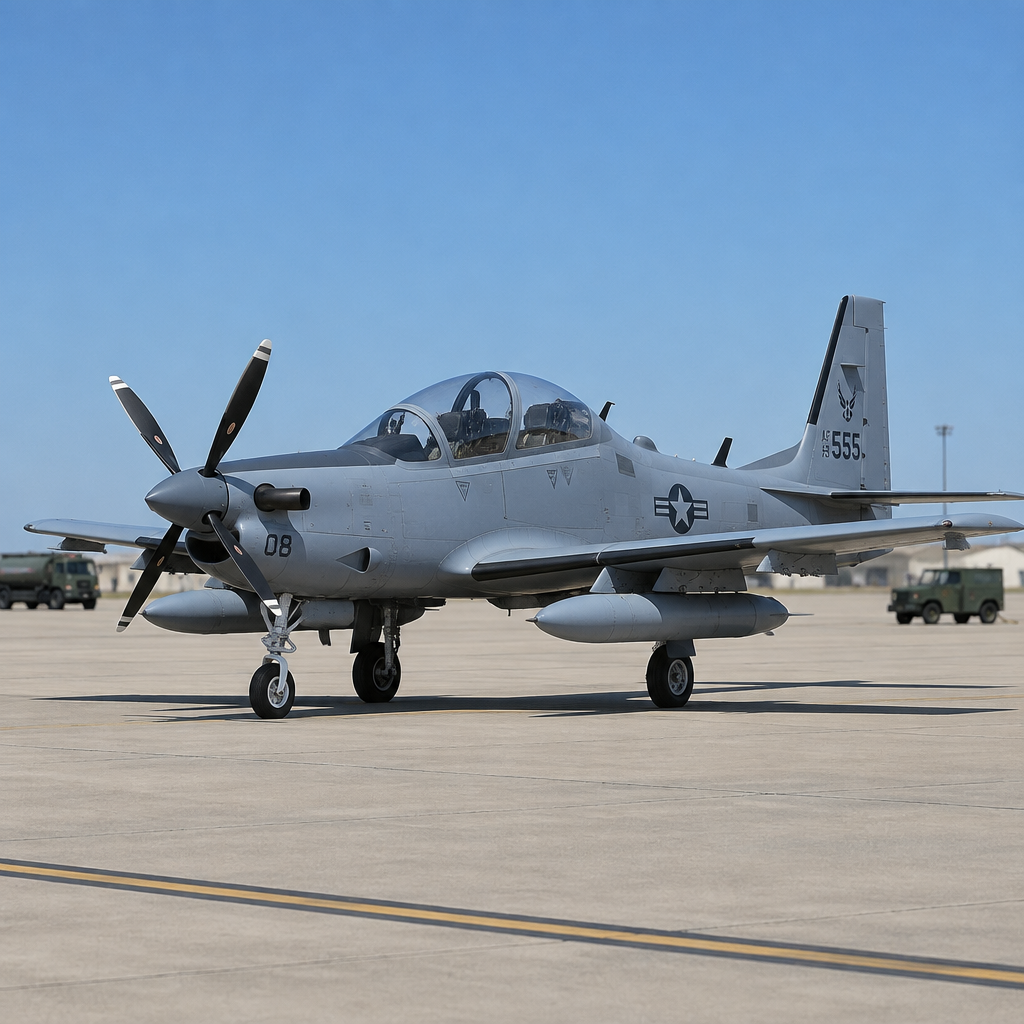
“The A-29 Super Tucano was thoroughly evaluated but did not meet the intended use for Air Force Test Pilot School,” a spokesperson for Edwards Air Force Base told Breaking Defense.
Edwards Air Force Base: test-pilot needs and divestment
Edwards Air Force Base evaluated three A-29 Super Tucanos for the Air Force Test Pilot School and concluded the turboprops would not meet the school's intended use. Those three aircraft have been “divested,” the Edwards spokesperson said, and officials are “exploring future options for a sustainable spin and mission systems aircraft” to fill the test pilot school's requirements. The statement to Breaking Defense frames the decision as a programmatic fit assessment rather than a temporary grounding.
The A-29’s path: from AFSOC to Edwards
The three Super Tucanos were originally procured by Air Force Special Operations Command (AFSOC). According to a 2024 Air Force release, AFSOC off‑loaded the aircraft “after mission requirements changed,” and the test pilot school at Edwards later acquired the turboprops for evaluation to see if they could meet various test-school needs.

This site is the portfolio.
OSINTSights runs on Cloudflare Workers, D1, R2, and Vectorize, with an AI pipeline on Hetzner ARM. Nubivance designed, built, and operates it. We do the same for clients.
See what we buildSole-source storage contract with SNC and the Oct. 29 notice
The fate of Edwards' A-29 fleet was disclosed in a notice posted by the Air Force on Oct. 29 that said the service plans to sole‑source a contract with SNC to safely store the aircraft. The notice adds that “These aircraft are not expected to return to flight for use by the Air Force.” The proposed contract was described as having a single base year with options for an additional two years of work.
Embraer, SNC, and the Jacksonville production line
Embraer manufactures the A-29 Super Tucano and assembles the aircraft at a production line in Jacksonville, Fla., where U.S. firm SNC installs mission equipment for U.S. customers and specific foreign military sales customers. Embraer officials have warned that the Jacksonville line could be at risk if sufficient demand does not materialize, though the company also operates a separate Super Tucano production facility in Brazil. Aviation Week had previously reported on the Air Force’s decision to retire the aircraft.
What this means for the Air Force Test Pilot School, Embraer/SNC, and allied customers
- Air Force Test Pilot School — The school will continue to seek “future options for a sustainable spin and mission systems aircraft,” indicating a search for an aircraft type that better matches its training and test requirements than the A-29.
- Embraer and SNC — Both manufacturers have a stake in continued demand: Embraer’s Jacksonville assembly line and SNC’s mission-equipment installations are linked to U.S. and foreign military sales. The planned sole-source storage and the Air Force’s finding that the aircraft will not return to flight may influence future commercial and production decisions.
- Allied and foreign military customers — While the U.S. Air Force itself “never bought the A-29 in significant numbers,” the service did acquire the aircraft for allies, including the Afghan armed forces prior to the Taliban takeover. Shifts in U.S. use and stockage of the platform may affect supply dynamics for customers that rely on U.S. industry and foreign military sales channels.
The record in public notices and service statements is straightforward: three A-29s evaluated at Edwards have been divested, a storage contract with SNC is planned, and the Test Pilot School is pursuing an alternative aircraft solution. The specific next step the Air Force has put forward is procurement of a “sustainable spin and mission systems aircraft” for the school; the Oct. 29 notice and the Edwards statement together make clear the Super Tucano will not fill that role for the U.S. test pilot training mission.
Read the original report on Breaking Defense: https://breakingdefense.com/2026/11/air-force-divests-its-few-a-29s-explores-future-options/