General Atomics has flight-tested sonobuoy dispensing system (SDS) pods as part of a broader demonstration of anti-submarine warfare (ASW) capabilities for the MQ-9B SeaGuardian.
General Atomics positions the MQ-9B SeaGuardian as a maritime partner
General Atomics is promoting the MQ-9B SeaGuardian unmanned aerial system (UAS) as an "ideal partner" for the U.S. Navy’s P-8 Poseidon, arguing the platform brings expanding anti-surface warfare, anti-submarine warfare and situational-awareness capabilities to long-endurance over-water missions. Company materials and demonstrations emphasize the SeaGuardian’s flexibility: it can either complement existing manned platforms or provide a complete solution on its own for many maritime tasks.
Sonobuoy dispensing and ASW demonstrations
Central to recent activity has been the flight-test of sonobuoy dispensing system (SDS) pods. Those tests form part of a broader ASW demonstration showing the SeaGuardian’s ability to deploy sonobuoys to listen for and track submarines. General Atomics highlighted the relevance of that capability for remote and strategically sensitive waters, specifically citing deep Pacific areas and the Arctic as operational environments where submerged threats can be both important and hard to reach.

This site is the portfolio.
OSINTSights runs on Cloudflare Workers, D1, R2, and Vectorize, with an AI pipeline on Hetzner ARM. Nubivance designed, built, and operates it. We do the same for clients.
See what we buildModular payloads, open architecture, and multi-mission sensing
The SeaGuardian is described as a modular-payload, open-architecture aircraft designed to carry a "huge range" of systems. General Atomics says those systems enable the UAS to sense and observe activity on land, at sea, in the air, and beneath the waves. In addition to acoustic sensing via sonobuoys, the platform is presented as capable of collecting signals intelligence and accepting "many specialized payloads" to fill other roles.
Weapons integration and broader mission roles
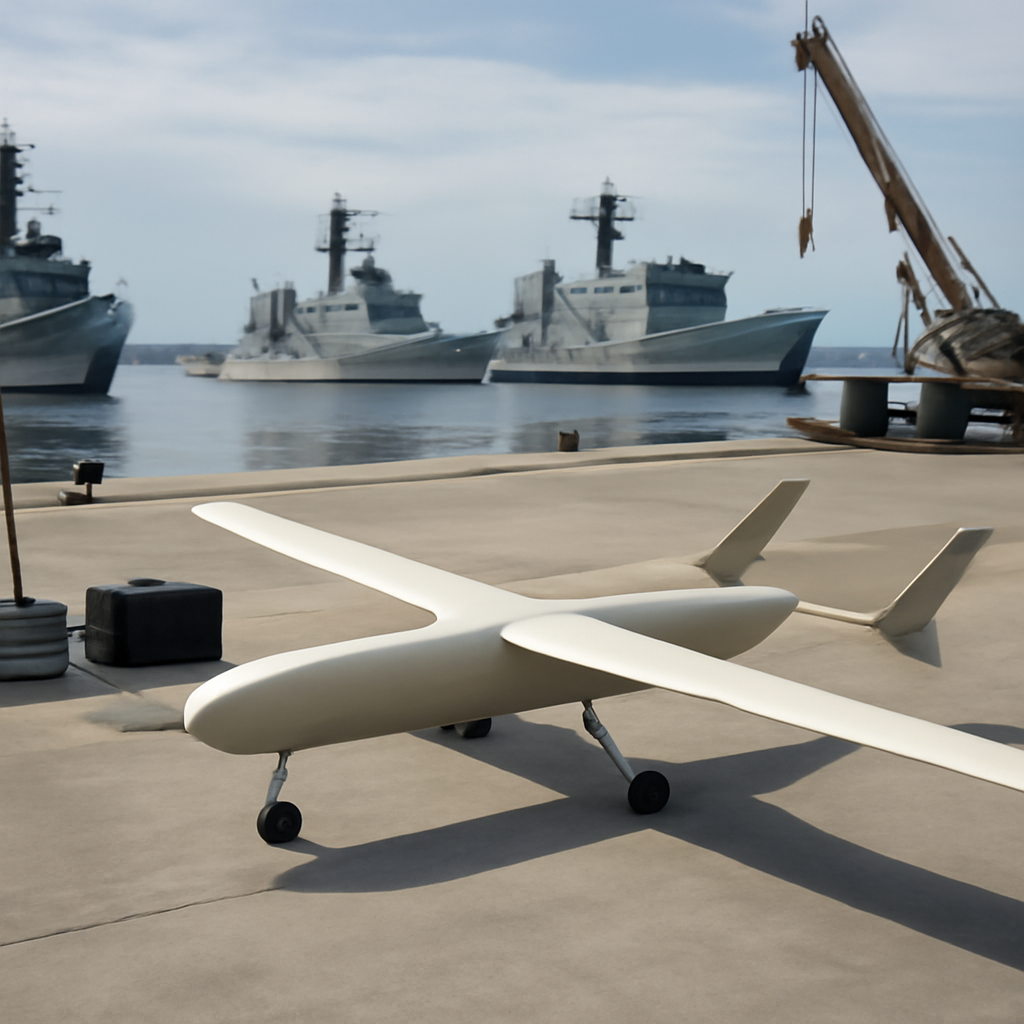
Beyond sensing and tracking, the SeaGuardian is presented as having strike ability: General Atomics lists strike roles among its capabilities and says long-range weapon integration is now planned. The company pairs that messaging with imagery of SeaGuardian configured with sonobuoy dispensers and sensors — an illustration of the dual focus on persistent surveillance and potential lethal engagement.
How technologists, policymakers, and procurement leaders should respond
- Technologists and security teams: Watch the open-architecture approach closely. The platform’s modularity and broad payload carriage — including signals-intelligence packages and sonobuoy dispensers — mean integration, data links, and sensor processing will be key technical challenges as well as operational enablers.
- Policymakers and regulators: The planned move toward long-range weapon integration and expanded ASW roles creates clear policy dimensions tied to rules of engagement and the balance between manned and unmanned maritime operations; those policy questions are implicit in the company’s stated ambitions.
- Procurement leaders and naval planners: The SeaGuardian’s pitch is explicit: it can complement P-8 operations or operate independently on long-endurance missions. That framing elevates choices about mixed force architectures, sustainment patterns for unmanned systems, and how sonobuoy-equipped UAS might be task-organized with manned maritime patrol assets.
TWZ’s Jamie Hunter discussed these developments with Doug Hardison of General Atomics at the Sea-Air-Space 2026 trade event, where the company laid out its progress and the logic behind pairing SeaGuardian with the P-8 Poseidon. The company’s public demonstrations, flight-tested SDS pods, and stated plans for weapon integration make clear the SeaGuardian program is moving from capability demonstration toward a broader operational pitch.
The questions that remain are concrete: how the modular payloads and open architecture will be integrated into existing command-and-control chains, how sonobuoy operations from an unmanned platform will be coordinated with manned ASW assets, and how long-range weapons will be brought into service without disrupting the SeaGuardian’s persistent surveillance roles. For now, General Atomics has shown the technical building blocks — SDS pods, sensor suites, and a modular airframe — and framed them as a companion to the P-8. The next steps will be in integration, doctrine, and procurement choices that put those pieces to work.
Source: The War Zone / TWZ — MQ-9B SeaGuardian Ready For Teaming With P-8 Poseidon