Shadows of Strategy: The Overlooked Role of Economic Intelligence in France’s Future
On a chilly evening in May 2012, as twilight settled over the Eiffel Tower, a gathering unfolded that would resonate through the halls of French economic and political strategy for years to come. Bernard Squarcini, then director of France’s internal security agency, laid out a vision for the nation’s intelligence apparatus—one that placed a significant emphasis on economic intelligence. Was this a mere footnote in an evening of political grandeur, or the dawn of a new paradigm in France’s approach to global competition?
The backdrop to Squarcini’s remarks was rich with history. France has long been a nation that balances its cultural heritage with an ambition to remain a major player on the global stage. However, as globalization accelerated and economic power shifted eastward, the need for an adaptive strategy became increasingly apparent. The rise of emerging economies like China and India has reshaped not just markets but the very fabric of international relations.
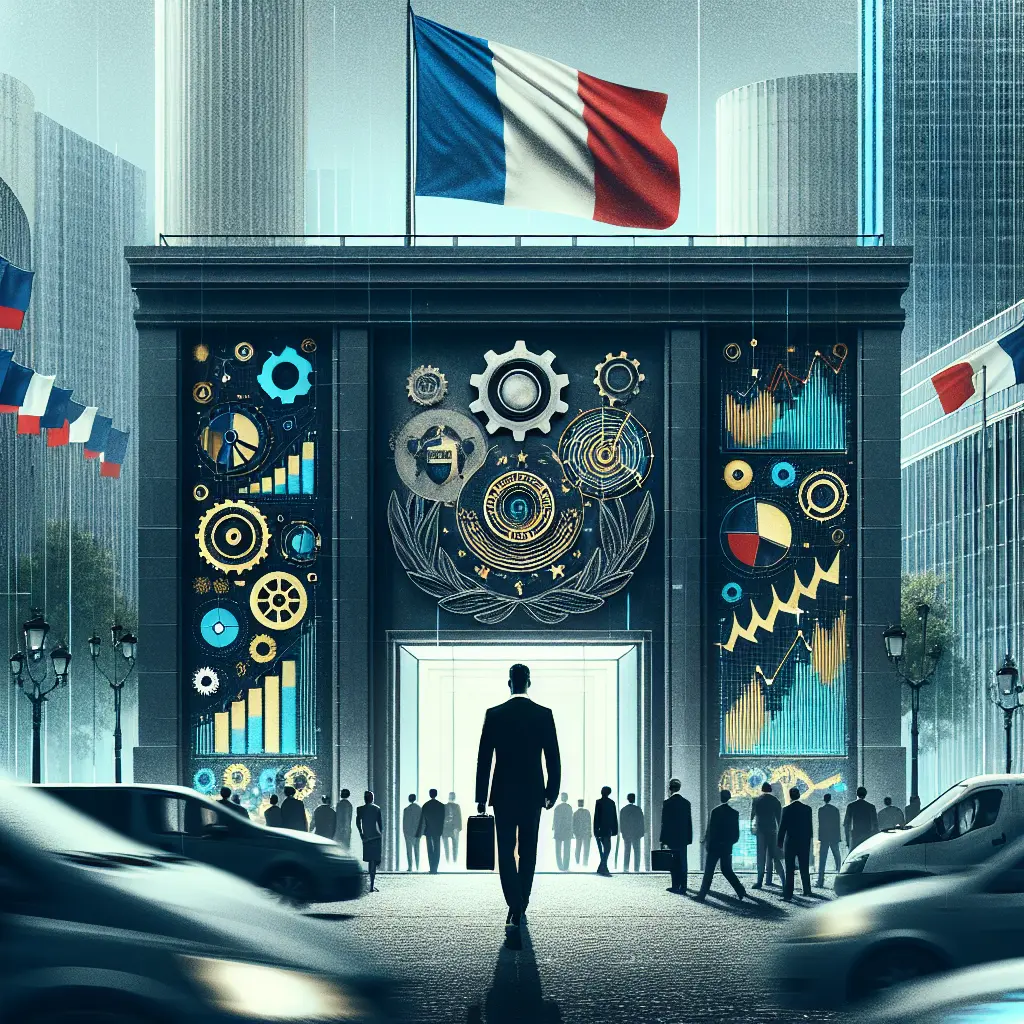
Economic intelligence—often relegated to the shadows compared to traditional military or political intelligence—has gained momentum as nations recognize its necessity for survival in a hyper-competitive world. From securing supply chains to protecting intellectual property, economic considerations now drive national security agendas. This shift has not only redefined how states engage with one another but also how they perceive threats and opportunities.
As we look toward 2023, this focus on economic intelligence is more pertinent than ever. Recent developments indicate that France is striving to recalibrate its priorities; however, questions linger about its efficacy and execution. In February 2023, French President Emmanuel Macron emphasized the importance of strengthening national economic capabilities during his state visit to India, highlighting the need for strategic partnerships that could bolster France’s technological prowess.
This renewed focus mirrors broader trends in Europe and beyond. With geopolitical tensions rising between major powers, particularly concerning technology access and supply chain vulnerabilities exacerbated by the COVID-19 pandemic, nations are re-evaluating their security frameworks through an economic lens.
So why does this matter? Economic intelligence is no longer merely about gleaning trade secrets; it encompasses comprehensive assessments of potential adversaries’ strengths and weaknesses in innovation, technology acquisition, and industrial capabilities. For example, advanced surveillance technologies that track supply chain shifts are not only tools for companies but also instruments for statecraft.
Experts agree that nations must adopt multi-faceted strategies integrating economic insights into traditional security models. According to Dr. Thomas Raines, a scholar at the Centre for Strategic Studies in Paris, “In today’s interconnected world, we can’t afford to think in silos anymore; economic strength is as critical as military readiness.” Such perspectives underscore a growing consensus among policymakers: understanding and leveraging economic dynamics can enhance national resilience against external pressures.
Looking ahead, observers should watch for continued evolution within France’s approach towards integrating economic intelligence into broader strategic frameworks. Potential shifts could include increased funding for research initiatives aimed at fostering innovation or enhanced collaboration between public institutions and private sector leaders to ensure that France remains competitive.
The question remains: will France successfully harness this strategic imperative before it falls too far behind? As policymakers grapple with balancing public resources amid competing domestic needs—education, healthcare—the challenge will be ensuring that investment in economic intelligence does not become an afterthought but rather a cornerstone of national policy.
Ultimately, the stakes are high. In an era where information reigns supreme and competition is measured not just by arms but by innovation capabilities and market influence, France stands at a crossroads. The capacity to navigate this landscape effectively could define its future as a global player—one way or another. As these discussions unfold behind closed doors—often away from public scrutiny—the implications will ripple through both commerce and diplomacy long after the shutters on today’s headlines have closed.