France’s Robotic Lifeline in Ukraine Heralds a New Chapter in Humanitarian Demining
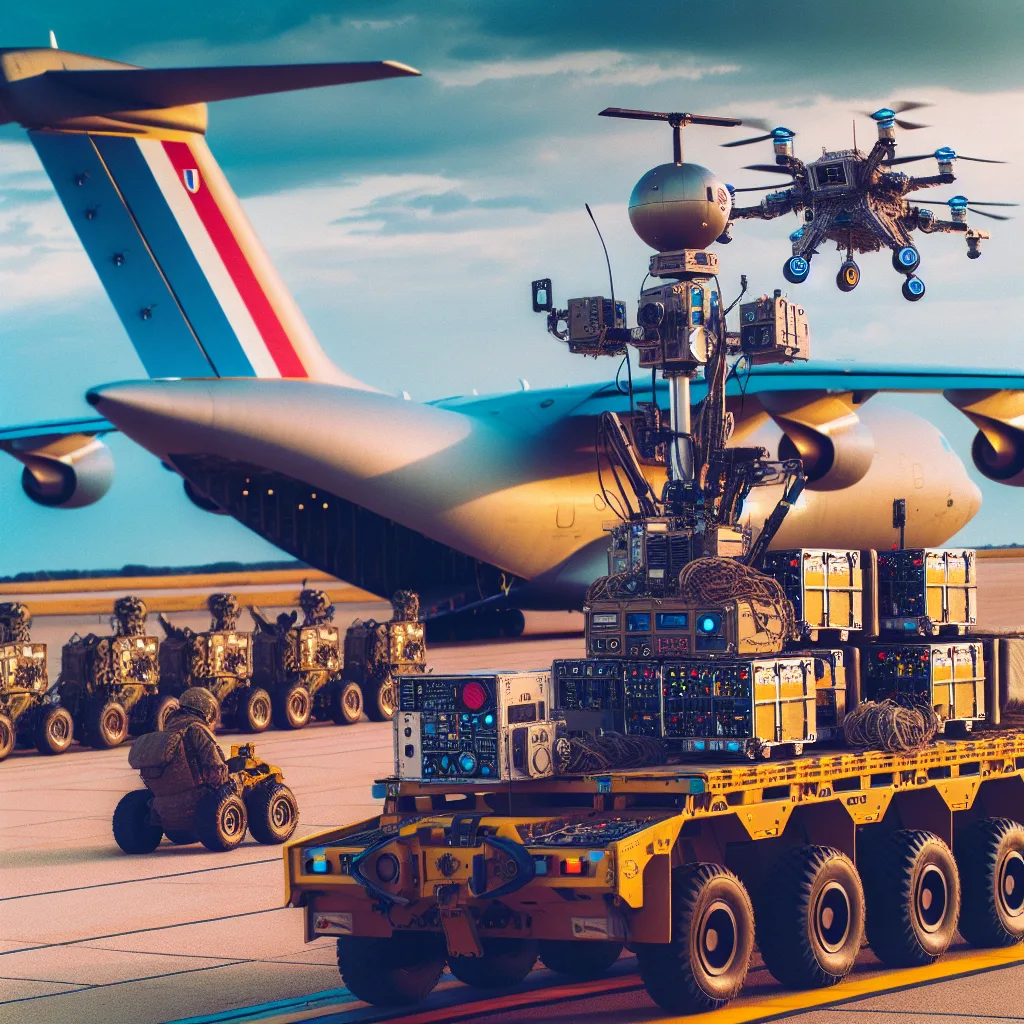
In a move that underscores the multifaceted nature of modern conflict support, France has arranged for the delivery of advanced robotic demining systems to Ukraine. These cutting‐edge unmanned ground systems—developed through a collaboration between Estonia’s Milrem Robotics and France’s CNIM Systèmes Industriels—promise to revolutionize explosive ordnance clearance in some of Ukraine’s most hard-hit regions. The six THeMIS-based Route Clearance Unmanned Systems (ROCUS) will soon be handed over to Ukraine’s State Emergency Service (SESU), a step that blends technological innovation with humanitarian pragmatism.
This initiative, which was first highlighted on Defence Blog, represents not only a significant stride in defense technology but also a deep commitment to preserving human life amid the lingering scars of conflict. By neutralizing potentially fatal remnants of warfare, these robotic systems may well pave the way for safer, more efficient demining operations—a necessity in the aftermath of protracted hostilities.
Historically, demining operations have been fraught with peril and painstaking manual labor. Human deminers have long risked their lives in the effort to clear bombed-out regions, and every incident of mine-related casualties leaves both a tragic memory and a strategic setback. With a legacy of conflict that has repeatedly necessitated large-scale demining—whether in Southeast Asia, the Balkans, or Africa—the introduction of robotic systems heralds a transformation in how post-conflict regions can be restored to safe, productive use.
The collaborative effort behind these robotic systems is itself a microcosm of broader transnational cooperation. Milrem Robotics of Estonia, a company renowned for its THeMIS platform, has built a reputation for designing versatile unmanned ground vehicles that operate in environments too dangerous for troops. Meanwhile, CNIM Systèmes Industriels, with its deep roots in French defense industry innovation, has contributed sophisticated engineering and logistical expertise. Together, these entities have created a system that is not only technologically advanced but also tailored to meet the unique challenges facing Ukraine today.
Recent developments in the conflict have increasingly underscored the importance of rapid and effective explosive ordnance clearance. In urban and rural settings alike, leftover munitions and improvised explosive devices (IEDs) can remain a constant, though invisible, threat long after active combat has subsided. Ukraine’s SESU, charged with managing the national emergency response, is tasked with mitigating these hazards so that communities might begin to recover and rebuild. The deployment of robotic systems like ROCUS stands as a vital upgrade to these efforts, reducing the reliance on human operators and expediting the clearance process.
What is particularly notable about the ROCUS technology is its capacity to operate in hazardous conditions without placing human lives directly in harm’s way. As with other unmanned systems employed in modern warfare—ranging from reconnaissance drones to bomb disposal robots—the critical question shifts from “How do we protect our soldiers?” to “How do we harness technology to protect our communities?” This shift not only reflects an evolution in military strategy but also in humanitarian policy. With a dual focus on disaster response and conflict mitigation, robotic demining systems represent an intersection where technology, international cooperation, and public safety converge.
At the heart of this initiative is the principle that innovation in defense technology should also serve humanitarian ends. Recent analyses by defense experts have highlighted that unmanned systems like ROCUS can significantly reduce the risk of secondary casualties. Indeed, the integration of robotic demining systems into Ukraine’s SESU operations is expected to yield a twofold benefit: protecting deminers from direct combat risks and accelerating the safe reopening of regions previously rendered dangerous by undisposed ordnance.
Experts in military technology, such as those from the International Institute for Strategic Studies (IISS), have noted that the convergence of robotics and defense is setting new standards for both warfare and humanitarian intervention. A report from the IISS indicated that the automation of demining tasks is long overdue, aligning with a broader shift towards unmanned systems capable of handling various high-risk tasks. Such evaluations reinforce the significance of the French-financed project not merely as a tactical enhancement but as a blueprint for future conflict recovery operations.
Moreover, the deployment of ROCUS in Ukraine comes at a crucial time. While the immediate priority remains the stabilization of conflict zones, the longer-term objective is the safe, systematic removal of lingering explosives. The approach taken by France and its partners is emblematic of a modern strategy in which defense dollars support initiatives that prioritize civilian safety and the restoration of normalcy in post-conflict regions. By investing in a technology that benefits public health and safety directly, France is also signaling a commitment to the principles of humanitarian practice and responsible technological integration.
Stakeholders from various sectors have taken note of this development. Representatives of Ukraine’s SESU have underscored the potential impact of robotic demining on their operational capabilities. In official communications, Ukrainian authorities have stressed that innovations like ROCUS not only mitigate immediate risks but also enhance long-term security and stability. In a conflict that has often involved external assistance—from military hardware to logistical support—the provision of robotic demining systems marks a distinct shift toward high-tech, precision support that addresses one of the most dangerous legacies of war.
Beyond the battlefield, the implications of this initiative extend to areas such as economic recovery and community resilience. Unexploded ordnance has long been a deterrent to both local economic activity and the broader process of reconstruction in previously contested zones. In regions where agriculture, industry, and everyday life have been upended by the omnipresent threat of hidden explosives, the promise of rapid and safe demining offers a pathway to economic revitalization. Local businesses, farmers, and community leaders are now better equipped to envisage a future free from the specter of past conflicts.
Several key factors illustrate why this development holds particular significance:
- Human Safety: The removal of explosive ordnance directly decreases the risk to civilians and emergency responders.
- Operational Efficiency: Robotic systems can work continuously and in hazardous conditions, enhancing overall demining efficiency.
- Economic Recovery: Clearing land enables rebuilding efforts and the resumption of economic activities in affected areas.
- International Cooperation: The project exemplifies how cross-border partnerships can yield transformative technologies that support both military and humanitarian objectives.
In placing its trust in unmanned systems, the French government is aligning with a growing global trend that sees technology as a decisive factor in both defense and disaster management. The French approach not only reflects advancements made on the industrial front but also offers a model for other nations grappling with the long-term consequences of conflict. With public and private investments converging around initiatives like the ROCUS system, there is the promise of a safer, more secure future for communities emerging from the shadows of war.
Looking ahead, one might reasonably expect that the success of these robotic demining systems in Ukraine could influence future policies and operational strategies elsewhere. As defense consultants, policy advisors, and humanitarian organizations observe the deployment and performance of ROCUS, the lessons learned may well lead to increased adoption of similar technologies in other conflict zones. Moreover, the successful integration of such systems could prompt a rethinking of demining protocols worldwide, with more emphasis on unmanned, technology-driven methods that minimize human exposure to danger.
The broader geopolitical implications of this development should not be understated. In an era marked by hybrid warfare and increasingly asymmetrical conflicts, the intersection of advanced robotics and humanitarian demining strategies offers new ways to mitigate the erosion of civil society in war-torn regions. France’s decision to fund and deploy these systems is a statement in favor of innovative crisis management—a signal that conflict recovery is not merely about resolving disputes, but also about securing a safer, more prosperous environment for all citizens caught in the crossfire.
As with any technological advancement, there are challenges ahead. Ensuring that the systems can operate effectively in diverse terrain, integrating them seamlessly with existing protocols, and managing the potential risks of technological reliance will all require continuous scrutiny and adaptive strategies. Nonetheless, by anchoring the initiative in proven expertise from Milrem Robotics and CNIM Systèmes Industriels, and by embedding the technology within the structured framework of Ukraine’s SESU, these challenges appear surmountable.
Ultimately, the introduction of robotic demining systems in Ukraine is more than a tactical upgrade—it is a harbinger of a transformative approach to conflict recovery. It reflects a broader shift, where modern warfare and humanitarian action meet at the crossroads of technology and innovation. As Ukraine continues to navigate the complex interplay of defense, recovery, and international support, the robust performance of systems like ROCUS will likely serve as both a benchmark for success and a roadmap for future endeavors in global demining operations.
In the end, the essence of this initiative rests on a timeless principle: the protection of human life. As communities look to rebuild and reimagine their futures, solutions that marry advanced technology with humanitarian purpose offer a beacon of hope. While the scars of war remain, the promise of safer lands—where the threat of hidden explosives is systematically eradicated—is a testament to the enduring human spirit and the relentless pursuit of progress. One is left to wonder: as technology continues to reshape the battlefields of today, might it also redefine the pathways to peace and recovery tomorrow?