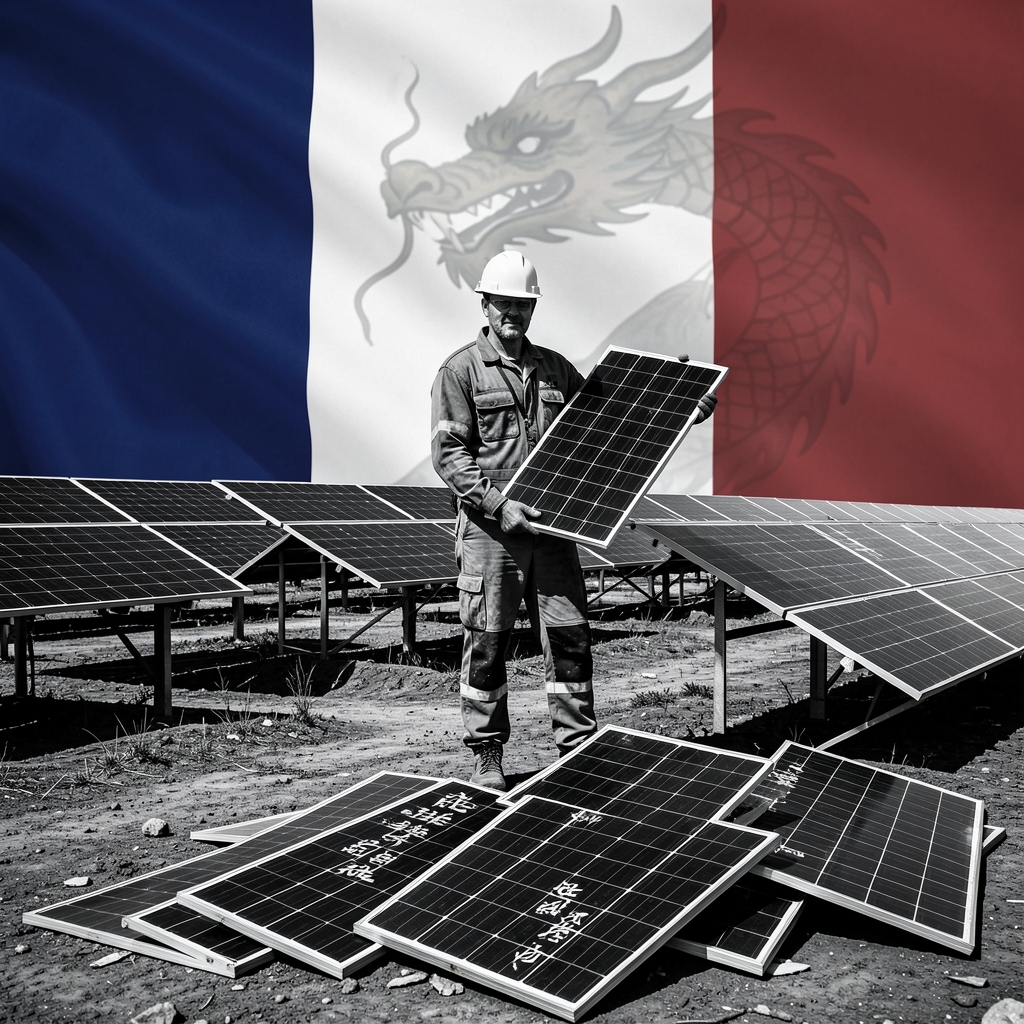
Can a national clean‑energy push be steered by both trade fences and cyber rules? France appears to be testing that idea as it prepares a government‑backed slate of new solar energy projects and explicitly moves to bar Chinese photovoltaic components — a policy move the government has framed with a blunt "non."
What Paris is doing
France is combining protectionist measures with new cybersecurity requirements to exclude Chinese-made photovoltaic components from a planned set of government-backed solar energy projects. The country’s approach, as reported, pairs market access restrictions with technical and security conditions intended to keep certain Chinese firms out of projects that benefit from state support.
The rationale on cybersecurity
The policy reflects concern about the implications of Chinese cybersecurity laws. Those laws, the reporting notes, require firms subject to them to share key information and to generally cooperate with Beijing. That legal framework in China is cited in Paris as a reason to raise cybersecurity‑based barriers to participation by Chinese firms in state-supported solar installations.

This site is the portfolio.
OSINTSights runs on Cloudflare Workers, D1, R2, and Vectorize, with an AI pipeline on Hetzner ARM. Nubivance designed, built, and operates it. We do the same for clients.
See what we buildWhy the choice matters
France’s dual strategy — protectionism plus cybersecurity prerequisites — turns a question about sourcing solar hardware into a broader policy decision that links national industrial policy to information‑security assessments. For a government preparing to underwrite new projects, the decision shapes procurement choices, supplier pools and the technical requirements that vendors must meet. It also signals that cybersecurity considerations tied to foreign law can be decisive in determining which companies may participate in publicly supported energy infrastructure.
Perspectives and tradeoffs
From one angle, policymakers backing the move can argue they are aligning procurement with national‑security risk assessments tied to foreign legal obligations. From another, the measures carry familiar tradeoffs: protectionist rules narrow the set of available suppliers and may influence project timelines and costs; cybersecurity requirements increase the technical scrutiny and compliance burden on vendors. The reporting frames the choice as a deliberate attempt to keep Chinese firms out — a policy posture that reframes how industrial policy and cyber policy intersect in energy‑sector procurement.
The French government’s posture raises a practical question for project implementers and for the companies that would supply equipment: how to meet both the commercial and the cybersecurity conditions set by a state that is explicitly using both levers to shape its renewables rollout.
As France moves to back new solar projects while tightening the door to certain foreign suppliers, the core tension remains: can state actors secure clean energy goals while also managing the cyber‑legal nexus that accompanies global supply chains — and what will that mean for who builds Europe’s next generation of renewable infrastructure?
https://www.govinfosecurity.com/france-limits-chinese-made-solar-energy-components-a-31369