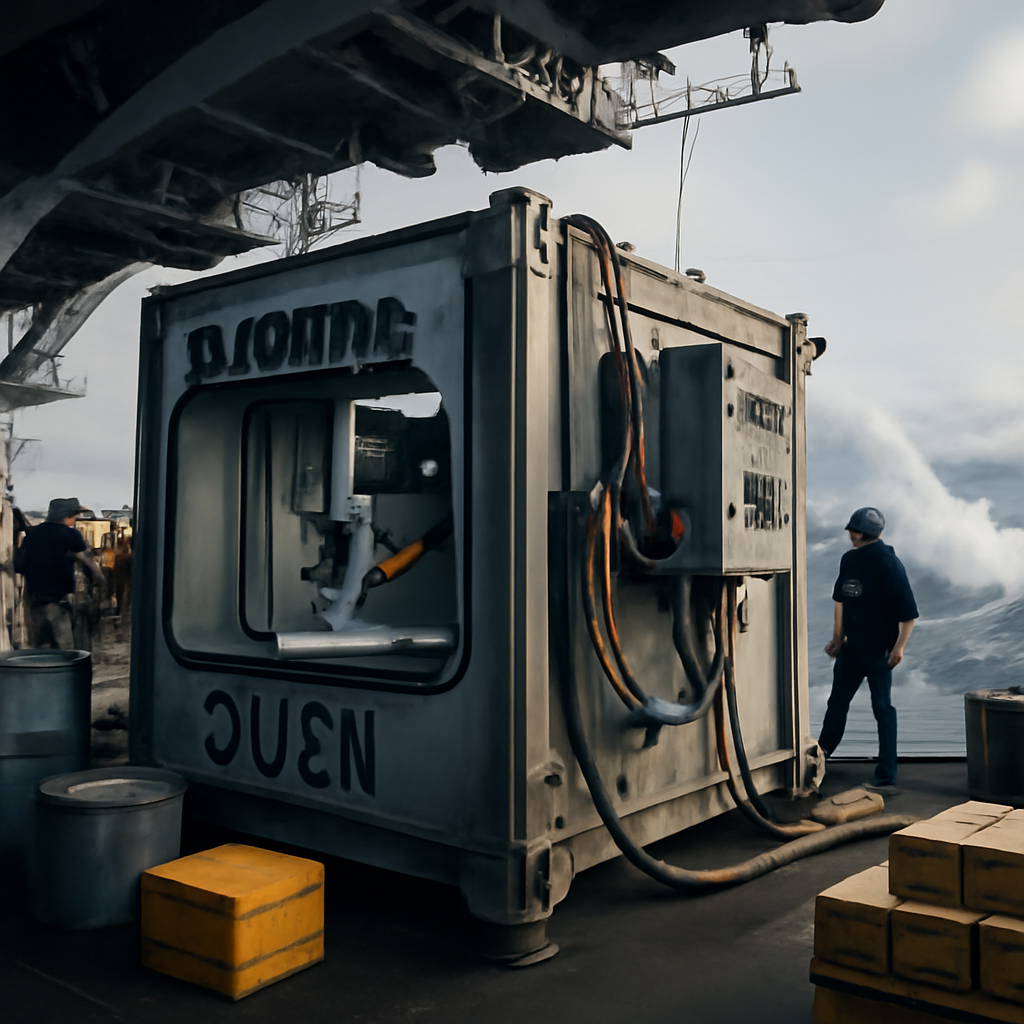
"We were told it was the roughest water off the California coast in the last five years," Firestorm CEO Dan Magy told Defense One, describing a sea trial that the company says did not stop it from printing "thousands" of unique parts aboard the USS Essex en route to the Rim of the Pacific exercise.
Firestorm Labs’ xCell unit and a sea trial on USS Essex
Firestorm Labs deployed an xCell additive manufacturing unit aboard the amphibious assault ship USS Essex while steaming to the Rim of the Pacific (RIMPAC) exercise. The xCell, the company said, is composed of two 20-foot containers designed to be transportable and "go anywhere." Despite the ship pitching through Sea State 5, Firestorm reported producing thousands of parts during the transit.
Parts printed at sea: drones, rotor stops and prosthetic-grade nylon
During a tour of the xCell unit, Duane Blank, Firestorm's field operations manager, showed parts made at sea and described a range of items printed in the shipboard environment. Those included stops used to protect Apache helicopter rotors from scraping the ship’s non‑skid coating. Blank said the nylon composite the company uses is suitable for "everything within the entire spectrum of warfare," citing use cases from prosthetics to drones to humanitarian assistance and disaster relief.
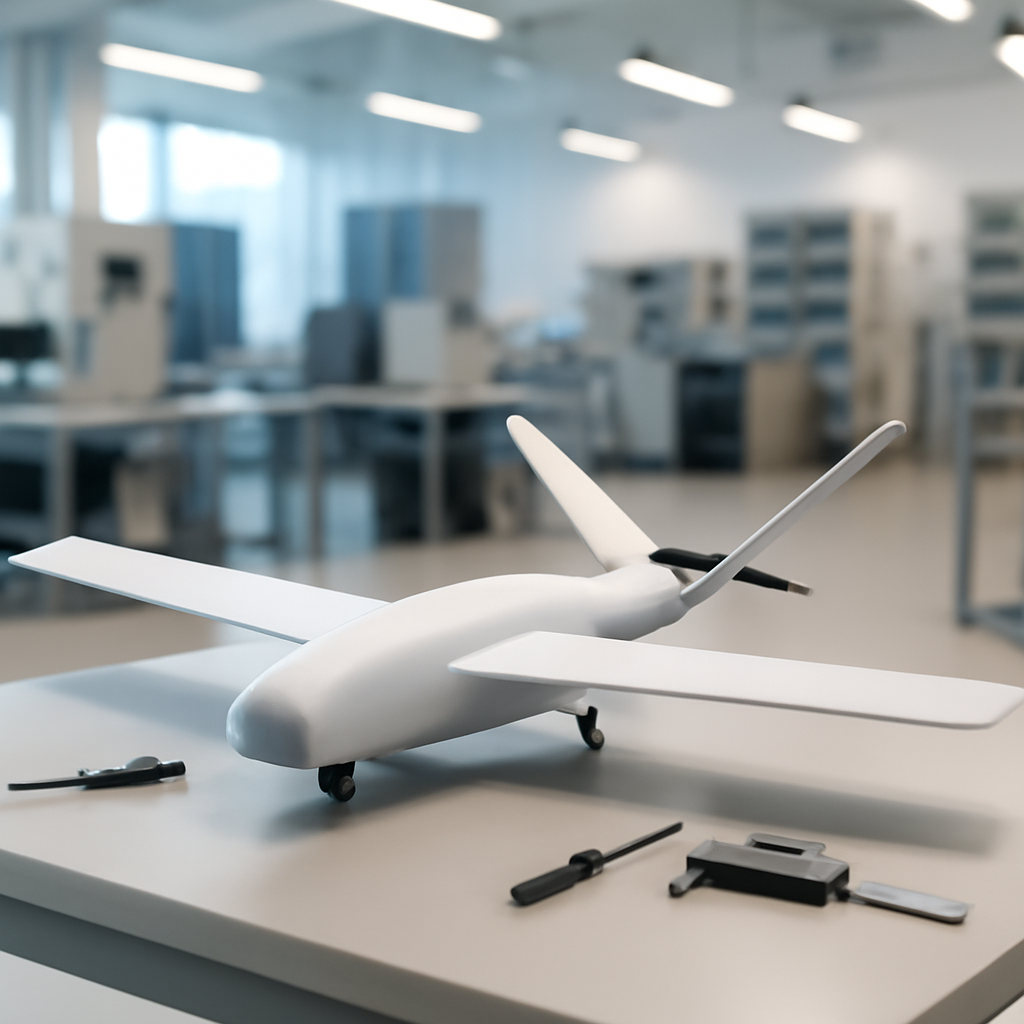
- A dozen Squall first-person-view (FPV) drones were printed during the voyage and later employed as adversary aircraft in a counter‑drone exercise at RIMPAC, Firestorm said.
- Other printed items demonstrated included rotor protection stops and other small parts intended for maintenance and rapid iteration at the point of need.

This site is the portfolio.
OSINTSights runs on Cloudflare Workers, D1, R2, and Vectorize, with an AI pipeline on Hetzner ARM. Nubivance designed, built, and operates it. We do the same for clients.
See what we buildHP partnership and multi‑jet fusion resilience
Firestorm said it has an exclusive arrangement with HP and uses HP's multi‑jet fusion 3D printing technology aboard the xCell. Magy emphasized that the company found the systems "and the machines are quite resilient" in rough seas, presenting expeditionary manufacturing as a potential logistics option when conventional supply chains are contested or delayed.
Claims about contested logistics and sustainment challenges
Magy framed the work as addressing what he described as a need to "rethink warfare from the ground up" in contested environments. He pointed to recent events in Ukraine and Iran and warned that blockades can disrupt supply chains and commodity prices. He also referenced a concentrated global manufacturing base, saying there are places "like the South China Sea, where 70 percent of the things we all buy in the world are produced."
Magy told Defense One that sustainment has become a central concern for Firestorm's customers. He quoted service members' frustrations with repair timelines: "It's great if you make it in a factory in Alabama or California or Texas. What happens if the thing breaks on the battlefield? I have to put it in a box now for four months." He described sustainment as increasingly important because legacy systems sometimes lack available supply chains, particularly when parts are needed in locations such as Okinawa or Bahrain.
What this means for ship crews, procurement leaders, and forward‑deployed maintainers
- Ship crews and forward-deployed maintainers: Firestorm's demonstration shows a capability to produce repairs and mission equipment at sea, which could reduce wait times for small parts and consumables when access to shore facilities is limited.
- Procurement leaders and sustainment planners: The xCell is presented as a mobile manufacturing option that might substitute for or augment traditional supply chains for legacy systems and attritable platforms such as drones, raising questions about contracts, inventory policy, and quality assurance for printed parts.
- Aircrews and drone operators: The company demonstrated a direct operational use case by printing a dozen Squall FPV drones that were subsequently used as adversary aircraft in an exercise, illustrating rapid iteration and local provisioning for training and counter‑drone needs.
Firestorm casts the xCell as an "expeditionary manufacturing" response to contested logistics and legacy supply shortfalls, demonstrating that multi‑jet fusion printers can operate while a ship is rolling and pitching. Whether portable, containerized additive manufacturing will scale to sustained deployments and meet oversight and qualification needs for safety‑critical parts in locations such as Okinawa or Bahrain is left as the next practical question from the trial.