That sentence, spoken by the LEXSO chief, captures the central challenge outlined in the reporting: protecting fixed facilities today is no longer a matter of fences, guards and firearms alone. Instead, defenders must contend with cheap, maneuverable unmanned aircraft systems, AI-accelerated cyberattacks, and the indirect targeting of third‑party infrastructure that a facility depends on.
Jason Rahimitabar on multi‑domain threats
Rahimitabar frames the problem as multi‑domain and democratized: “It is multi-domain, it is air, land, sea, space, cyber, and it is now more easily accessible to our adversaries.” The consequence, he argues, is that threats no longer present from a single, predictable direction or actor. Defenders must be able to detect and respond across domains, and to do so quickly enough that a blip on a sensor can be turned into an informed action.
The economics: $50 drones vs. $15,000–$4 million intercepts
Two concrete numbers in the reporting explain why this problem is stubborn. Readily available drones can cost as little as $50, while the munitions or effectors used to shoot them down can range from “anywhere from $15,000, up to $4 million per round,” Rahimitabar said. That mismatch creates an economic asymmetry: waves of cheap, expendable drones can be used to overwhelm defenses, forcing operators to choose between costly countermeasures and accepting risk. A recent overflight at Barksdale Air Force Base — multiple drone incidents with no reported damage — is cited as an example that even domestic facilities face the same exposure.

Audit-ready is a season. It shouldn't be.
Evidence in spreadsheets, controls drifting between audits, frameworks multiplying on flat headcount. Nubivance runs continuous compliance on Rapid7 Cyber GRC - SOC 2, HIPAA, ISO 27001, PCI, CMMC.
End the scrambleLEXSO’s technical approach: sensor integration, AI, and a single pane of glass
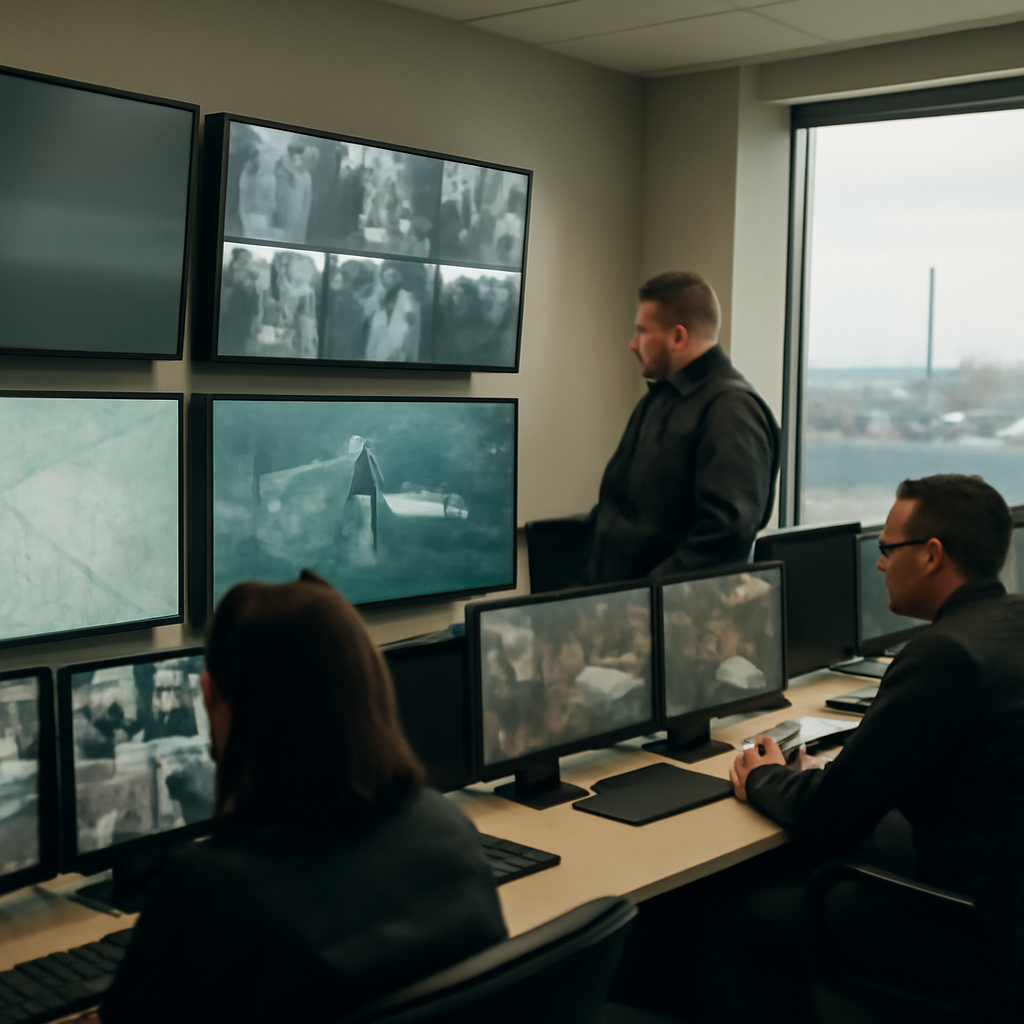
LEXSO is presented as a response to those conditions. The system is built to be sensor‑agnostic and to integrate multiple sensing technologies — radar, LIDAR, visual line‑of‑sight cameras and acoustic sensors — into a unified operating picture. “It brings all of those sensors into an orchestrated layer,” Rahimitabar said, adding that the interface “simplifies the interface for the operator to be able to make decisions in near real time” and helps avoid acting on false alarms.
Artificial intelligence plays a central role in that integration. Rahimitabar described AI as a tool to sift enormous data streams and calculate a level of confidence across multiple sensor layers: radar pings, camera sighting, and acoustic signatures can be correlated to present a consolidated assessment to a human operator. Importantly, LEXSO emphasizes a human‑in‑the‑loop model — AI surfaces fused information and confidence levels, while operators decide how to respond.
Downstream attacks: AWS data centers in the UAE and the need for holistic security
Security for one facility is no longer independent of security for others. Rahimitabar pointed to the targeting of two Amazon Web Services data centers in the United Arab Emirates during the recent Iran conflict as an example of how attackers can strike commercial nodes to indirectly harm military or industrial operators. Facilities rely on off‑site power, communications and data centers; those downstream dependencies can become vectors for disruption that bypass traditional perimeter defenses.
For that reason, Rahimitabar said security planning must be holistic: bringing together security, fire and safety, search and rescue, and IT so everyone “is working from the same information” and using a common operating picture. He warned that siloed budgets and siloed operators — guards at the gate separated from cyber and IT staff — leave gaps that adversaries can exploit.
What this means for security teams, IT leaders, and first responders
- Security teams: Expect to extend detection farther from the perimeter and to invest in counter‑UAS detection and tracking rather than taller fences; prioritize sensor integration that can reduce false alarms.
- IT leaders: Treat IT and data‑center dependencies as part of physical security planning; participate in shared operating pictures so cyber incidents are visible to physical response teams.
- First responders and safety officers: Insist on interoperable information flows — fire and rescue, search teams and security must be represented in planning so responses align when incidents cross domains.
Rahimitabar’s closing assessment insists the challenge is organizational as much as technical: “We haven’t fully adapted to this complex environment in terms of realizing that the security posture of critical infrastructure is not ready, nor does it have budgets yet to be able to handle the threat we’re talking about.” The practical takeaway is blunt: sensor fusion, AI to manage data, and shared situational awareness are tools — but they require alignment of budgets, people and mission priorities to be effective. Until that alignment happens, facilities will face a hard choice between accepting higher risk or paying steep prices to neutralize inexpensive threats.