"Every fighter design is driven around the weapon bay, period." — Darold Cummings
Darold Cummings on the engineering rubric
Darold Cummings, an aerospace engineer who helped develop Northrop’s YF-23 and now heads ForzAero, framed the debate in therms of basic aerodynamic and stealth trade-offs. He emphasized fineness ratio and the Sears‑Haack plot as organizing principles: aircraft teams work “to get the [radar] cross-sectional area down” by rearranging landing gear, weapons bays and structure to match an idealized low‑drag shape. Cummings recalled spending “probably a whole year on the Sears‑Haack plot on the YF‑23,” and stressed the practical squeeze between structural needs and low observability.
Wings, planform and the Project Fear footage
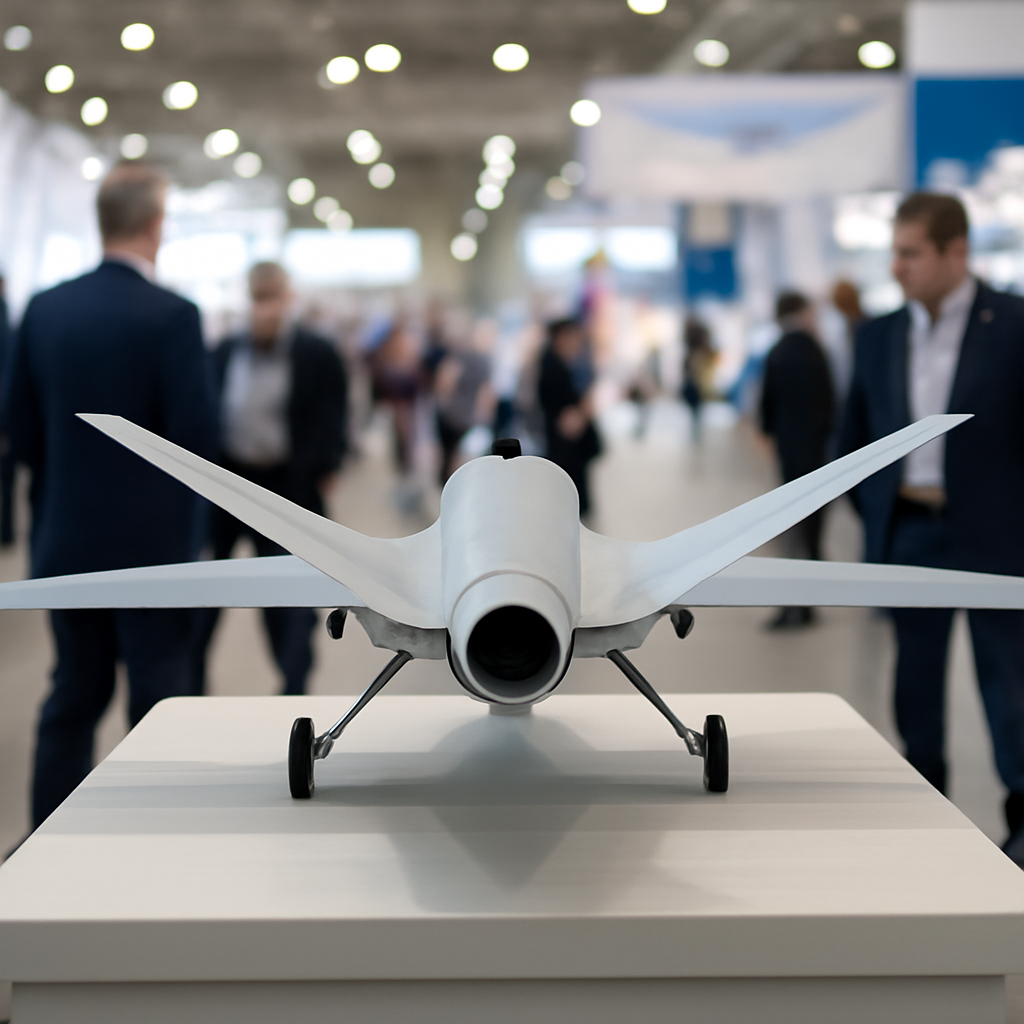
The footage posted by the Project Fear YouTube channel on June 5 shows an aircraft with a long shovel‑like nose, large canards and rear‑set swept wings — a planform that departs from many public expectations of a tailless, modified delta‑wing NGAD descendant. Observers note the wings in the clip appear to have significant dihedral and possibly drooping tips, though the infrared, night‑time capture limits certainty. The design has invoked comparisons with Boeing’s Bird of Prey demonstrator; Boeing and the Air Force have also released official F‑47 renderings showing positive dihedral.
The Air Force’s May 2025 infographic lists the F‑47’s top speed as “Mach 2+” and its combat radius as “1,000+” nautical miles — figures cited in the source that shape discussion of wing shaping, fuel capacity and cruise regime. Cummings said a drooped‑tip benefit for aero‑lift is generally seen at much higher speeds, citing the XB‑70’s Mach‑3 design as an example, and expressed skepticism that the demonstrator is exploiting that effect at the F‑47’s expected performance.

The cyber insurance questionnaire just landed. Now what?
SOC 2, HIPAA, insurance renewals - someone has to own security strategy. Nubivance provides fractional CISO leadership without the full-time salary.
Get a security leadCanards, maneuverability and radar signature
Canards appear in an official F‑47 rendering released in March 2025 and again in the Project Fear footage. Cummings and other analysts in the source note canards add maneuverability and high‑angle‑of‑attack stability — especially important for delta or tailless layouts — but can complicate low‑observable shaping, particularly from the frontal aspect. Cummings described the Boeing X‑36 as “a great place to start” for a canard, yaw‑vectored, tailless approach, and Bill Sweetman recalled earlier canard work in the CALF lineage.
Cummings specified a likely geometric separation — “the canard would probably be plus 10 degrees, the wing … minus two to three” — citing a close‑coupled foreplane arrangement as effective throughout the envelope. The possibility that canards or wingtips articulate was raised as an unresolved detail in the footage.
Weapons bays, CCAs and the range trade‑space
“Everything wants to be in the CG,” Cummings said, pointing to the tight packaging conflict between wing thickness, weapons bays, inlets and landing gear. He argued that smaller‑diameter weapons — invoking Raytheon’s Peregrine and noting AIM‑260’s narrower form factor relative to AIM‑120 — could let designers slim internal bays and reduce cross‑sectional area. The source also notes the Air Force intends Collaborative Combat Aircraft (CCA) fleets to be armed for air‑to‑air combat, and shows an Anduril YFQ‑44 Fury carrying an inert AIM‑120 during tests; CCAs could extend magazine depth and influence how much organic load an F‑47 must carry.
Cummings advocated adaptive or “compound” engines with variable flow — the kind pursued under Next Generation Adaptive Propulsion programs (XA102, XA103 are named competitors in the source) — to get range and supercruise efficiency. He estimated the F‑47 would need “double” the range of the F‑22 for Indo‑Pacific operations, while the Air Force’s unclassified figures place the F‑47 combat radius at “1,000+” nautical miles. The source also states the first F‑47 is in production now and the Air Force is targeting a first flight in 2028, while noting there is no hard evidence the Project Fear clip shows an aircraft already in formal flight testing.
What this means for Boeing, the U.S. Air Force, and CCA programs
- Boeing: Analysts quoted in the source say Boeing likely leaned on Bird of Prey and X‑36 heritage to reduce program risk. Steve Trimble observed companies “build what you know” through long‑standing design codebases, which helps explain a canard‑and‑rear‑swept approach.
- The U.S. Air Force: The service’s public specifications (May 2025 infographic) set speed and radius targets and the Air Force has said it expects a first flight in 2028; the service will eventually need to show at least part of the actual design as the program moves toward an operational role in the early 2030s.
- CCA programs: Because CCAs will be armed “right from the start,” the source suggests they could permit the F‑47 to trade organic magazine depth for fuel, stealth shaping or performance by shifting some lethality to loyal wingmen.
The debate illustrated by the Project Fear footage and the F‑47 public art is less a mystery than a compact catalogue of trade‑offs: stealth and low RCS, internal weapons carriage, fuel and range, and control authority for a tailless or canarded layout. The demonstrator seen near Area 51, and the Air Force’s published performance goals, frame the narrow set of choices Boeing and the service are making; the promised first flight in 2028 will be the first concrete moment to confirm which compromises prevailed.
Source: TWZ — Why Does The F‑47’s Design Look So Different Than What Many Expected?