Smoke Over Severomorsk: Uncertainty at Russia’s Nuclear Nerve Center
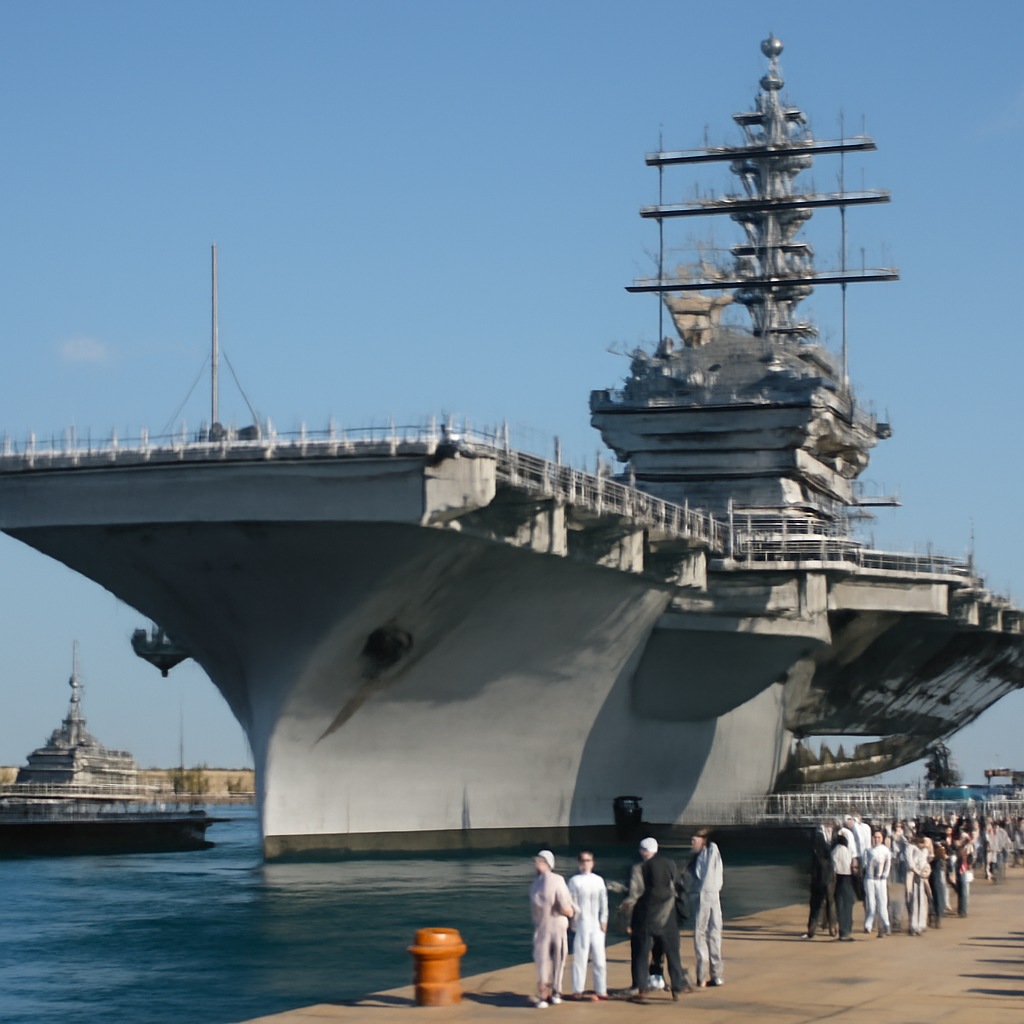
On a brisk Sunday morning along the frigid shores of the Kola Bay, explosions and climbing plumes of smoke sent ripples of concern through one of Russia’s most strategically critical military installations. In Severomorsk—the home port of the Northern Fleet and the linchpin for the nation’s nuclear-powered submarine fleet—unconfirmed reports of explosive events have raised alarm bells among security experts, analysts, and international policymakers alike.
Eyewitness accounts and initial reports from Defence Blog paint a picture of a scene none could have anticipated: heavy smoke billowing against a backdrop of stark Arctic landscapes, with the rumble of explosions echoing near the harbor. Given the base’s pivotal role in housing nearly two-thirds of Russia’s nuclear-armed platforms, the implications of any disruption here extend far beyond local or even national boundaries.
The strategic significance of Severomorsk has not diminished over time. Established as the headquarters for the Northern Fleet, its location on the Kola Peninsula near the Barents Sea makes it one of Russia’s most heavily secured military assets. Over the decades, it has evolved into a highly classified hub of naval power, designed to ensure that Russia maintains its maritime reach and nuclear deterrence capabilities in an increasingly complex global security environment. The base’s infrastructure is sophisticated, its operational protocols rigorous, and its presence a cornerstone of Russian military strategy since the Cold War era.
Even as Russian state media and official channels work to piece together a thorough account of the incident, the immediate facts drawn from the scene underscore the gravity of what may be unfolding. The explosions, accompanied by fast-moving smoke as seen in recently circulated images on Defence Blog, suggest an event of significant force near the heart of a facility integral to Russia’s nuclear command and control. Government spokespeople have signaled that investigative efforts are underway, but precise details—regarding the cause, scale, or potential aftermath—remain closely guarded at this stage.
Why does this matter? Beyond the inherent dangers of any disruption at a nuclear facility, the incident carries broader security implications. At a time when global tensions are already high, any significant destabilization at a nuclear base could prompt heightened alert statuses among military alliances and adversarial nations alike. In environments where nuclear materials and sophisticated weaponry converge, even an isolated technical glitch or an accidental detonation has the potential to ripple outwards, affecting national security doctrines and international relations.
Several leading defense and nuclear policy experts have cautioned that the integrity of Russian nuclear facilities must be maintained to avert any unintended escalation. In past incidents, technical anomalies or isolated detonations at sensitive military sites have served as a wake-up call for routine review of safety standards and risk management procedures. For instance, in a 2018 briefing, the Russian Ministry of Defence underscored the regular maintenance and rigorous oversight of its nuclear infrastructure as crucial steps in preventing accidental launches or catastrophic failures. While no official confirmation exists confirming such measures were compromised in the current instance, the timing alone has reignited discussions on the overall health and safety climate within key military installations.
Observers also point to the multifaceted nature of such an occurrence. On one hand, technical malfunctions or operational mishaps stand as plausible explanations—especially given the challenges inherent in managing aging infrastructure under extreme environmental conditions. On the other hand, the backdrop of international cyber threats, espionage, and increasingly sophisticated forms of warfare means that no stone can be left unturned when investigating potential sabotage or tampering. These dual explanations underscore the importance of thorough, impartial investigations that scrutinize every potential vector of failure.
Adding a layer of complexity to the unfolding narrative is the human dimension. Severomorsk is not an isolated facility tucked away from society; it is a community where military personnel and their families live, work, and forge enduring bonds. The backdrop of explosions and heightened media scrutiny has brought palpable anxiety among those stationed there, as well as among local citizens who rely on the promise of stringent safety protocols to feel secure. In a circle where every incident is magnified by decades of experience and institutional memory, it is not just the machinery of war that is tested, but the resilience and readiness of the people who stand behind it.
Analysts note that when such incidents occur at strategic sites, the ripple effects can extend into broader spheres, such as regional economic confidence, diplomatic negotiations, and even domestic political rhetoric. In recent years, Russia has faced its fair share of security challenges—from both technical malfunctions to geopolitical maneuvers that test the robustness of military readiness. In this context, the explosion at Severomorsk becomes more than a localized event; it is an inflection point in an ongoing narrative about the state of modern warfare, nuclear safety, and the reliability of military infrastructure in a rapidly changing world.
Former U.S. Navy Rear Admiral John Kirby, now a senior fellow at the Atlantic Council, has previously emphasized the need for continuous vigilance at nuclear facilities worldwide. “Every incident, no matter how isolated it may initially appear, serves as a reminder of the delicate balance that defines nuclear deterrence,” he remarked in a 2021 forum on strategic stability. Although his comments were made in a broader context, they resonate strongly with the current situation in Severomorsk, where even minor disruptions could set off a cascading series of alert statuses and international concern.
Looking ahead, a number of key factors will determine the trajectory of this unfolding situation. First, how Russian authorities choose to frame and address the incident—be it as an isolated technical misfire or a consequence of external interference—will have significant implications for international trust and regional stability. Should the situation devolve into a broader crisis, the role of international agencies and nuclear watchdogs could become pivotal in mediating discussions and ensuring that transparent safety standards are upheld. In contrast, a rapid and thorough internal resolution might help calm tensions, though likely leaving behind lingering questions about infrastructural integrity.
Simultaneously, global militaries and governments, especially those in NATO, are poised to reexamine contingency plans related to nuclear safety and emergency response at critical sites. The explosion, even while under investigation, serves as yet another reminder of the vulnerabilities present in aging systems. More importantly, it reinforces the recurring necessity for investment in modernizing safety protocols as technology evolves and geopolitical contexts shift.
Ultimately, the incident at Severomorsk shines a spotlight on the complex interplay between military imperatives and the ever-present risk of accidents in high-stakes environments. It invites a broader contemplation of how nations manage their most sensitive assets under the twin pressures of technological aging and modern strategic uncertainty. As investigators continue to piece together the nature and cause of the explosions, the global community watches with a mixture of apprehension and cautious optimism that lessons, once learned, will pave the way for renewed safety standards and diplomatic dialogue.
In an era marked by rapid change and mounting tensions, the unfolding events at Russia’s primary nuclear submarine base challenge us to ask: how do nations reconcile the demands of robust military readiness with the imperative to ensure absolute safety in the most dangerous theaters of modern warfare? Perhaps the answer lies in unyielding transparency, vigilant oversight, and the quiet determination of administrators who understand that behind every missile silo and nuclear reactor are the lives and futures of countless individuals.