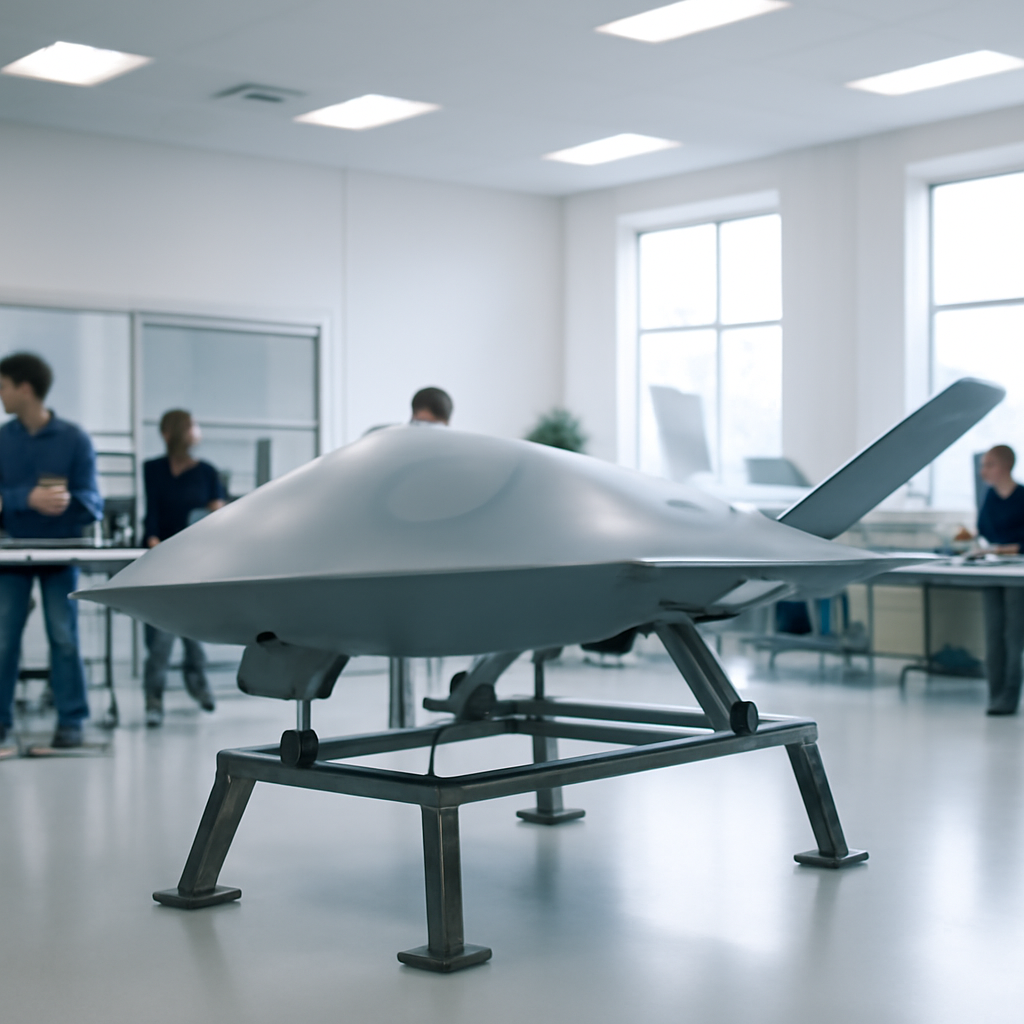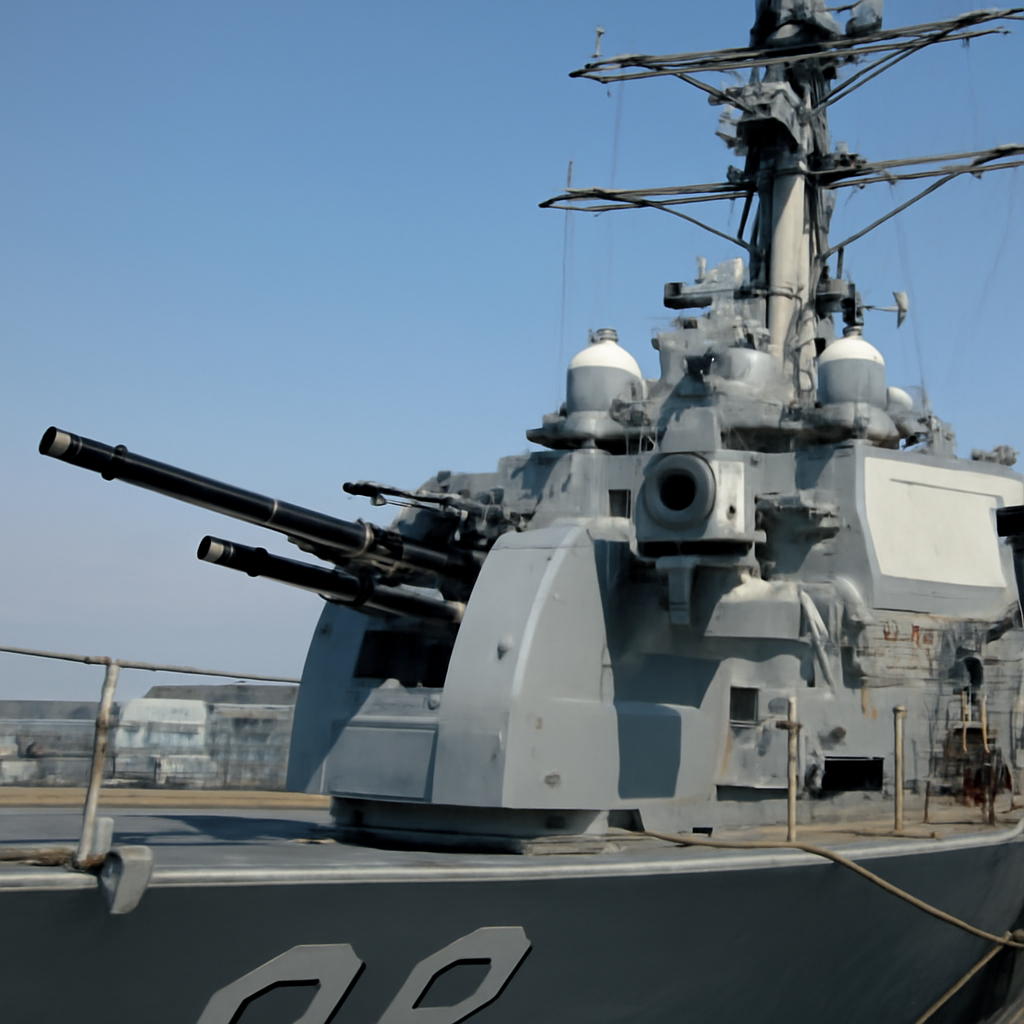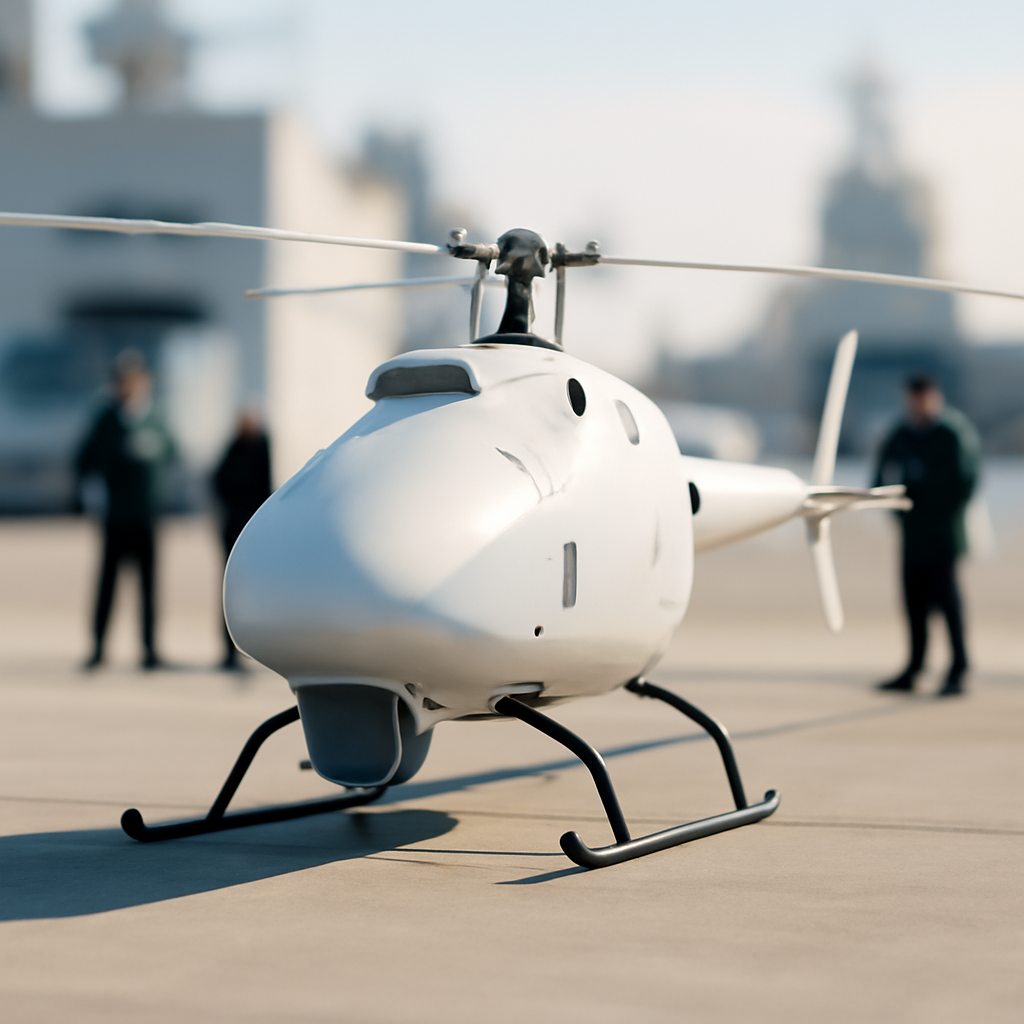
“The successful trials included the first operational flying tests of all six HT-100 NAVAL systems and represent a significant milestone in the programme,” EDGE Group said, announcing the delivery of six unmanned HT 100 NAVAL helicopters to the Angolan navy.
EDGE Group and ANAVIA: Swiss Factory Acceptance Trials and delivery
EDGE Group said it completed Factory Acceptance Trials (FAT) at the end of August in Switzerland at facilities belonging to ANAVIA, an EDGE subsidiary that produces the HT 100 NAVAL. The company described the trials as including “the first operational flying tests of all six HT-100 NAVAL systems.” Following those trials, EDGE reported that all six systems were delivered to the Angolan Navy as part of the broader contract signed in 2023.
HT 100 NAVAL unmanned helicopters: sensors, numbers, and shipboard role
EDGE described the aircraft as HT 100 NAVAL unmanned helicopters equipped with electro-optical/infrared (EO/IR) sensors intended to expand surveillance and reconnaissance capability. The six robo-helos are intended to operate aboard three BR71 MK II corvettes, with two helicopters planned for each vessel, and — EDGE said — will be “fully integrated with the corvettes’ combat management systems.”

This site is the portfolio.
OSINTSights runs on Cloudflare Workers, D1, R2, and Vectorize, with an AI pipeline on Hetzner ARM. Nubivance designed, built, and operates it. We do the same for clients.
See what we buildBR71 MK II corvettes: platform for the unmanned systems
The unmanned helicopters are linked explicitly to the three BR71 MK II corvettes that form the largest element of the 2023 procurement. EDGE’s statement framed the deliveries as an “important step towards their integration with the BR71 MK II corvettes and the delivery of an enhanced maritime surveillance and reconnaissance capability.” The corvettes are described elsewhere in the contract as 71-meter ships that will carry two HT 100 NAVAL systems each.
ADSB, CMN naval, and where the ships are being built
Abu Dhabi Ship Building (ADSB), an EDGE subsidiary, inked what the reporting styles as a $1 billion-plus deal with the Angolan navy in 2023; the three BR71 MK II corvettes were the big-ticket items in that agreement. ADSB subcontracted French shipbuilder CMN naval to construct the first and third corvettes at CMN’s Cherbourg shipyard in France, while the second corvette is under construction in Abu Dhabi, EDGE said.
What this means for ADSB, the Angolan navy, and CMN naval
- ADSB: The delivery of the HT 100 NAVAL systems demonstrates the company’s capacity to pair naval platforms and unmanned systems, a combination ADSB has advanced through EDGE’s internal supply chain. ADSB leadership has also signaled export ambition; in a February interview with Breaking Defense, ADSB CEO David Massey said the company has export “ambitions in Asia, West and East Africa and Brazil,” and that “more than 50 percent of ADSB’s order book will be for export for the foreseeable future.”
- Angolan navy: The delivered systems provide an immediate maritime surveillance and reconnaissance capability, EDGE said, and are intended to integrate with the corvettes’ combat management systems. Operational integration with the three BR71 MK II corvettes will be the next step following the hardware delivery and FATs.
- CMN naval: As the subcontractor building the first and third corvettes in Cherbourg, CMN naval will be responsible for accepting and integrating the shipboard infrastructure required to host two HT 100 NAVAL systems per vessel and to link those systems to the corvettes’ combat management suites.
EDGE framed the shipment as a coordinated delivery across subsidiaries — ANAVIA for aircraft production and FATs, ADSB for the corvette contract, and CMN naval for hull construction on two ships — tying unmanned aviation to surface combatants in a single procurement cycle. The immediate, traceable facts are compact: six HT 100 NAVAL systems completed Swiss FATs at the end of August and were handed over to the Angolan navy for integration aboard three 71-meter BR71 MK II corvettes bought under a 2023 agreement valued in reporting as roughly €1 billion ($1.2 billion) or $1 billion-plus.
The remaining question left in the public record is operational: how the Angolan navy will sequence flight certification, full combat-management-system integration, and routine deployment of the robots at sea — steps EDGE’s announcement implies are next but does not detail.