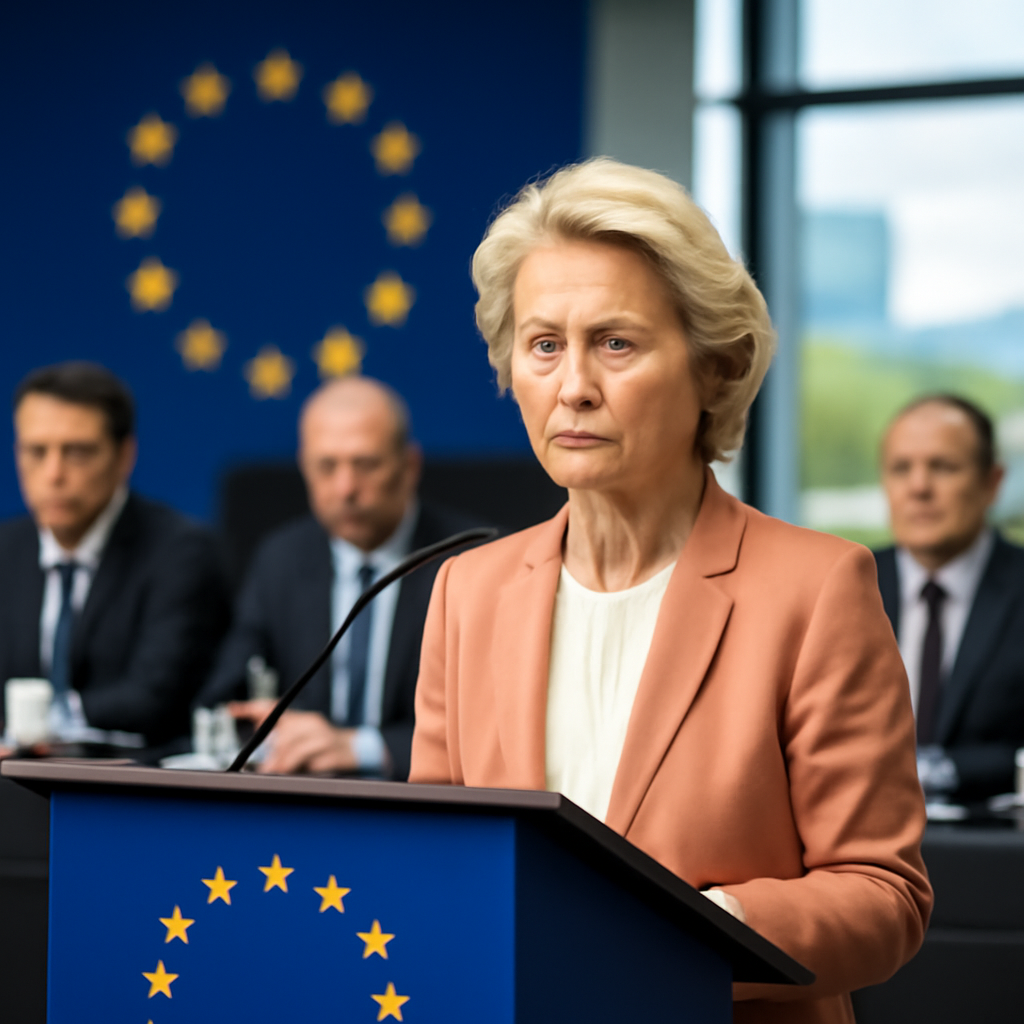
"We want a peaceful Arctic, we want a peaceful world," Thomas Dans declared — a line the new chair of the U.S. Arctic Research Commission has repeated as he presses for closer ties with Russia, more icebreakers and even a tougher U.S. posture on Greenland. His public profile has left foreign partners, researchers and ethics experts asking where the commission ends and his private interests begin.
Thomas Dans and the U.S. Arctic Research Commission
In December, President Donald Trump appointed a Texas venture capitalist and MAGA influencer with no formal science background to chair the four-decade-old U.S. Arctic Research Commission. The commission traditionally advises Congress and the president on Arctic research ranging from environment to security; previous chairs were described as well-versed in science and public policy. Dans has outlined four priorities — military and national security, energy security, economic development and what he termed "community security" — and has represented the commission at conferences and overseas visits.
Under federal law, commission members are not considered government employees and are not required to file the standard ethics disclosure forms; the White House told ProPublica that Dans’ consulting work did not constitute a conflict for that reason. The commission chair is eligible only for a stipend of up to about $55,000 a year. The commission spent about $87,000 on Dans’ travel in his first five months as chair, during which he visited Denmark, Norway, Italy, Canada, Mar-a-Lago and New York’s Explorer’s Club.
Damen Shipyards, icebreakers, and a lingering contract question
Dans has repeatedly said the United States needs more icebreakers and has publicly championed Damen Shipyards, a Dutch company with which he had a business relationship. In August he posted that he was "working with Damen Shipyards Group" and shared a photograph with three high-ranking company executives, including Rutger Dolk, who was later detained by Dutch authorities as part of a probe into whether Damen supplied equipment to Russia in violation of European sanctions. The company has said it acted in accordance with sanctions and with transparency.
Records show the U.S. Navy bought the designs for a medium-sized ship from Damen for $3.3 million without the typical bidding process, citing time and cost savings from a “proven” design. While Dans’ consultancy was reportedly helping Damen pursue an icebreaker contract, Damen terminated its agreement with Dans while ProPublica was reporting the story. Legal experts quoted in the reporting said such activity could raise questions under lobbying rules or the Foreign Agents Registration Act; documents show Dans had not registered as either a lobbyist or a foreign agent.

This site is the portfolio.
OSINTSights runs on Cloudflare Workers, D1, R2, and Vectorize, with an AI pipeline on Hetzner ARM. Nubivance designed, built, and operates it. We do the same for clients.
See what we buildRussia ties, social media and Moscow outreach that never happened
Dans’ affinities for Russia date back decades: he learned Russian in school, was an exchange student in Moscow, and later worked in finance there in the 1990s. He has publicly reminisced about overlapping social circles with Kirill Dmitriev, whom the story describes as a banker turned key Russian intermediary. During the Trump administration’s first term, Dans served in the Treasury Department as a senior policy adviser for international affairs and sat on a secret National Security Council task force focused on U.S. control of Greenland.
His social media activity includes reposting a Kazakh story about Vladimir Putin’s warning regarding Tomahawk missiles, and marking Victory Day by reposting a video of Putin from Russian state media with the caption "Happy Victory Day" in Russian and English. He called Dmitriev "the Kremlin’s ace in the hole." Dans announced plans to travel to Moscow to discuss Arctic research, but that trip did not occur — the State Department’s official guidance on Russia is "Do Not Travel for Any Reason."
Greenland rhetoric and diplomatic ripple effects
Dans has been an active voice in the administration’s push toward Greenland. He helped arrange a January visit by Donald Trump Jr. and Charlie Kirk to the island through his nonprofit, American Daybreak, and tried to involve other high-profile figures. When President Trump said he would take Greenland "one way or the other," Dans told the BBC that "everything’s on the table."
The rhetoric has had consequences: Denmark placed soldiers on alert in Greenland with explosives and plans to disable airfields in the event of an American invasion; one Greenlandic politician reported that some schoolchildren were instructed to practice hiding under desks. Dans was recorded on a hot mic telling a Greenlandic politician "the check’s in the mail," a remark that drew criticism and the admonition from a former commission chair, Michael Sfraga, to "rip the check up." At least one Danish researcher has said she will no longer participate in research with the U.S., and colleagues reportedly avoided Dans at a conference.
What this means for the Navy, Greenlandic researchers, and U.S. diplomacy
- Navy procurement watchers: The Navy’s $3.3 million purchase of a Damen design without a typical bidding process, coupled with Dans’ public advocacy for Damen, is likely to focus scrutiny on procurement decisions and the line between advocacy and procurement influence.
- Greenlandic and Danish researchers: The heated rhetoric and incidents cited — from hot-mic remarks to avoidance at conferences — have already prompted some researchers to cut back or sever collaboration with U.S. counterparts, complicating long-standing scientific cooperation in the Arctic.
- U.S. diplomatic teams and negotiators: Dans’ public statements and travel — juxtaposed with administration envoy visits that excluded him — have fed diplomatic tensions with Denmark and Greenland and complicated messaging as negotiators engage on security and sovereignty questions.
Dans’ dual role — commission chair with access to interagency information, and a private consultant who has promoted foreign-built icebreakers and maintained business ties in Russia — sits at the center of a set of unresolved questions: whether his outside commitments improperly intersect with government access and how that intersection will shape Arctic research, procurement and diplomacy. The White House has defended his work; critics say the commission’s legal status and lack of disclosure requirements create gaps that deserve attention.