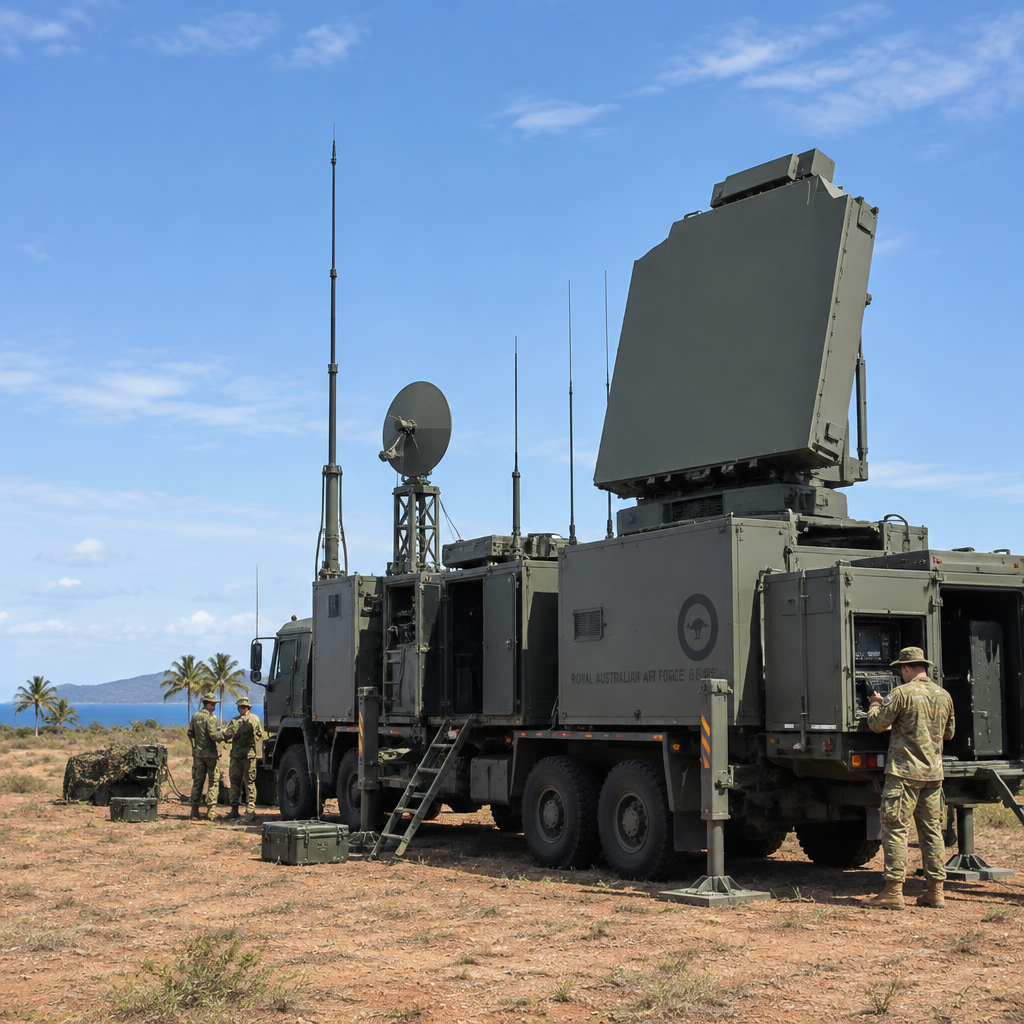
In September, the government committed a further $2.4 billion to Air 6500 — a program to link Australia’s air and missile defence through a Joint Air Battle Management System — while a proposed $299.1 million infrastructure package at RAAF Darwin was put forward to support No. 114 Mobile Control and Reporting Unit and the emerging command-and-control architecture under Air 6500.
Air 6500: money, networks and a new organising principle
The $2.4 billion commitment to Air 6500 is a clear bet that integration — sensors, decision-makers and weapons operating as a single system — will be central to Australia’s future air and missile defence. The project’s Joint Air Battle Management System is described in the source as the connecting architecture for the country’s defensive capabilities. That integration is intended to allow defensive systems across different services and locations to operate together, but the source is explicit that network integration cannot substitute for the physical availability of weapons: no single system will address every airborne or missile threat.
Land 6504: scale, mobility and the basing question
Land 6504 is the army project to buy medium-range, ground-based air and missile defence systems. The source argues that procurement choices for Land 6504 — the number of systems, their mobility and their sustainment needs — must be driven by operational requirements: which military functions need immediate protection, which can accept deployment delays, how many locations must be defended simultaneously, and for how long. A highly mobile system bought in insufficient numbers, the source warns, will still struggle to meet competing operational demands.

This site is the portfolio.
OSINTSights runs on Cloudflare Workers, D1, R2, and Vectorize, with an AI pipeline on Hetzner ARM. Nubivance designed, built, and operates it. We do the same for clients.
See what we buildReadiness timelines, Nasams and the testbed opportunity
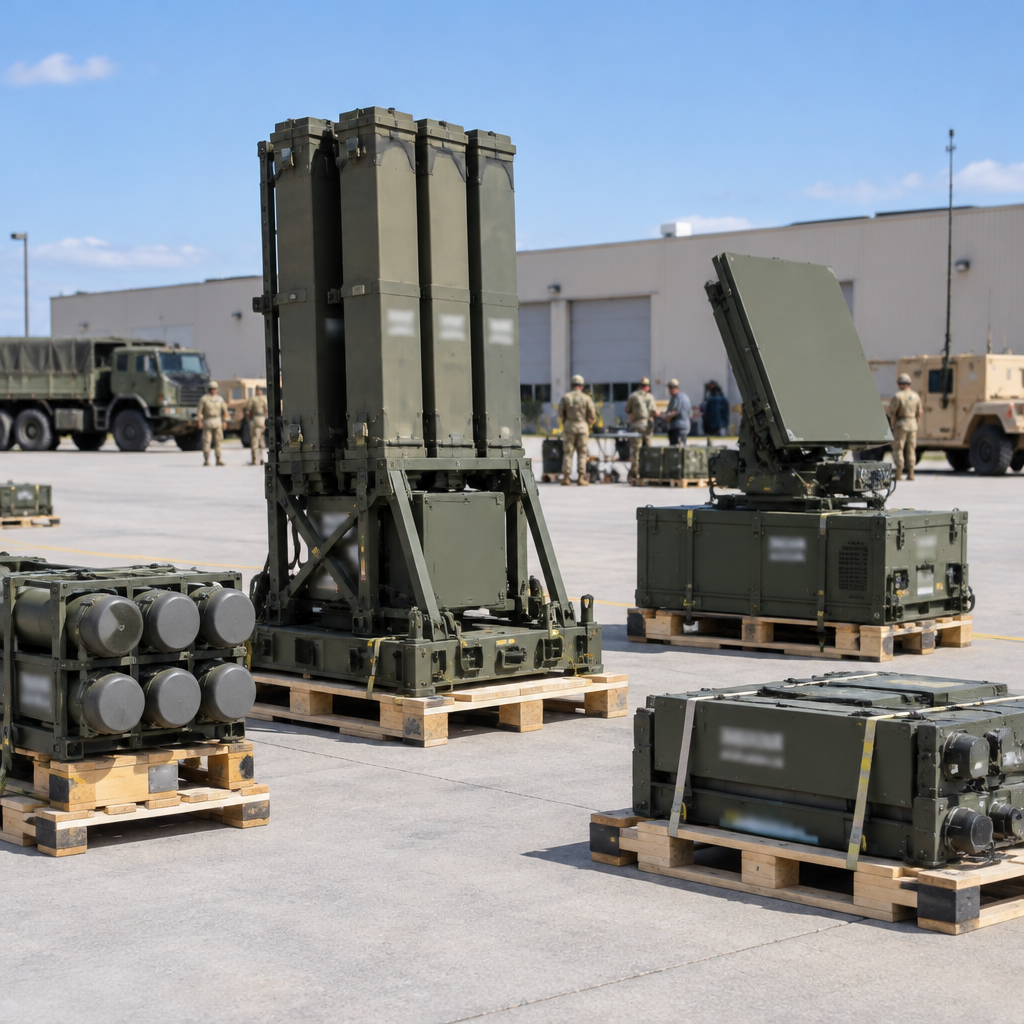
Australia’s short-range air defence system, Nasams, "became fully operational in September," creating an immediate chance to trial distributed readiness concepts. The source recommends that Defence use exercises to measure the full sequence of actions for ground-based air defence: authorise movement, deploy personnel and equipment, establish communications, integrate with the broader defensive network and sustain operations. Exercises should also test competing demands for coverage, degraded communications and disruption to supporting infrastructure. While Land 6504 will have different technical and sustainment profiles, lessons from Nasams operations could shape operating concepts and infrastructure decisions for medium-range systems.
Geography and the argument that "air defences should be going north"
Geography complicates basing and posture. The source maps key nodes: RAAF Darwin and RAAF Tindal supporting Australian and allied air operations; Townsville underpinning the army’s combat and aviation capabilities; and HMAS Stirling central to naval operations and the future AUKUS submarine presence — noting that Stirling lies outside northern Australia. Those dispersed locations perform different roles, face different threat environments and have distinct supporting infrastructure, so identical defensive arrangements are unlikely to be appropriate. The central claim is simple: Defence should align acquisition and infrastructure decisions with a force posture that combines centralised training and distributed operational readiness — which, in practical terms, means much of the newly procured defensive capability should be placed northward where it will be needed.
Relocation, sustainment and the supporting ecosystem in the north
The source points to the army’s relocation of the 1st Aviation Regiment from Darwin to Townsville during its transition to Boeing AH-46E Apache attack helicopters as an example of the economic efficiencies of concentrating personnel, training and maintenance. But it also stresses that ground-based air defence has a different operational imperative: these systems often must be in place before the forces they protect can operate. Sustainment — specialist workforces, ammunition support and complex logistics — matters as much as initial deployment. The source highlights the role of Northern Territory, Queensland and Western Australia governments, infrastructure operators and industry in ensuring access to transport, communications, energy, maintenance facilities and specialist workforces, and urges early engagement so Defence can identify prepared operating locations and contingency arrangements without unnecessary duplication.
Defence faces a choice: treat basing and sustaining new systems as an afterthought, or make force posture central to capability development. The source makes the operational case for the latter — aligning Land 6504’s scale and readiness with Air 6500’s integrating architecture and with targeted infrastructure investments such as the proposed $299.1 million at RAAF Darwin — so commanders gain not just nominal mobility but defensive options they can actually employ when circumstances demand.
https://www.aspistrategist.org.au/new-air-defences-should-be-going-north/