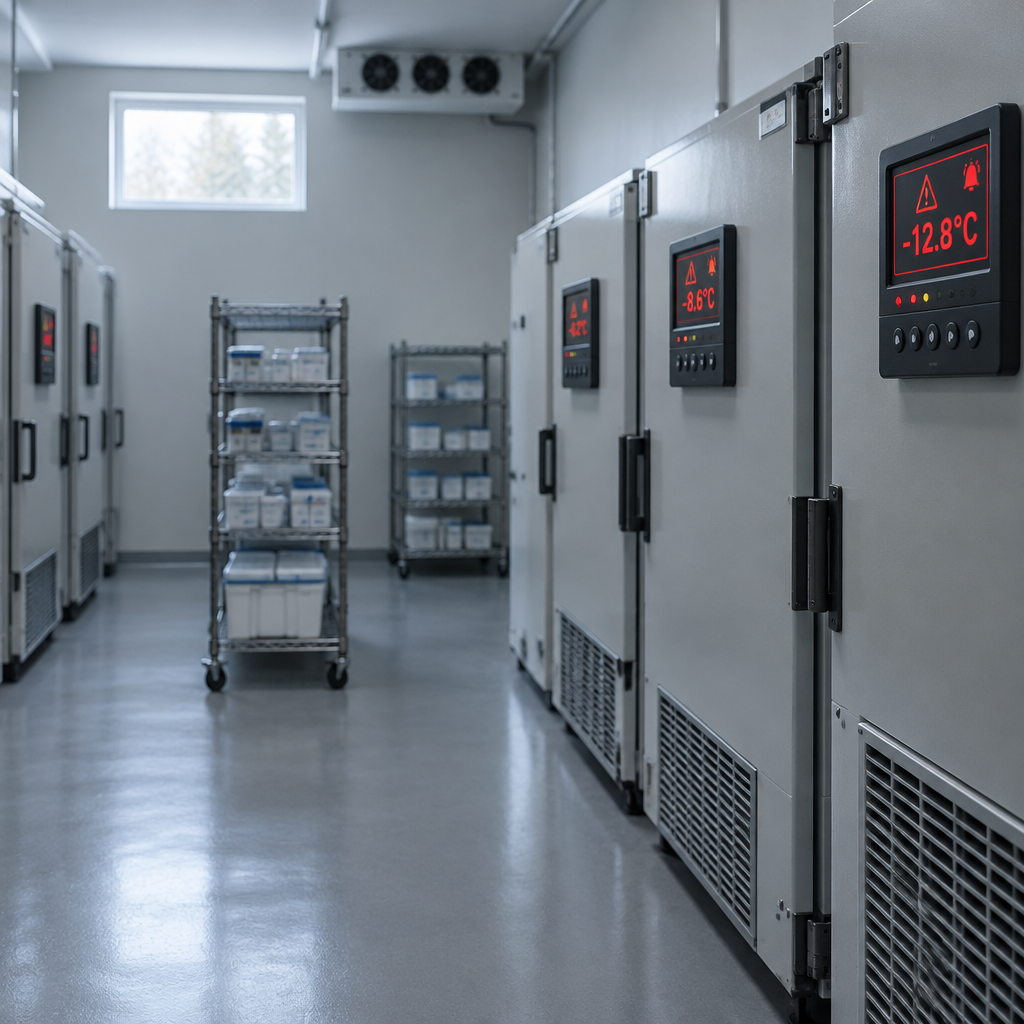
"The EFS' monitoring and alarm systems enabled the rapid identification of these anomalies and the implementation of necessary measures to ensure that no blood samples or products were compromised," the French Blood Establishment (EFS) said.
French Blood Establishment: cold rooms tampered after supplier compromise
The EFS confirmed on Tuesday that attackers tampered with cold‑storage settings used by France's civilian blood service after compromising a refrigeration supplier, and said its own systems had not been directly targeted. The affected equipment contained blood samples and frozen plasma, including plasma intended for transfusion. The EFS said safeguards — monitoring and alarm systems and rapid operational responses — prevented any loss of blood products, and that affected units were either brought back under control or neutralized and their contents preventively transferred to other facilities. The EFS did not name the supplier publicly. The organization added that it notified France's cybersecurity agency, ANSSI, and the Ministry of Health.
Temperature changes reported: -30°C to 110°C claim, retail temps up to 50°C
Reports said attackers changed cold‑room temperature settings from -30°C to 110°C; the EFS cautioned that such reported setting changes do not mean equipment or contents reached the higher temperature. Separate reports from retailers described remotely activated defrost cycles and temperatures reported as high as 50°C, forcing retailers to discard spoiled food. The attackers behind the incidents have not been identified.

This site is the portfolio.
OSINTSights runs on Cloudflare Workers, D1, R2, and Vectorize, with an AI pipeline on Hetzner ARM. Nubivance designed, built, and operates it. We do the same for clients.
See what we buildRetail wave across Europe and an earlier August incident
News of cyberattacks targeting refrigeration devices spread on Monday morning when retailers found puddles on floors after criminals reportedly activated defrost modes. Initial reports named stores across Belgium, Ireland, Luxembourg, and Sweden; subsequent confirmations came from Estonia, Finland, Germany, Portugal, Romania, and the Netherlands. The latest wave followed a first wave roughly a month earlier that affected French supermarket chains Carrefour, Coopérative U, Intermarché, Monoprix and others. Both supermarket waves involved remote interference with refrigeration controls and caused stock losses. The incidents in France also followed reports in August of compromises at US military commissaries that led to food wastage.
Danfoss controllers and CERT‑FR advisory — routes of access remain unclear
Some affected supermarket chains identified Danfoss controllers in their systems; others said they did not use the company's equipment. At the time of those supermarket attacks, CERT‑FR published an advisory urging organizations to remediate vulnerabilities in Danfoss AK‑SM and AK‑SC controllers. Whether the attack that affected the EFS used the same access route as the retail incidents remains unclear.
UK signals and suppliers reporting 'collateral' impacts
Richard Horne, chief executive of the UK's National Cyber Security Centre (NCSC), told BBC Radio 4's Today program he was aware of "a couple of impacts" in the UK's food supply chain, though no affected UK businesses have publicly identified themselves. The British Association of Independent Meat Suppliers (AIMS) told the BBC that some of its more than 300 members had become "collateral" in the attacks, with two members reporting that their fridges had begun defrosting.
What this means for technologists, regulators, and procurement leaders
- Technologists and security teams will be focused on monitoring refrigeration controllers and associated vendor supply chains: the incidents involved changes to temperature settings and, in earlier advisories, specific Danfoss AK‑SM and AK‑SC controllers.
- Policymakers and regulators — represented here by ANSSI and France's Ministry of Health — have been notified by the EFS and will be monitoring whether medical cold‑chain assets require additional operational safeguards or oversight.
- Procurement and facilities leaders at hospitals and retailers will watch supplier relationships and remediation advisories closely: the EFS declined to name its refrigeration supplier publicly, and some supermarket chains both did and did not report Danfoss hardware in their systems.
The immediate facts are narrow but sharp: refrigeration controls in multiple countries were manipulated, retail losses occurred, and a French national blood service detected and contained tampering without product loss. Open questions remain central to operational and regulatory responses — who remotely accessed the refrigeration equipment, whether a common vendor vulnerability was exploited in all cases, and whether any equipment actually reached the extreme temperatures reportedly set. For now, the EFS, ANSSI, and the Ministry of Health are participants in a response whose next steps will determine how resilient cold‑chain services must become.