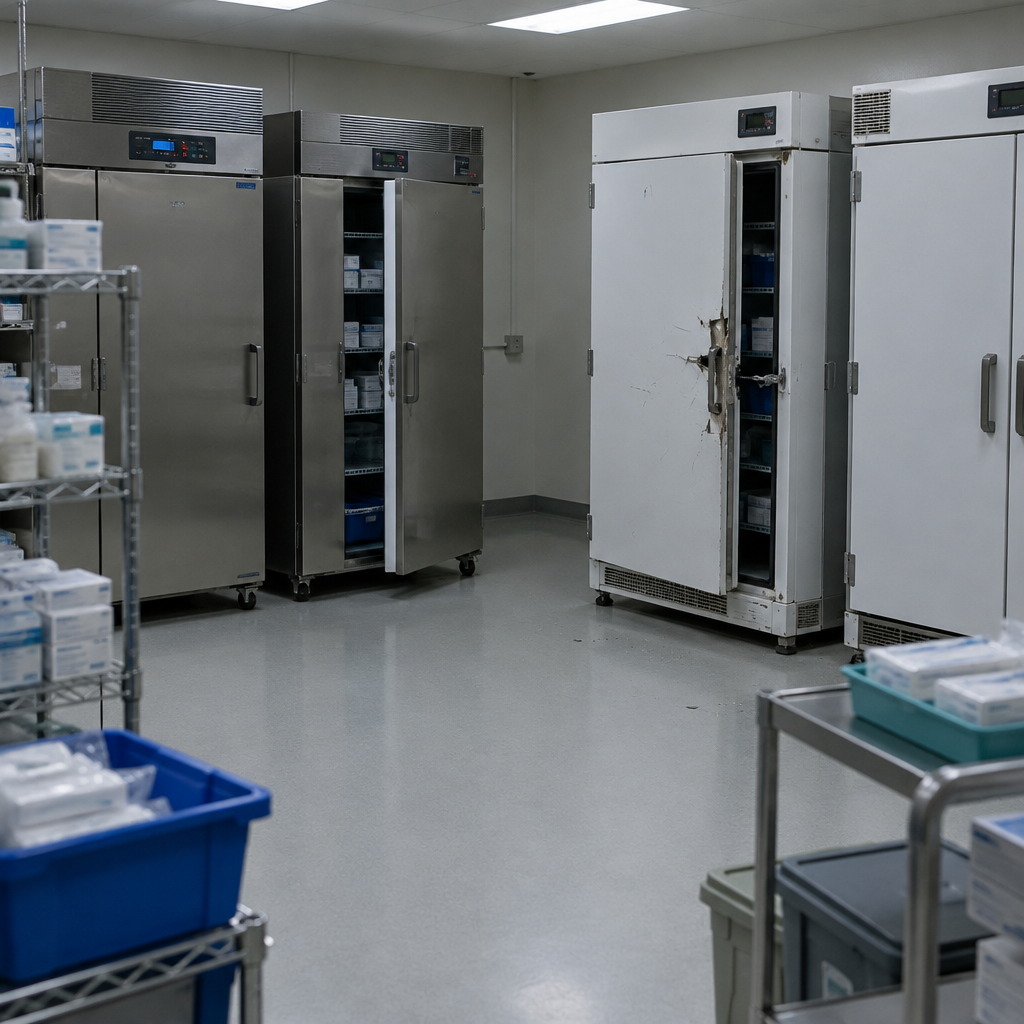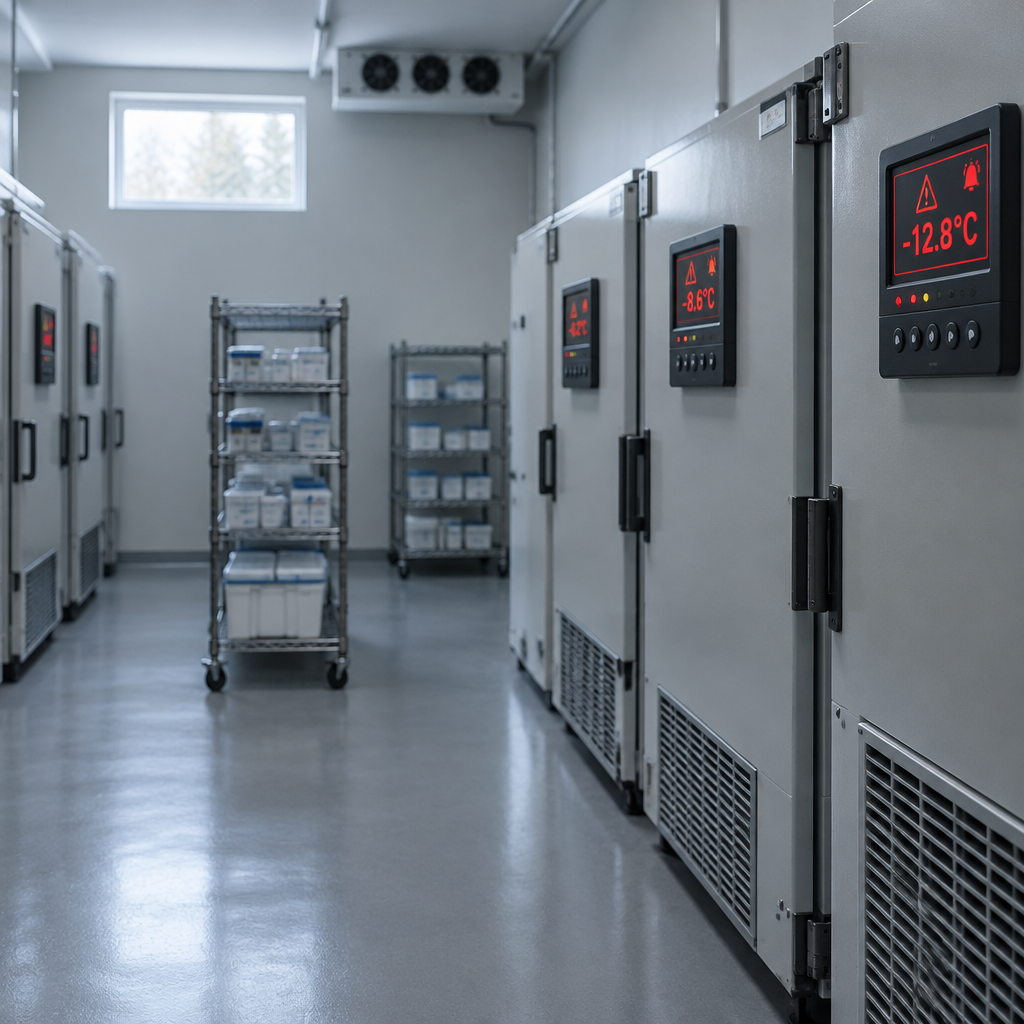
Some cold storage rooms used by France's National Blood Service (EFS) were driven to a boiling 110°C (230°F) after unauthorized actors took control of refrigeration controllers, according to reporting that describes a wave of attacks on temperature-controlled systems.
EFS cold storage rooms in Burgundy and Franche-Comté
French investigative weekly Le Canard enchaîné reported on November 3 that unauthorized actors took control of some refrigeration controllers in EFS cold storage rooms during the night between November 1 and 2. The affected facilities were located in the Burgundy and Franche‑Comté region in east‑central France. The cold storage units, which typically hold blood samples kept at around -30°C (-22°F) and plasma intended for transfusion, were reported to have reached temperatures as high as 110°C (230°F).
Coolworld confirms a cybersecurity incident and points to a third‑party component
Coolworld, a Dutch temperature control rental company that operates in France, Germany, Ireland, the Netherlands and the UK, confirmed on November 4 that it was "aware of the cybersecurity incident involving remote monitoring software used in refrigeration systems" and said it "responded promptly by implementing the appropriate measures." The company added that only a limited number of Coolworld units were affected and specified that "the vulnerability currently being reported in the media concerns a component supplied by a third‑party provider and not directly controlled by Coolworld."

Audit-ready is a season. It shouldn't be.
Evidence in spreadsheets, controls drifting between audits, frameworks multiplying on flat headcount. Nubivance runs continuous compliance on Rapid7 Cyber GRC - SOC 2, HIPAA, ISO 27001, PCI, CMMC.
End the scrambleDetection and official reassurance: on‑call technician and Ministry of Health
The French Ministry of Health told Le Canard enchaîné that the incident had caused no operational disruption because it had been detected in time. The EFS said an on‑call technician noticed an abnormal rise in temperature overnight, which allowed the issue to be identified before it could affect operations. EFS president Frédéric Pacoud told BFMTV that while the EFS "could have lost samples or bags of plasma intended to treat patients," the early warning meant "there was no compromise to the safety of blood products."
Impact on blood products, operations, and IT systems
According to the reporting, the cold rooms in question host blood samples used for health monitoring and plasma intended for transfusions. Because of timely detection by staff and the on‑call technician's alert, the Ministry of Health and EFS reported no operational disruption and no compromise to blood product safety. The account also states that, "at this stage, nothing indicates that any EFS IT systems are impacted by the attack." The EFS was approached for comment but had not responded at the time of publication.
What this means for Coolworld, the EFS, and the Ministry of Health
- Coolworld: The company has publicly acknowledged the incident and emphasized that a third‑party component is implicated. That statement places attention on the remote monitoring software component and the suppliers of that component, while Coolworld says it has taken "appropriate measures."
- EFS (French National Blood Service): The EFS relied on human monitoring — a technician on call — to detect an abnormal temperature rise and prevent operational impact. The EFS and its leadership have framed the incident as one in which early detection prevented loss of samples or plasma for patients.
- Ministry of Health: Officials have sought to reassure the public that the incident caused no operational disruption because it was detected in time, a message underscoring detection and response as the immediate public health priority.
The incident joins a reported wave of attacks across Europe targeting refrigeration and temperature‑control systems. In this case, the immediate consequence was an extreme and dangerous temperature swing in facilities that normally hold material at roughly -30°C; timely human detection and the measures Coolworld says it implemented were credited with preventing loss or compromise of blood products. Questions remain in the public record about the specific third‑party component referenced by Coolworld and how widely similar remote monitoring systems have been affected elsewhere — matters the company, suppliers and public health bodies appear positioned to address in the days ahead.