“Whatever the number is [for the BBG(X) program], I’m going to give you right one of the surest fire Kalshi bets you will ever have: Take the over,” Rep. Adam Smith said as he pressed an amendment to strip $1 billion in advanced procurement for the so-called Trump-class battleship. The motion failed.
Rep. Adam Smith’s amendment to zero out BBG(X) advanced procurement
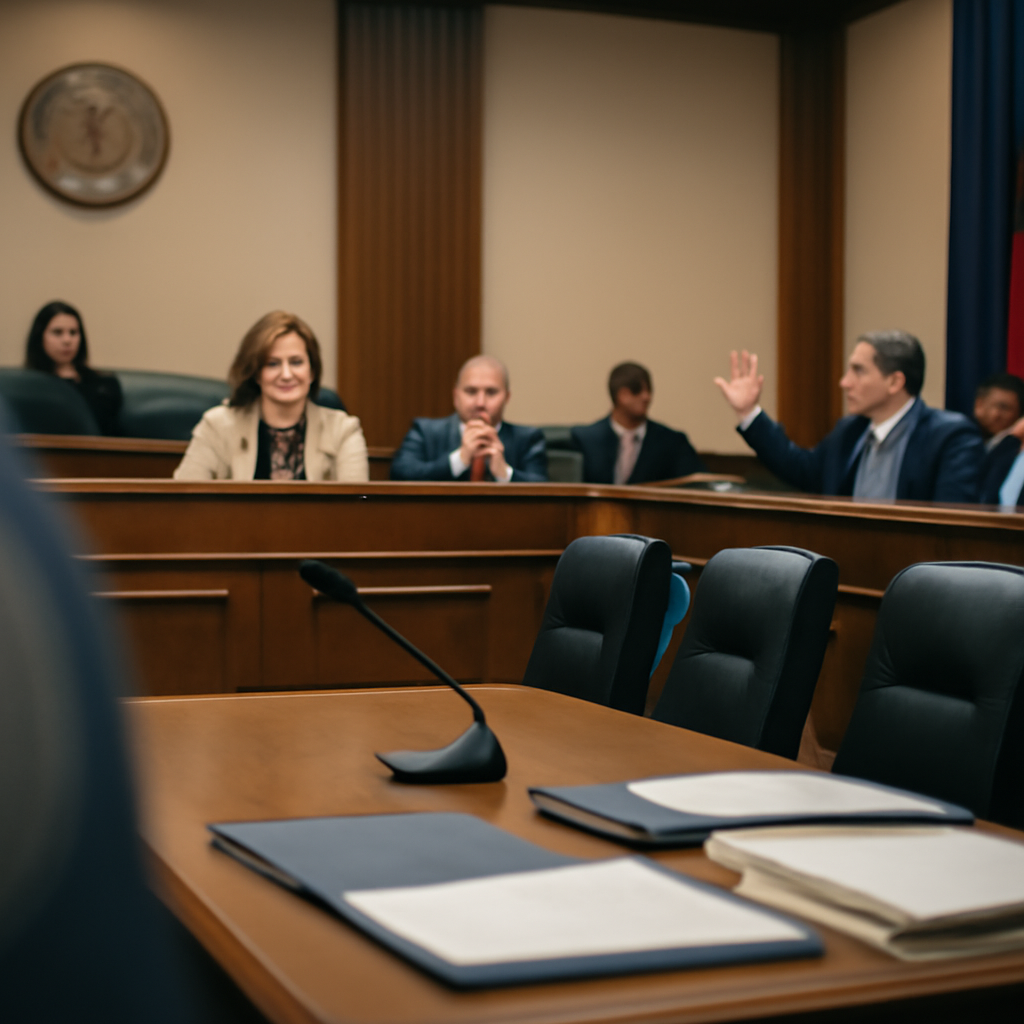
During the House Armed Services Committee (HASC) markup of the fiscal 2027 defense policy bill, Rep. Adam Smith of Washington offered an amendment that would have zeroed out advanced procurement funds for the BBG(X). The amendment was defeated 26–30. Smith cited a Congressional Budget Office projection that the lead Trump-class battleship could cost about $20 billion and argued those funds should instead go toward autonomous drone ships.
HASC vote breakdown and the immediate legislative context
The battleship amendment was part of HASC’s first series of recorded votes on NDAA amendments. The defeat was among several early showdowns: Rep. Seth Moulton’s proposal to lower the NDAA topline by $150 billion failed 25–31, with Democratic Reps. Don Davis of North Carolina and Jared Golden of Maine voting with Republicans. Moulton’s separate amendment requiring the Defense Department to provide a cost breakdown for the war in Iran failed 27–30 on a party-line vote.
Committee debate was still ongoing at the time of the votes, with a final passage vote on the bill scheduled for late tonight or early Friday morning.

This site is the portfolio.
OSINTSights runs on Cloudflare Workers, D1, R2, and Vectorize, with an AI pipeline on Hetzner ARM. Nubivance designed, built, and operates it. We do the same for clients.
See what we buildHASC Chairman Mike Rogers’ defense of the BBG(X) requirements
HASC Chairman Mike Rogers, R-Ala., spoke against Smith’s amendment and framed the battleship’s requirements as the product of prior studies. Rogers said the requirements “were spawned out of the studies for a next-generation destroyer done by the Biden administration,” and argued the Navy lacks “a ship with enough space or power to support the combat systems we need for future conflicts like hypersonics and high being high energy lasers.” Rogers was the only Republican member to speak in defense of the program during the recorded votes.
Democratic critiques: Courtney, Moulton, and Vindman
Several Democrats used the markup to criticize the program. Rep. Joe Courtney of Connecticut, the top Democrat on the seapower and projection forces subcommittee, questioned the logic of ordering parts and materials before a design exists, saying: “The concept of the battleship was announced last December down at Mar-a-Lago, where, again, we didn’t have any designs. We didn’t have any studies in terms of analysis that normally go into starting a new class of any ship. What we did have was an AI-generated picture on a poster board.”
Rep. Seth Moulton called the project a “boondoggle” and “the most expensive sitting duck in world history.” Rep. Eugene Vindman said the program would not be receiving the same support from Republicans “if the ship was named the Obama-class,” a comment intended to highlight perceived partisan dynamics around the effort.
Other amendments tied to Navy programs, including DDG-51 and Ford-class concerns
HASC members passed multiple en bloc packages of noncontroversial amendments, several of which directly affect BBG(X) and other Navy programs. Rep. Jared Golden secured a $500 million boost for the Arleigh Burke-class destroyer (DDG-51) to help pay for a second ship in FY27; the amendment offsets the increase by reducing funds for submarine tenders, littoral combat ship modernization, and KC-46 tanker development.
The committee also adopted a provision requiring the Navy to report on its strategy to design and construct BBG(X) “without interfering with existing nuclear-powered shipbuilding plans, specifically that of the Ford-class carrier.” The committee cited Ford-class delivery delays tied to “supply chain and workforce challenges” and warned that adding a new nuclear-powered surface vessel program “could be further exacerbated by a new nuclear-powered surface vessel program and without careful planning could jeopardize Ford-class delivery.”
A separate amendment ordered a briefing on the so-called Golden Fleet that would include the BBG(X) business case, the novel systems needed to build the battleship and their projected costs, and the impact of BBG(X) and other Golden Fleet vessels on legacy shipbuilding programs.
How the Navy, appropriators, and HASC members will respond
- The Navy and shipbuilders: They will be asked to produce the required reports and briefings on BBG(X) design strategy, novel systems, cost projections, and the program’s impact on Ford-class carrier timelines, per committee provisions.
- Appropriators and budget officials: The NDAA authorizes funding; the committee record notes it is unknown whether appropriators will follow the authorization, leaving the final funding picture for BBG(X) and DDG-51 uncertain.
- HASC members and proponents/opponents in Congress: Early recorded votes show a committee split. With additional briefings and reports now mandated, members opposing the program have secured more information for future votes, while supporters retained authorization language and program access in the near term.
The amendment to strip $1 billion from BBG(X) failed, but the committee simultaneously pressed the Navy for detailed planning and cost assessments and moved money around for destroyer construction. The record leaves open two immediate facts: whether appropriators will mirror these authorizations in actual funding, and whether the Navy can reconcile BBG(X) development with Ford-class delivery timelines now flagged by the committee. The answers will determine whether the battleship remains primarily a paper program, a new construction priority, or a contested budget line in the months ahead.