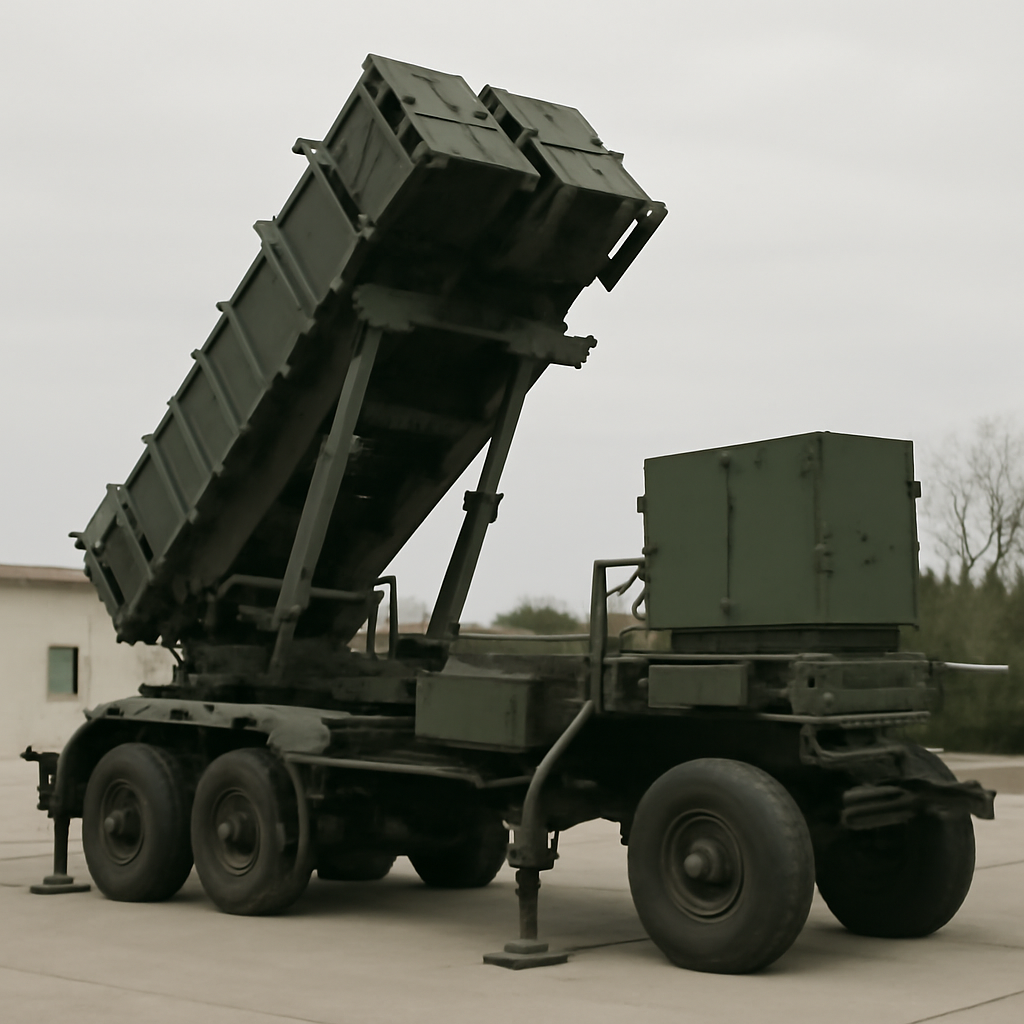
"We were receiving PAC-3 missiles from our partners in certain quantities, but later that monthly volume was cut several times over," Ukrainian President Volodymyr Zelensky wrote on June 3, 2026, adding that the reductions were "not due to a lack of funding, but because of the war in the Middle East." That line sits at the center of a new, formal push by the Senate Armed Services Committee to determine whether the Pentagon can send more Patriot interceptors to Ukraine.
Senate Armed Services Committee directive to the Pentagon
The Senate Armed Services Committee (SASC) has ordered a comprehensive report from the Secretary of Defense, coordinated with the Under Secretary of Defense for Acquisition and Sustainment, to be delivered to congressional defense committees no later than October 1, 2026. The committee said it “recognizes the importance of Patriot air defense systems and Patriot Advanced Capability-3 (PAC-3) interceptors in supporting Ukraine’s self-defense and notes continued concerns regarding interceptor availability, production capacity, and the impact of transfers on United States military readiness.”
SASC’s directive lists a set of required assessments, including:
- “An assessment of current and projected Ukrainian requirements for PAC-3 interceptors over the next 12 months;”
- “An assessment of the availability of PAC-3 interceptors from existing Department of Defense inventories for transfer to Ukraine and the impact of such transfers on United States military readiness and operational plans;”
- “An evaluation of options to accelerate production of PAC-3 interceptors, including through multiyear procurement authorities, advance procurement, expanded supplier capacity, and other industrial-base investments;”
- “An assessment of the feasibility of increasing annual PAC-3 interceptor production and the anticipated timeline for achieving such increases;”
- “An identification of any statutory, regulatory, contractual, or supply-chain barriers to increasing interceptor deliveries to Ukraine;”
- “An assessment of opportunities for allied and partner nations operating Patriot systems to contribute additional PAC-3 interceptors to Ukraine, including options for United States backfill arrangements;”
- “Recommendations for legislative or administrative actions that would enable increased interceptor deliveries to Ukraine while maintaining acceptable levels of U.S. military readiness.”
The committee also required a briefing to congressional defense committees within 15 days after the report’s submission.
Lockheed Martin’s production claims and limits
Lockheed Martin, the prime contractor for PAC-3 interceptors, has publicly announced an intention to ramp production. Under a January contract with the Department of Defense, Lockheed is committed to boosting annual PAC-3 MSE (Missile Segment Enhancement) production from roughly 600 to 2,000 interceptors per year.
But the company’s officials have cautioned that production capacity does not equal control over allocation. Brian Dunn, vice president for strategy and business development of missiles and fire control, told journalists at the ILA Berlin Air Show that Lockheed “doesn’t control what the allocation of those missiles is going to be” and that the company “can’t tell anybody where you’re going to be on that [priority list].”
In an updated response to inquiries, Lockheed Martin stated: “Lockheed Martin is accelerating production and increasing capacity to deliver a record number of interceptors to American and global customers, and stands ready to support any U.S. government decision on Foreign Military Sales deliveries. Additional questions should be directed to the U.S. government.” The company also confirmed that “The PAC-3 MSE is the only variant currently in production. We closed our PAC-3 CRI production line in 2023.”

The cyber insurance questionnaire just landed. Now what?
SOC 2, HIPAA, insurance renewals - someone has to own security strategy. Nubivance provides fractional CISO leadership without the full-time salary.
Get a security leadInventory numbers, wartime expenditure, and CSIS findings
The Center for Strategic and International Studies (CSIS) report cited by TWZ places current PAC-3 MSE production “around the baseline rate of 650 interceptors per year, with half the deliveries going to the United States and the rest to allies and partners.” CSIS noted U.S. procurement over the last decade averaged 225 missiles per year — a pace that, it said, will not be enough to restore spent stocks without future budgeted buys.
CSIS also reported that at the start of the conflict with Iran there were “about 2,500 Patriot interceptors in the U.S. inventory,” and that during that conflict “between 1,060 and 1,430 Patriots were fired.” The report warned the Army’s FY 2027 budget request for 3,203 Patriot missiles would be required to replenish stockpiles, with deliveries projected to start in May 2029.
Ukraine’s immediate needs and recent strikes
Numbers available about Ukraine’s remaining Patriot interceptors are limited and classified. The New York Times noted that “at the end of June last year, there were as few as 16 in Ukraine’s arsenal.” Ukrainian President Volodymyr Zelensky has repeatedly requested additional interceptors from the U.S. and allies; Zelensky’s June 3 tweet framed recent reductions in monthly deliveries as connected to the war in the Middle East rather than to funding.
Operational pressure on Ukraine’s defenses is acute. The Kyiv Independent reported that, in a single mass assault referenced in the source, Russian forces launched 70 missiles and over 600 drones; of 34 ballistic missiles fired, 19 were aimed at Kyiv. The outlet credited Kyiv’s Patriot batteries with intercepting 15 ballistic missiles and five of six 3M22 Zircon hypersonic cruise missiles, but noted that “layered defenses were stretched beyond the limit.” The same reporting referenced damage to cultural sites, including Mystetskyi Arsenal.
What this means for the Pentagon, Lockheed Martin, and Ukraine
- Pentagon: The SASC report requirement forces an explicit, quantified assessment of transfer feasibility, readiness impacts, and legal or supply-chain barriers — and sets an October 1, 2026 deadline for those findings.
- Lockheed Martin: The company says it can increase capacity and is “accelerating production,” but has made clear it does not determine allocation priorities; it also confirmed PAC-3 MSE is the only variant currently in production.
- Ukraine: Kyiv remains dependent on external interceptors to defend against high-volume missile and drone strikes; limited stock counts and high expenditure rates make timely transfers and production increases an urgent operational need.
The Senate’s demand for a detailed feasibility report — and Lockheed’s simultaneous pledge to raise output while disclaiming control over allocation — frames a narrow, consequential window. The Pentagon has declined comment on the committee’s request or on how many interceptors it has provided to Ukraine. The facts now move toward a set of deadlines and numbers: an October 1, 2026 report, Lockheed’s 2,000‑per‑year production target, and the Army’s FY 2027 request whose deliveries begin in May 2029. Whether those arithmetic and policy milestones can resolve Ukraine’s immediate shortages is the question the Pentagon must answer to Congress.