"I hope everyone who celebrates has a great Thanksgiving. I am thankful for all of you!" — the TWZ post opened
The Andersons' double-hulled steel shelter, installed 1955
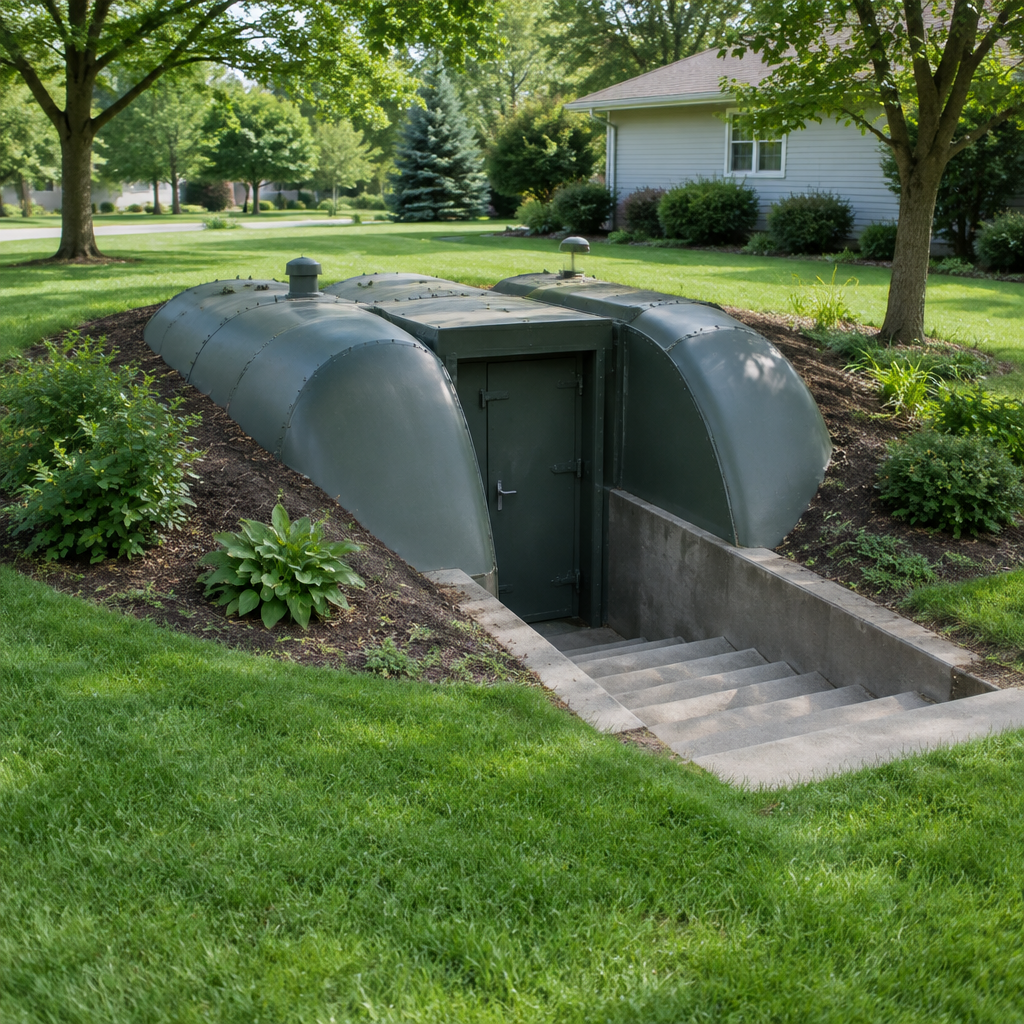
Under the front yard of Mr. and Mrs. Murland E. Anderson of Ft. Wayne, Indiana, a free‑standing, double‑hulled steel fallout shelter was installed in 1955. The shelter is described in the post as a physical expression of mid‑century public policy assumptions: that with enough preparation the American family, and by extension the nation’s social and political fabric, could survive a nuclear attack.
The account records the shelter’s provenance precisely: the Andersons purchased it from J. L. Haverstock, a Ft. Wayne realtor who began selling family fallout shelters as a sideline in early 1955 after reading a promotional Life magazine article. From its installation in 1955 through the 1960s, the Andersons maintained the shelter while the era saw the development of the hydrogen bomb and the Cuban missile crisis.
J. L. Haverstock and the Life magazine prompt
The post attributes the start of Haverstock’s sideline to a specific cultural artifact — a promotional article in Life magazine — and places that decision in early 1955. Haverstock’s activity turns a national magazine piece into a local commercial practice: a realtor selling family fallout shelters in Ft. Wayne.
That chain—magazine article to local seller to family shelter—frames the shelter as a product of both mass communications and small‑scale entrepreneurship rather than a government program alone.

This site is the portfolio.
OSINTSights runs on Cloudflare Workers, D1, R2, and Vectorize, with an AI pipeline on Hetzner ARM. Nubivance designed, built, and operates it. We do the same for clients.
See what we buildThe 1961 resurfacing during the Cuban missile crisis
The shelter did not remain indefinitely inert beneath the lawn. Because it was initially insufficiently anchored against Ft. Wayne’s high water table, the shelter "popped to the surface of the Anderson front yard in time for the Cuban missile crisis" and was "quickly reinterred in a frenzy of shelter building activity in 1961," according to the post.
That moment — a literal coming up from the ground during an international emergency — is the narrative hinge of the account: the artifact’s physical behavior mirrored contemporary anxieties and catalyzed renewed local activity to secure or rebuild protection.
Donors' 1968 purchase and the shelter's later custodianship
The post notes that the donors purchased the property, including the shelter, from the Andersons in 1968. Beyond that transaction, the account does not elaborate on subsequent use or display; it records the chain of ownership through the late 1960s and leaves the shelter tied to the property acquired by those donors.
Prime Directives: forum moderation and community norms on TWZ
The Thanksgiving post also sets clear behavioral rules for the community. It urges respectful political discussion, reminding readers there will always be disagreement and that differences should be hashed out respectfully and on the facts. The post forbids "childish name‑calling or personal attacks of any kind," "drive‑by garbage political memes," and "conspiracy theory rants." Links to "crackpot sites" will be removed, and "trolling and shitposting will not be tolerated."
The post advises users to avoid obsessive behavior about other users and to use the mute button if they dislike what they see. It emphasizes reporting offenders — “this doesn’t mean reporting people who don’t share your political views, but we really need your help in this regard.”
What this means for historians, homeowners, and community moderators
- Historians and preservationists: The Anderson shelter is a concrete artifact of Cold War-era civil defense ideas — an example that connects national anxieties (the hydrogen bomb, the Cuban missile crisis) with local actors and material culture.
- Homeowners and household preparedness advocates: The shelter’s resurfacing because of Ft. Wayne’s high water table is a reminder that engineering, site conditions, and maintenance mattered as much as the intention to prepare.
- Community moderators and forum participants: The post’s "Prime Directives" outline a proactive moderation posture emphasizing respectful debate, targeted removals (conspiracy sites, trolling), and member reporting as core tools to maintain quality discussion on TWZ.
The TWZ post stitches together an artifact and an editorial: a mid‑century steel shelter bought in 1955, briefly exposed and reburied in 1961, and transferred with its lot in 1968 — plus a contemporary reminder to keep community conversation civil. Together those threads make a small but pointed record of how physical preparedness and community norms have both been constructed, negotiated, and handed on through time.