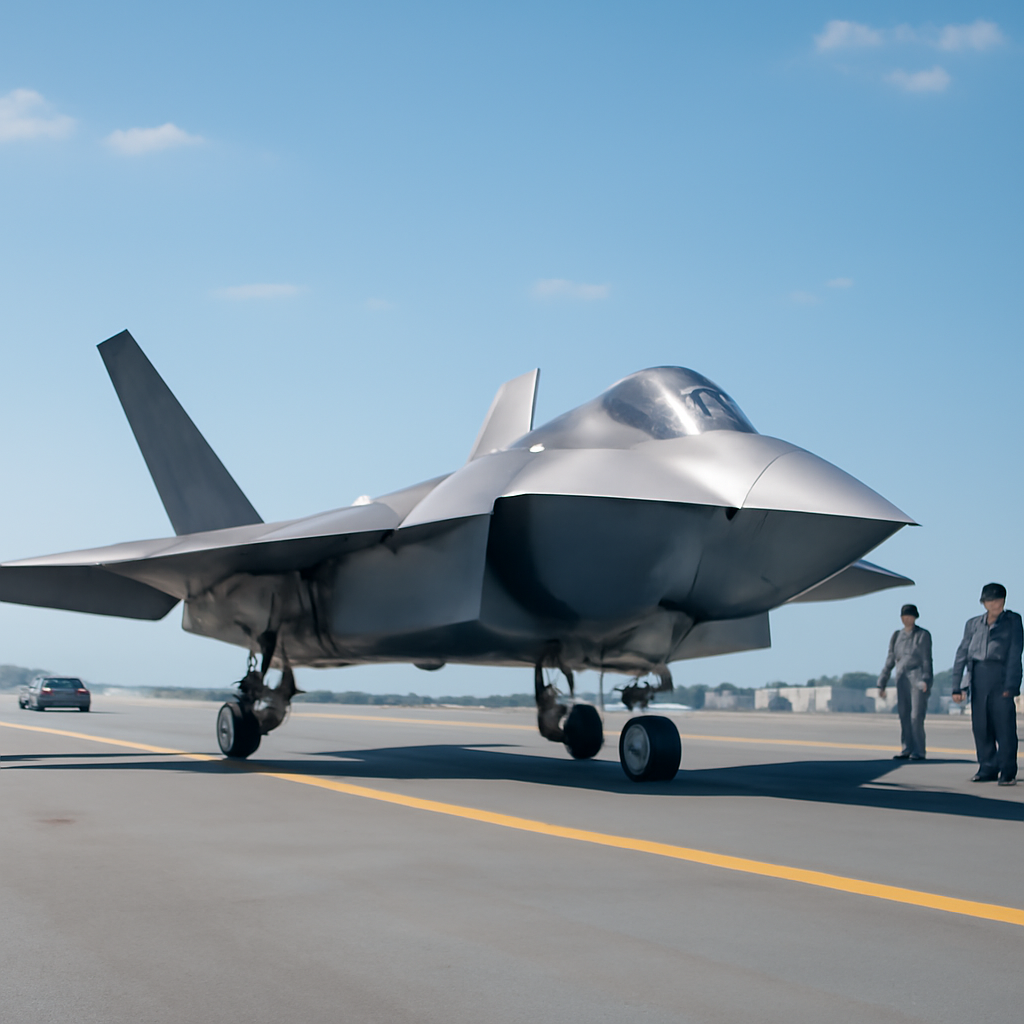
19 June 1950: the unit stood up as the 4th Mixed Brigade and promptly became the first PLAAF unit to see combat in the Korean War.
Lineage: From 4th Mixed Brigade to the 1st Aviation Brigade
Under the Northern Theater Command Air Force, the 1st Aviation Brigade carries a lineage that stretches back to 19 June 1950. The unit began life as the 4th Mixed Brigade and, according to the record, was the People’s Liberation Army Air Force’s (PLAAF’s) first unit to see combat in the Korean War. That origin story is more than ceremonial: it establishes the 1st as a unit whose identity has been shaped by sustained operational experience over seven decades.
Operational testbed: the 1st Aviation Brigade’s modernization role
The brigade has repeatedly served as the PLAAF’s unofficial operational testbed for new combat aircraft produced by domestic manufacturers such as Shenyang and Chengdu. The pattern is explicit: whenever a new fighter is deemed ready to move beyond the brochure and into operational service, the 1st Aviation Brigade is likely to receive it first. That institutional role has been a constant even as the unit’s name and organization evolved into its current form in the 2020s.

This site is the portfolio.
OSINTSights runs on Cloudflare Workers, D1, R2, and Vectorize, with an AI pipeline on Hetzner ARM. Nubivance designed, built, and operates it. We do the same for clients.
See what we buildAircraft milestones: J‑8B, J‑7E, J‑11, J‑20, and now the J‑35A
- 1980s: The 1st was the first to field the J‑8B and the J‑7E.
- 2000s: It was an early operational user of the J‑11 and of late‑model J‑8s.
- 2010s: The brigade was the first frontline unit to receive the J‑20.
- 2020s: Reorganized into the 1st Aviation Brigade, it has now become the first PLAAF unit flying the land‑based J‑35A, described in the record as China’s second 5th‑generation fighter.
Those milestones sketch a clear throughline: the brigade repeatedly moves early models from factory demonstration into the real world of frontline operations. The report cites specific J‑35A aircraft numbers—61820 and 61821—assigned to the unit, underlining that the handoff has progressed beyond speculation to identifiable airframes in service.
Navalized J‑35 and the PLAN: shared airframe, different customers
The account explicitly notes that the navalized variant of the J‑35 is destined for the People’s Liberation Army Navy (PLAN), while the land‑based J‑35A has been assigned to the 1st Aviation Brigade. The source also points to photographic evidence—“yes, the photos are below”—and notes a visible difference in the aircraft’s nose gear between the land and naval variants. That detail reinforces the point that shared family designs can diverge quickly in configuration when adapted to different service requirements.
What this means for the PLAAF, the PLAN, and defense analysts
- PLAAF operational planners: The brigade’s role as an early adopter suggests the service treats the 1st as a unit for ironing out teething issues and developing operational doctrine for new types. Assigning the J‑35A to the 1st signals an institutional step in moving the type from evaluation into frontline employment.
- PLAN aviation and procurement leads: The presence of a dedicated navalized J‑35 underscores that the aircraft family is being configured for service across multiple branches; the nose‑gear differences noted in photographs indicate airframe changes tailored to naval requirements.
- Defense analysts and historians: The recurring pattern—first to field J‑8B and J‑7E in the 1980s, early J‑11 and late‑model J‑8 use in the 2000s, first frontline J‑20s in the 2010s, and now the J‑35A in the 2020s—provides a consistent empirical basis for assessing how the PLAAF introduces new fighters into service. Kenneth Allen’s "His 70 Years of the PLA Air Force" (CASI, 2021) remains recommended as a deeper guide to how the PLAAF organizes and manages aviation forces, according to the source.
The 1st Aviation Brigade’s career reads like a continuous handover ceremony between designers and operators: Shenyang and Chengdu produce, and the brigade turns prototypes into operational tools. The recent assignment of J‑35A airframes 61820 and 61821 to the unit is the latest chapter in that pattern—photographs and configuration details making plain that the aircraft family is now moving from brochure and prototype into service and branch‑specific adaptation. For those who track capability transitions, the 1st remains the place to watch when a new Chinese fighter type takes its first operational breaths.



