"Ha — PL‑15 is practically vintage at this point, so 2025," the blog observed, a concise assessment that frames the central fact reported: the PL‑17 beyond‑visual‑range air‑to‑air missile, described as the follow‑on to the PL‑15, has moved into an integration phase and is being fitted not only to the newest platforms but to legacy fighters as well.
PL‑17: the stated follow‑on to the PL‑15 and its early rollout
The source identifies the PL‑17 as the successor to the PL‑15 and notes that the PL‑15 “grabbed international headlines on May 7th, 2025.” As of the blog post dated February 22, 2026, the PL‑17 is reported to be in the integration phase. The post emphasizes that the missile is being fielded across multiple airframes, signaling its growing role in the force’s long‑range air‑combat posture; the post states that retrofitting PL‑17 onto older airframes like the J‑11 “says a lot about how central this missile is becoming to their long‑range air‑combat doctrine.”
Integration beyond front‑line types: J‑16, J‑20 and the J‑11 retrofit
The post explicitly says the PL‑17 is “not just for the shiny new J‑16s and J‑20s” and highlights that the PLA is already retrofitting the missile onto older airframes such as the J‑11. Photo captions and commentary in the post show a J‑11B being discussed in the context of upgrades to a J‑11BG standard, implying a planned conversion path from existing J‑11 variants to an upgraded configuration able to host newer weapons.

Audit-ready is a season. It shouldn't be.
Evidence in spreadsheets, controls drifting between audits, frameworks multiplying on flat headcount. Nubivance runs continuous compliance on Rapid7 Cyber GRC - SOC 2, HIPAA, ISO 27001, PCI, CMMC.
End the scrambleJ‑11B, J‑11BG and the continuing service of Flanker variants
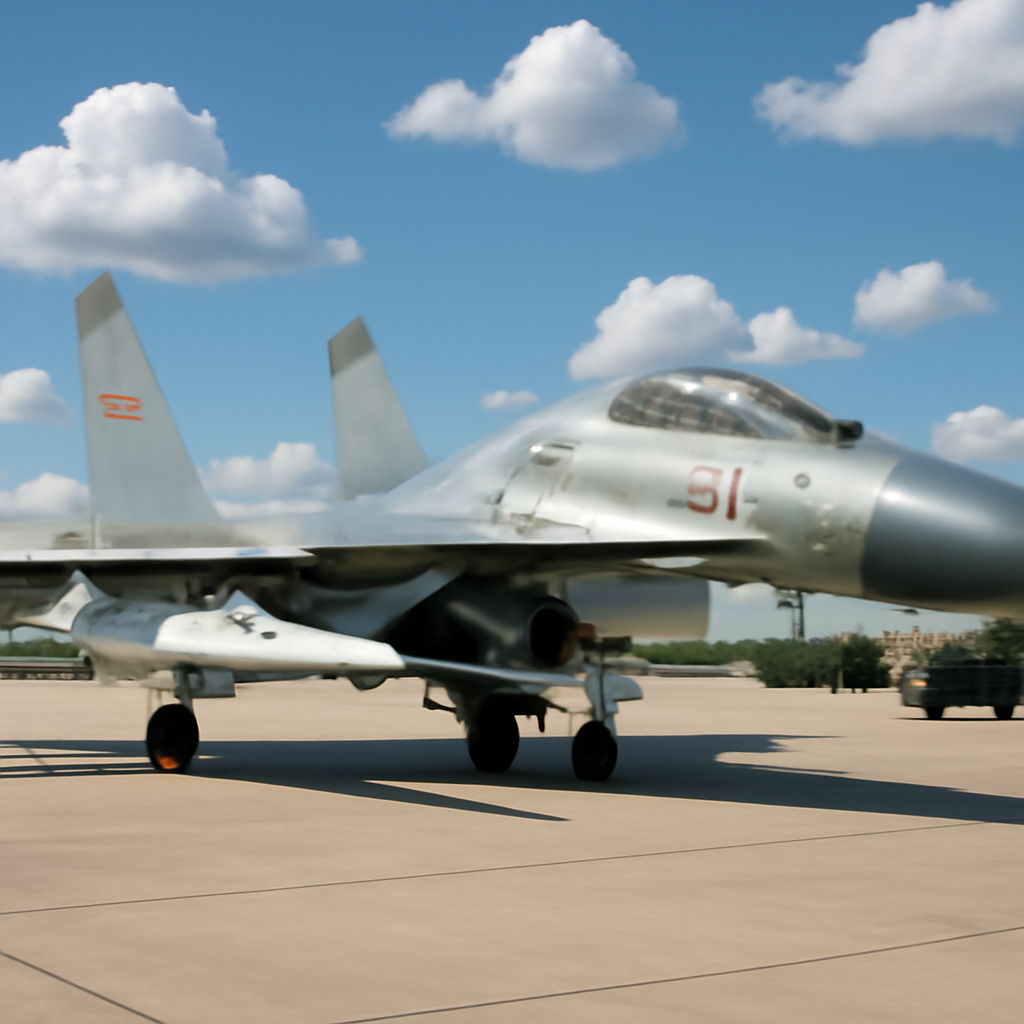
The blog provides several specific technical and inventory notes about the J‑11 family. It describes a J‑11B as “equipped with an AESA radar and capable of carrying the advanced PL‑10 and PL‑15 air‑to‑air missiles.” The post also states that the J‑11B was the first PLAAF Flanker variant to feature fully Chinese‑developed avionics, weapon systems, and engines. Importantly, the piece reports that nearly 300 aircraft, including both J‑11A and J‑11B variants, remain in service, and that “upgrading these airframes to the J‑11BG standard central on AEDA radar appears to be a straightforward and logical decision for PLAAF leadership.” The post includes visual references: a front view of a J‑11B and a rear view of a J‑11BG, plus bonus photos of a J‑11GBH of PLA Naval Aviation (the post notes H = Hai or Ocean).
PLA procurement pattern as described in the post
The post characterizes the PLA’s procurement approach in a single, categorical line: their long‑standing pattern is “acquire systems from abroad, absorb the technology, and ultimately transition to fully indigenous solutions, one way or another.” The blog presents the J‑11’s evolution and the push to fit PL‑17 onto older airframes as consistent with that pattern.
How the PLAAF, PLA Naval Aviation, and procurement leaders are affected
- PLAAF: The post portrays the PLAAF as moving to field PL‑17 not only on modern platforms (J‑16, J‑20) but also across a substantial fleet of older Flanker airframes, reflecting a force‑wide emphasis on long‑range air‑combat capability.
- PLA Naval Aviation: The blog includes imagery and a label for a J‑11GBH tied to naval aviation (H = Hai or Ocean), indicating that naval air units are part of the upgrade pathway shown in the photos.
- Procurement leaders and force planners: With nearly 300 J‑11A/J‑11B types still in service, the post frames retrofitting as a pragmatic route—upgrading avionics and radars to J‑11BG standard—to extend the utility of existing aircraft while fielding newer missiles like the PL‑17.
Taken together, the source paints a concise picture: as of February 22, 2026, the PL‑17 is in integration and being installed across both new and legacy platforms; the J‑11 family remains numerous and is being upgraded; and the changes fit a documented procurement pattern of technology absorption and indigenization. The account raises a clear, factual question left open by the post itself: how quickly and how widely will the PL‑17 be fielded across the nearly 300 J‑11 airframes the author reports are still in service?