"The role of China's Woody Island is pretty well documented," the China Defense blog wrote — a concise opening that the site's author used to frame recent, routine admissions about activity on the island.
Woody Island as a forward operating location
The blog notes that aircraft operating from Woody Island gain measurable reach into the South China Sea: Woody Island sits roughly 300 to 330 km (185 to 205 miles) from Sanya Phoenix International Airport on Hainan. That distance translates into about 600 km of additional round‑trip reach compared with launching directly from Hainan — a tangible extension of patrol and on‑station time the post argues is "not an insignificant advantage" for platforms sensitive to station time, fuel burn, and coverage.
KJ‑500 / KJ‑500H AEW&C operations to Huangyan Island
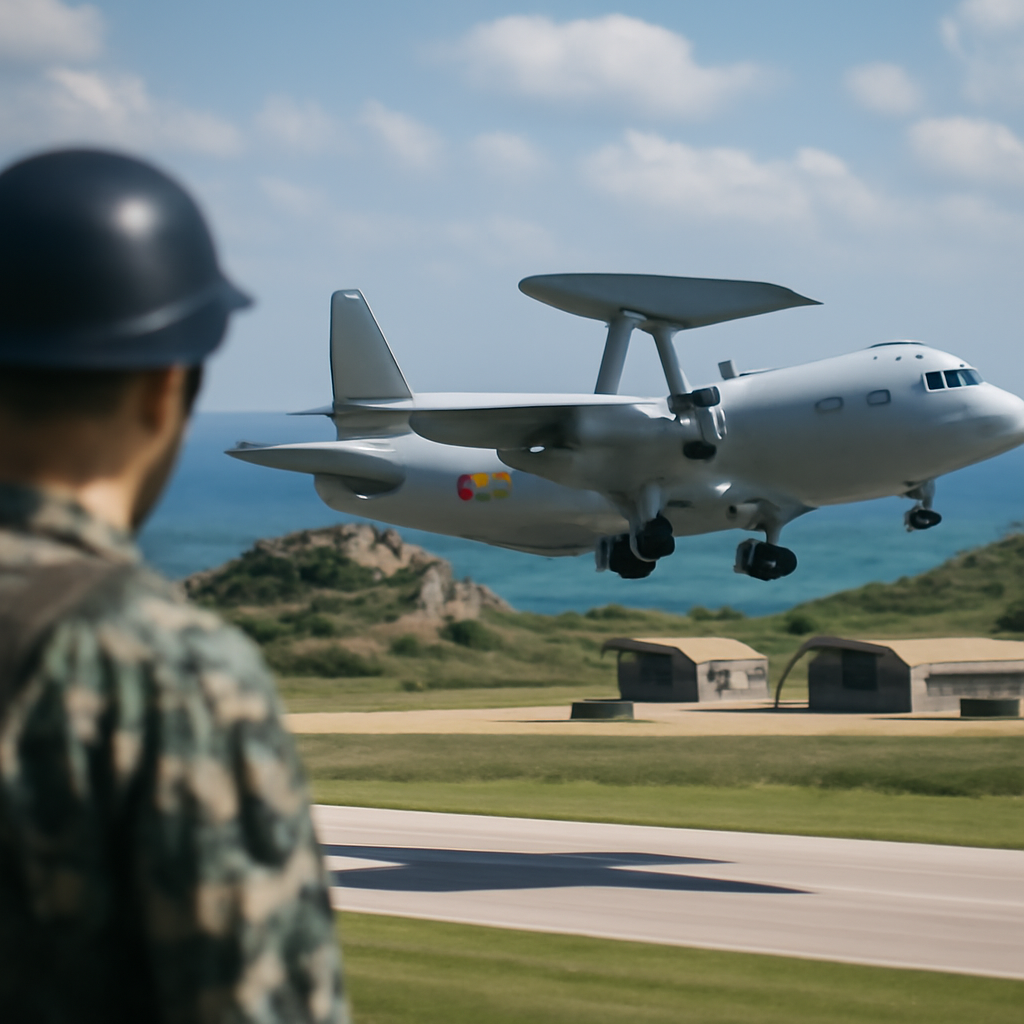
The report cites an official confirmation that both the PLAAF and PLAN are using Woody Island for joint‑service drills, and identifies a featured participant as a KJ‑500/KJ‑500H airborne early warning and control (AEW&C) aircraft operating to Huangyan Island. The author treats the deployment as unsurprising but useful to have on the record: "The PLA operating AEW&C out of Woody Island is about as surprising as finding water in the South China Sea, but official acknowledgments are always useful."

This site is the portfolio.
OSINTSights runs on Cloudflare Workers, D1, R2, and Vectorize, with an AI pipeline on Hetzner ARM. Nubivance designed, built, and operates it. We do the same for clients.
See what we buildWZ‑7 Soaring Dragon dispatched from "an inland military airport"
The blog also reports that WZ‑7 Soaring Dragon unmanned systems were dispatched to participate in the exercise, and importantly notes they originated from "an inland military airport." The phrasing in quotes comes from the report the blog cites; it highlights a launch pattern in which long‑range or high‑end reconnaissance platforms move from interior bases to island airfields to join forward operations.
JL‑10 twin‑seat trainers patrolling Huangyan (Scarborough Shoal)
Separately, the blog confirms the PLAAF has begun stationing JL‑10 twin‑seat advanced trainers to patrol around Huangyan Island (黄岩岛), also known as Scarborough Shoal. The author lays out operational logic: twin‑seat JL‑10s are cheaper to operate in harsh island environments, where "modern fighters hate salt" — salt accelerates corrosion, degrades sensors, ages precision components faster, increases maintenance hours, and lowers reliability. Stationing JL‑10s, the post argues, reduces maintenance burden, lowers escort speeds to match presence‑mission needs, and cuts operating cost compared with deploying higher‑performance land‑based fighters for routine patrol or escort duties.
How the PLAAF, PLAN, and the Central Military Commission are positioned
- PLAAF: The air force is employing a mix of platforms — AEW&C KJ‑500/KJ‑500H, WZ‑7 unmanned systems, and JL‑10 trainers — to balance reach, endurance, and cost for patrols that extend into the South China Sea.
- PLAN: By operating joint drills on Woody Island, the navy provides the forward‑island logistics and basing that let air assets stage closer to contested or patrolled sea areas.
- Central Military Commission: The blog frames island expansion and forward basing as institutional choices that increase reach and on‑station time for PLA aviation — decisions the author treats as pragmatic even as he leavens the point with a satirical comment about fuel savings.
The record the blog assembles is plain: forward basing on Woody Island widens patrol horizons, AEW&C and reconnaissance platforms are being used from that location, and cost‑effective trainers like the JL‑10 are being employed for predictable, low‑tempo presence missions. The account combines operational details (platform types, launch points, and distances) with a clear throughline about logistics and mission fit.
The post closes with a wry observation — "The real news would be if they weren't doing those things" — a reminder that, within the facts the blog presents, these deployments are depicted as routine elements of broader operational patterns rather than singular surprises. For now, the specifics on platform movements, basing distances, and platform selection remain the concrete points documented in the public report.