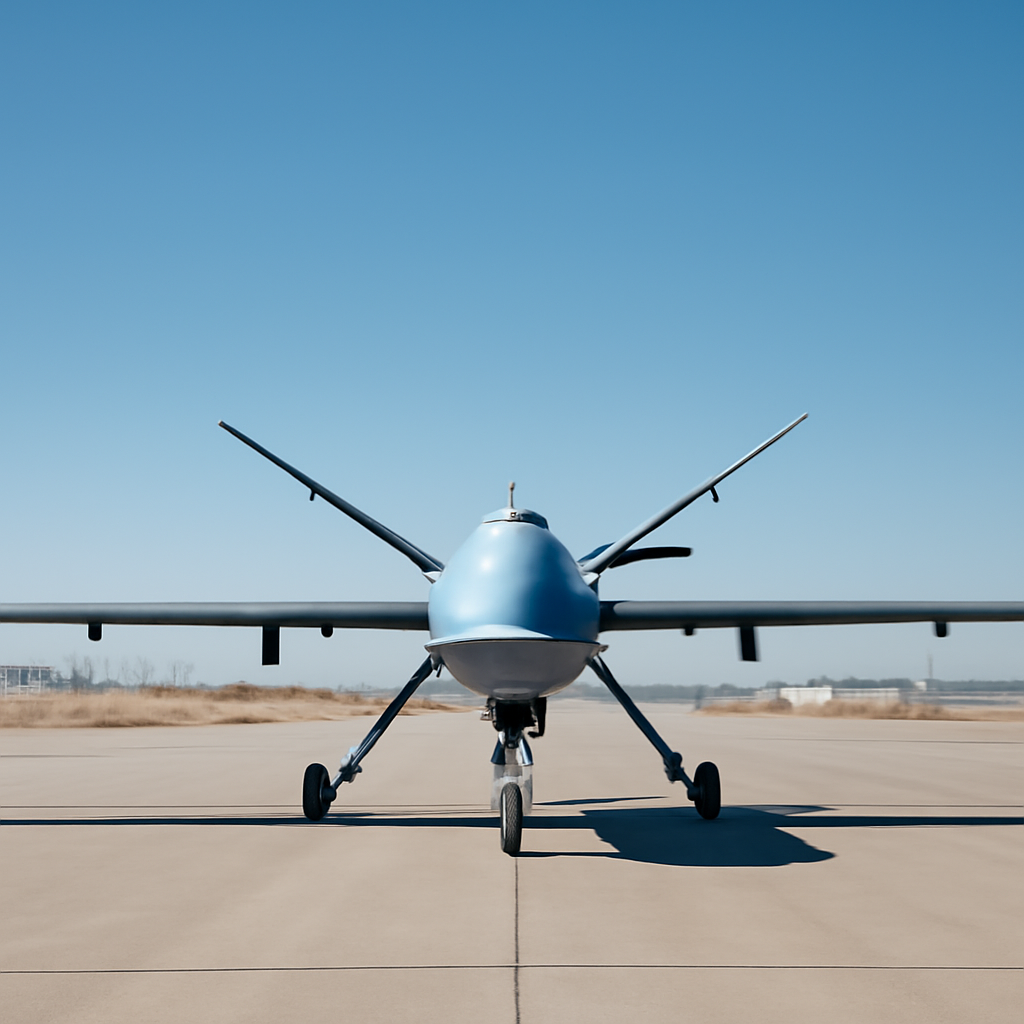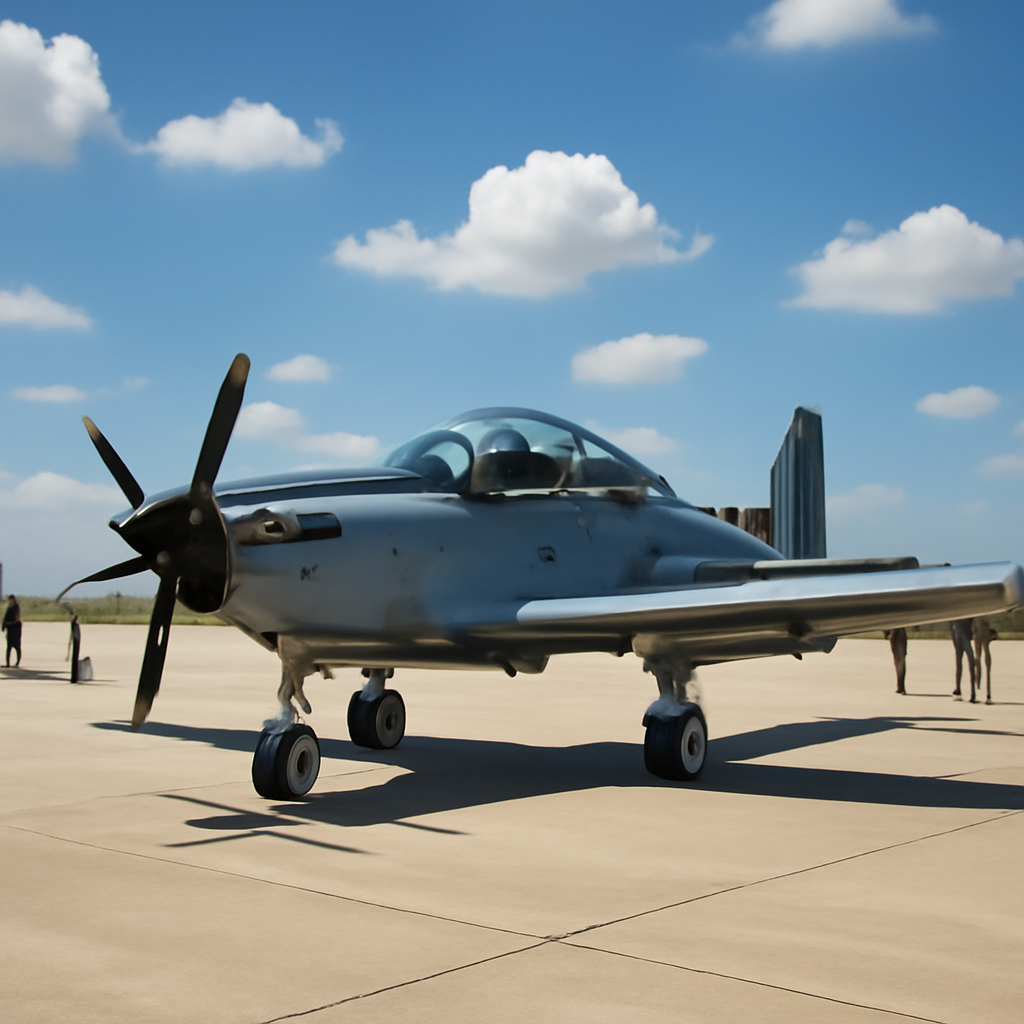
StarAir, formally Hunan Sunward Technology Co., Ltd., saw its SA218 conduct its maiden flight on October 1.
SA218's maiden flight and the CJ-6 replacement contest
The SA218's first flight marks the emergence of at least one civilian-backed contender for a long-running People’s Liberation Army basic trainer requirement intended to replace the aging Nanchang CJ-6. The SA218 now appears to be one of two, perhaps three, publicly known options; the TA-20 from Wuhu Zhongke Aircraft is the other named contender. Separately, the XJJ basic trainer made its first public appearance at the 2025 Dubai Airshow and has been presented as a likely modern successor to the CJ-6.
Why replacing the CJ-6 is technically and operationally notable
The CJ-6 has been the backbone of Chinese basic pilot training for decades: it first flew in the late 1950s and entered service in the early 1960s. The platform earned a reputation in the source material as rugged, forgiving, easy to maintain, and inexpensive to operate, attributes that prolonged its service life and allowed exports and civilian variants. The XJJ program was reported as moving toward a turboprop solution intended to replace the CJ-6’s piston HS-6A (Huosai-6A) engine, bringing basic training closer to the performance envelope and handling characteristics of modern military aircraft.

This site is the portfolio.
OSINTSights runs on Cloudflare Workers, D1, R2, and Vectorize, with an AI pipeline on Hetzner ARM. Nubivance designed, built, and operates it. We do the same for clients.
See what we buildHow China’s procurement approach resembles — and departs from — the Soviet OKB model
At a glance, the competition among multiple airframe designs resembles the Soviet-era model of design bureaus competing for state selection. Names such as Chengdu Aircraft Industry Group, Shenyang Aircraft Corporation, Xi'an Aircraft Corporation, and Nanchang Aircraft Corporation regularly appear behind major PLA aircraft programs. But the source emphasizes a structural difference: those Chinese firms are largely vertically integrated organizations operating under the AVIC umbrella, performing design, development, testing, and production rather than separating design bureaus from factories. The practical effect is competition, but within an integrated state-owned industrial system sharing suppliers, engines, and electronics.
Scale, cost, and the case for civilian entrants — the Mengshi example
The source frames military procurement as a three-part equation: performance, cost, and scale. It argues that while performance and cost attract attention, scale — how many units can be built and how quickly — can determine outcomes. Vertically integrated firms can scale rapidly once a design matures, spreading fixed costs and streamlining supply chains. The narrative cites the Dongfeng Mengshi family as an illustrative parallel: Dongfeng moved from commercial automotive expertise into a military vehicle line, leveraging shared manufacturing facilities, supply chains, and engineering talent. That example underlines the broader policy theme described in the source: allowing civilian firms to bid on lower-risk, dual-use platforms (such as a basic trainer) can free top-tier defense aerospace teams to focus on more advanced combat programs while drawing on China’s large civilian industrial ecosystem — an approach often labeled Military-Civil Fusion (军民融合) in the source material.
What this means for the PLA, StarAir, and AVIC aircraft groups
- The People's Liberation Army: The PLA’s basic-training pipeline could move from a long-serving piston trainer to turboprop designs that better match modern training needs if one of these contenders is selected and produced at scale.
- StarAir (Hunan Sunward): A successful SA218 program — beginning with the October 1 maiden flight — would demonstrate civilian firms can meet military training requirements and may accelerate more civilian participation in defense-relevant manufacturing.
- AVIC member companies such as Chengdu and Shenyang: Their vertically integrated structures and shared industrial ecosystem will remain central if the state awards a large-scale trainer contract, because scale favors firms that can mount rapid production and leverage common suppliers and engineering resources.
The SA218 is interesting not solely for its technical merits. As the source puts it, the aircraft "offers another window into how China approaches procurement: encouraging competition, leveraging civilian industry, and building systems designed not just for performance, but also for cost and scale." In that framing, the CJ-6 replacement competition is as much an exercise in industrial policy and production economics as it is an exercise in aircraft design — because, in the words repeated in the source, "quantity has a quality all its own."