"Japan would keep monitoring China‑Russia activity around the archipelago 'with concern,'" Chief Cabinet Secretary Kihara Minoru said.
What Japan detected: ships, locations, and a first public announcement
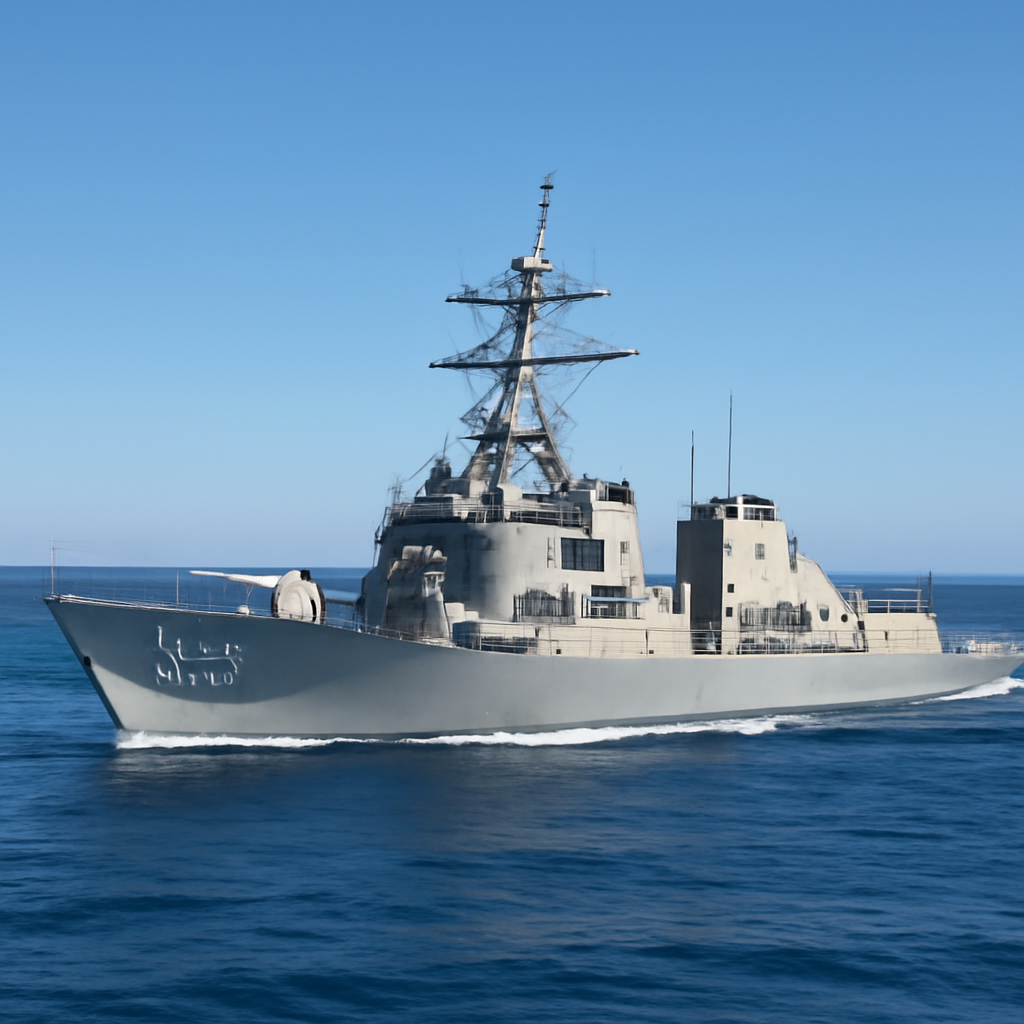
Japan’s Ministry of Defense told reporters on July 21 that its forces had detected three Chinese naval vessels and a Russian frigate conducting operations near Okinotorishima. The Joint Staff reported the Chinese Type 055 destroyer Anshan, the Type 052D destroyer Kaifeng, and the Type 903A replenishment ship Kekexilihu, together with the Russian Steregushchiy‑class frigate Rezkiy, sailing northeast about 330 kilometers southwest of Okinotorishima. The ministry said this was the first time it has publicly announced a case involving a foreign warship conducting a live‑fire exercise inside Japan’s exclusive economic zone (EEZ).
The Kaifeng drill: where it happened, how it was announced, and the safety concern
Tokyo’s Joint Staff later confirmed the Kaifeng conducted a machine‑gun firing roughly 180 kilometers southwest of Okinotorishima — a location squarely inside waters Japan regards as its EEZ. The Chinese destroyer radioed nearby vessels shortly before the drill to announce its location and duration; the MSDF destroyer Samidare, on monitoring duty, picked up that transmission. Tokyo lodged a diplomatic protest, arguing the exercise could endanger nearby shipping. No damage to vessels was reported.

Audit-ready is a season. It shouldn't be.
Evidence in spreadsheets, controls drifting between audits, frameworks multiplying on flat headcount. Nubivance runs continuous compliance on Rapid7 Cyber GRC - SOC 2, HIPAA, ISO 27001, PCI, CMMC.
End the scrambleThe legal framing: EEZ rights, territorial sea limits, and Okinotorishima
Japan did not allege the drill was a violation of international law. The firing occurred well beyond Japan’s 12‑nautical‑mile territorial sea, and under the United Nations Convention on the Law of the Sea (UNCLOS) an EEZ grants coastal states sovereign rights over natural resources but not full sovereignty over all activity within it. The source notes that foreign militaries generally retain freedom of navigation in an EEZ and that military exercises there are not automatically unlawful — a principle the United States and other maritime powers rely on.
Beijing’s response reversed course on key points. Foreign Ministry spokesperson Lin Jian dismissed Japan’s protest as groundless, accused Tokyo of exaggerating external threats to justify its own military buildup, and reiterated China’s long‑standing argument that Okinotorishima is a rock not capable of generating an EEZ under UNCLOS Article 121. Japan has reinforced Okinotorishima with concrete to preserve its claim to islet status. The legal disagreement therefore reaches beyond whether exercises in an EEZ are permissible: China rejects Japan’s entitlement to an EEZ around Okinotorishima and argues the surrounding waters are high seas.
China‑Russia naval coordination: from Joint Sea 2026 to Western Pacific patrols
Tokyo officials framed the drill in a broader operational context. The Kaifeng was operating alongside the Russian frigate during a joint maritime patrol that followed the two navies’ “Joint Sea 2026” exercise near Qingdao. Japanese officials highlighted that the same four ships had passed southward between Okinawa’s main island and Miyako Island on July 16. The article places this incident amid a series of increasingly sophisticated China‑Russia activities — including joint bomber flights, China’s submarine‑launched ballistic missile test on July 6, and repeated transits through the Miyako and Tsushima straits — and says the two navies are approaching genuine operational interoperability.
Chinese Defense Ministry spokesperson Jiang Bin defended the partnership as resting on principles of non‑alliance, non‑confrontation, and non‑targeting of third parties, and described the exercise and subsequent patrol as part of an annual cooperation plan rather than a response to current international or regional tensions.
What this means for commercial and fishing vessels, Tokyo, and the United States and other maritime powers
- Commercial and fishing vessels: The immediate concern is safety — the article stresses that a live‑fire drill, even with prior notice, creates risks when warning windows are brief. Tokyo argued the exercise could endanger nearby shipping.
- Tokyo (Japanese officials and defense planners): Officials face a dilemma: defend maritime claims and deter risky behavior while avoiding legal arguments so broad they would undercut the freedom of navigation principles Japan and its partners rely on elsewhere. Defense Minister Koizumi Shinjiro framed the drill as part of deepening China‑Russia military cooperation.
- The United States and other maritime powers: The piece notes that these actors rely on the principle that military operations in another state’s EEZ are not automatically unlawful. The article points out the irony that China here invoked a permissive interpretation of naval freedom that it typically resists when others operate in waters it claims.
Okinotorishima itself is tiny, but the events around it are disproportionately revealing: the sightlines of navigation safety, competing readings of UNCLOS, and expanding China‑Russia naval coordination are all being tested in the same stretch of sea. Tokyo treated a short machine‑gun drill as a strategic signal rather than an isolated incident; Beijing described it as routine. The divergence — over legal status, maritime practice, and what counts as routine — is now playing out in the water between them.