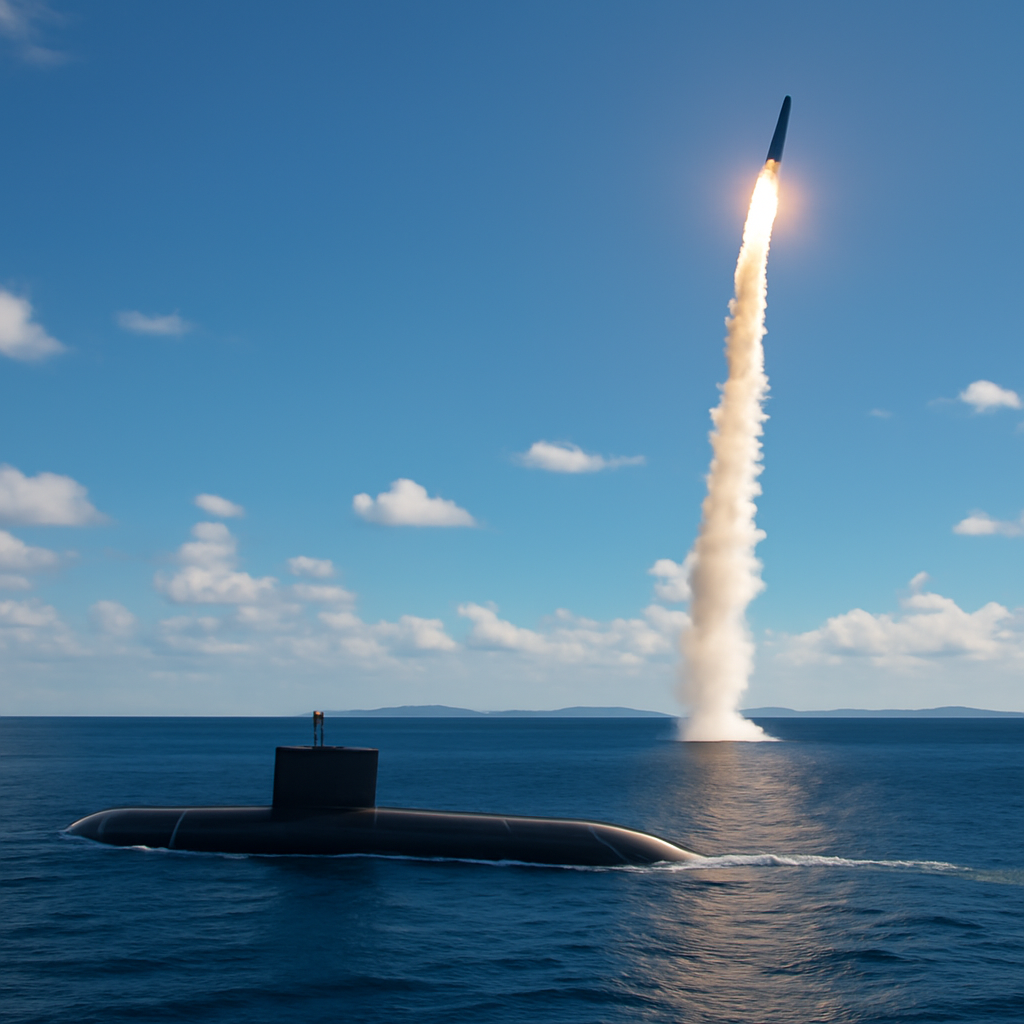
"The ink was barely dry on the historic 6 July alliance between Australia and Fiji when the response came from Beijing," said Malcolm Davis, capturing the sequence at the heart of a development that has set off fresh debate across the South Pacific.
China’s announcement and the Ocean of Peace Alliance
China said on 6 July that one of its submarines had test-launched a ballistic missile into the Pacific Ocean. The launch came only hours after Australia and Fiji signed a mutual defence agreement identified in the reporting as the Ocean of Peace Alliance (or Veitacini Treaty). With that signing, the source records, Fiji became Australia’s fourth full ally, after the United States, New Zealand, and Papua New Guinea.
Analysts see the test as both signal and capability demonstration
ASPI analysts offered converging and divergent readings of the test. Malcolm Davis described the SLBM launch as "a clear warning by Beijing" and characterised submarine-launched ballistic missiles as "a weapon designed for nuclear war," arguing the timing could hardly be coincidental. Mike Hughes, by contrast, warned it is "unlikely the test is directly linked to the Australia–Fiji deal" and framed the event as evidence that "China’s military and nuclear modernisation continues apace."
Justin Bassi called the test "an escalation in its ongoing military expansion" and stressed Beijing’s growing willingness to project power "far beyond its own shores." Raji Rajagopalan described it as "another example of its aggressive behaviour towards smaller countries," and Eric Frecon warned the move could be counter-productive ahead of the next Pacific Islands Forum Leaders Meeting.

This site is the portfolio.
OSINTSights runs on Cloudflare Workers, D1, R2, and Vectorize, with an AI pipeline on Hetzner ARM. Nubivance designed, built, and operates it. We do the same for clients.
See what we buildTechnical profile: Yuan Wang 5 and missile flight geometry
Linus Cohen noted a technical detail visible in public reporting: the telemetry and tracking vessel Yuan Wang 5 was present in the region. Cohen described Yuan Wang 5 as "a satellite-tracking and telemetry vessel operated by the People’s Liberation Army Aerospace Force – China’s space force" and said the vessel’s presence is consistent with measuring missile performance.
Cohen also highlighted that, unusually for a Chinese strategic missile test, the weapon "flew at a shallower, more normal angle" over a realistically long distance rather than on a steep lofted trajectory. The testing profile and tracking assets together underline that the event served both political signalling and technical validation purposes.
Context: previous tests and regional manoeuvres
The ASPI commentary places this launch in a broader pattern. Analysts noted it was "the fourth such test by China." The most recent prior example, cited in the reporting, occurred in September 2024, when "an intercontinental ballistic missile of the DF-31 type flew from Hainan to seas near French Polynesia." Malcolm Davis also referenced last year’s Chinese naval deployments, including a March circumnavigation of Australia that "conducted unannounced missile drills in the Tasman Sea."
What this means for Australia, Fiji, and Pacific island nations
- Australia: Analysts urged Canberra to take the test seriously as a signal Beijing may use implied military force to shape regional alignments; the timing was read as a direct message about Australia strengthening ties in its region.
- Fiji and other Pacific island nations: Madi Jones observed China may hope the test deters security cooperation with Australia, but she warned it could instead encourage collective security among Pacific nations; past responses to China’s 2024 testing included Pacific nation statements—"including from Fiji and Palau"—that urged respect and condemned the displays of force.
- Regional forums and partners: Eric Frecon flagged that militarisation is a live concern ahead of the Pacific Islands Forum Leaders Meeting, and raised whether external powers might again choose demonstrative responses—"the question is now whether the US will reply with a test, as it did in 2024."
The recorded claims leave one concrete, immediate question on the table: "So, it’ll be interesting to see how close this test’s warhead came to Fiji," Malcolm Davis wrote. That single, specific detail—how near the flight path came to inhabited islands—will be central to how Pacific governments measure the political impact of a technical missile trial that unfolded in the same hours Australia and Fiji sealed a security agreement.
https://www.aspistrategist.org.au/chinas-pacific-ballistic-missile-test-views-from-aspi-analysts/



