"But, eventually every aircraft reaches the end of its journey," wrote China Defense Blog on November 5, 2025 — a line that framed the appearance in Dubai of what may be the CJ-6's long-awaited successor.
XJJ’s public debut at the 2025 Dubai Airshow
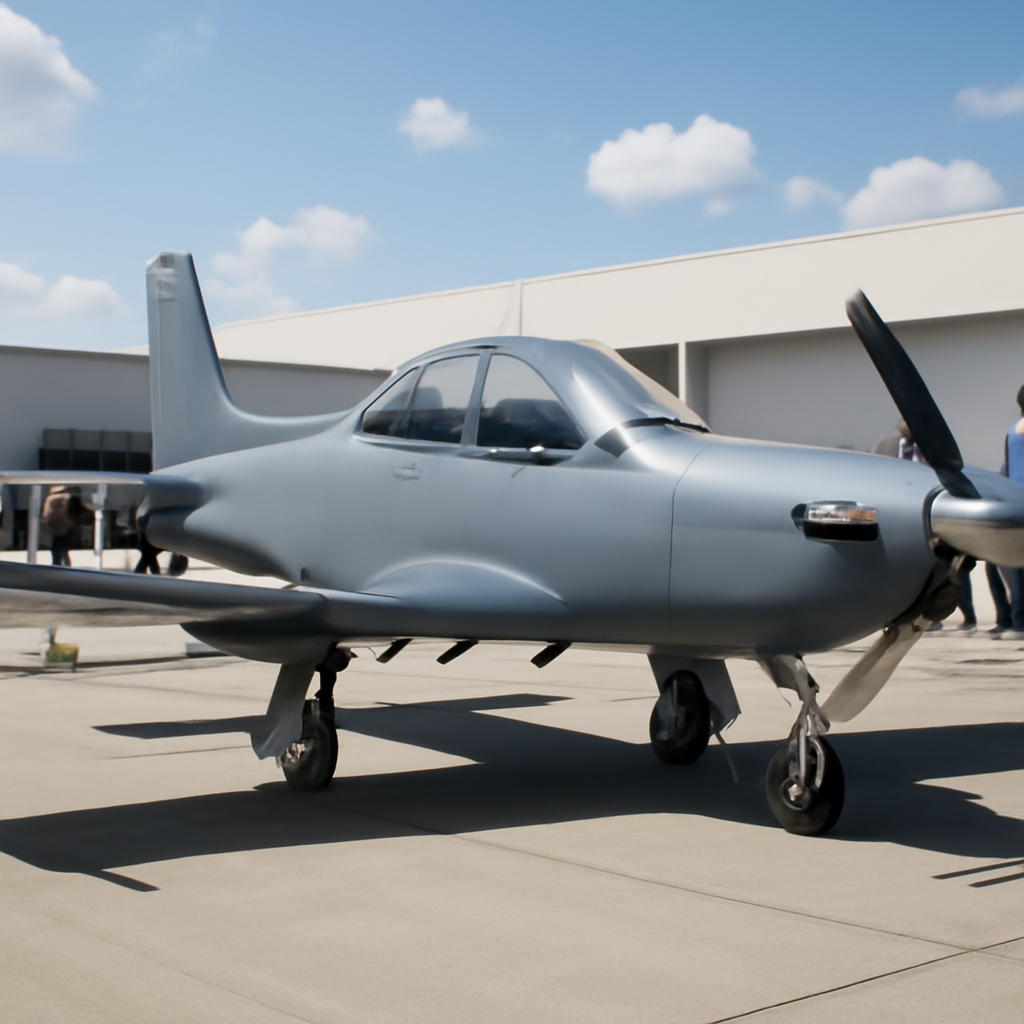
The blog reports that China’s new XJJ basic trainer made its first public appearance at the 2025 Dubai Airshow. That showing is described as the clearest sign yet that the People’s Liberation Army Air Force may be prepared to retire the CJ-6 from frontline basic training duties. The XJJ’s emergence on an international stage was framed in the source as a visible milestone for a program that, according to the blog, "appears to be moving forward steadily."
Replacing the Huosai‑6A piston engine with a new turboprop
Central to the XJJ program, the source says, is a propulsion change: the aircraft will be powered by a new turboprop engine developed to replace the aging HS‑6A (Huosai‑6A) piston engine that has powered generations of CJ‑6 trainers. The blog places this shift in an operational context, arguing that a modern turboprop would offer better performance, reduce lifecycle support challenges, and provide a training experience more representative of contemporary military aviation.

This site is the portfolio.
OSINTSights runs on Cloudflare Workers, D1, R2, and Vectorize, with an AI pipeline on Hetzner ARM. Nubivance designed, built, and operates it. We do the same for clients.
See what we buildCJ‑6: design, longevity, and global afterlife
The CJ‑6’s service record is set out plainly in the post: it first flew in the late 1950s and entered service in the early 1960s, after which it became the backbone of Chinese basic pilot training for decades. The blog notes that while the CJ‑6 is often compared to the Soviet Yak‑18, Chinese engineers substantially redesigned it and evolved it into a successful aircraft in its own right. The CJ‑6 is portrayed as rugged, forgiving, easy to maintain, and inexpensive to operate — qualities that kept it in use domestically and made large numbers of surplus aircraft attractive to warbird collectors and recreational pilots in the United States, Australia, and New Zealand.
The source also documents continued production into the 2020s: an AVIC public-relations photo was cited on August 22, 2024 claiming the CJ‑6 was "still in production" after roughly 60 years, and CCTV footage captured a newly minted CJ‑6 taking off on December 30, 2024.
Training pipeline implications for the PLAAF and PLANAF
The blog frames the issue as more than an equipment swap. It argues that the CJ‑6’s piston‑engine design increasingly contrasted with a modern training pipeline centered on advanced jet trainers and fifth‑generation combat aircraft. A successor with turboprop performance, the post suggests, would close that gap and better match the "performance and operational characteristics of modern military aircraft." The blog also notes the PLAN’s continued reliance on the CJ‑6 as it expands naval aviator training, and it points out that pilots now flying the J‑35 stealth fighter began their careers in the CJ‑6.
What this means for the PLAAF, the PLA Navy, and warbird owners
- PLAAF: The blog implies that planners may be ready to let the CJ‑6 go from frontline basic training duties now that a turboprop successor has appeared publicly and engine development reportedly is underway.
- PLA Navy (PLAN): As the source observes the Navy continues to rely on the CJ‑6 to train naval aviators, the arrival of a turboprop trainer could shift how the PLAN approaches basic carrier and deck-landing preparation over time.
- Warbird owners and international buyers: The CJ‑6’s long life and widespread export footprint — and the continued production and civilian variant mentioned in the source — mean a substantial second‑hand fleet remains available for collectors and recreational pilots even as official training fleets modernize.
Few military trainers can claim more than six decades of continuous service, and the blog treats the XJJ’s debut as the most concrete signal yet that the CJ‑6’s frontline career may be winding down. The precise timetable for any formal retirement is not given in the post, but the combination of a public XJJ reveal and a planned turboprop replacement for the Huosai‑6A creates a clear inference: the long‑serving radial‑engined CJ‑6 may be nearing the end of its primary training role.