China Unveils Next-Generation Drone-Killer Systems in Expansive Military Drill
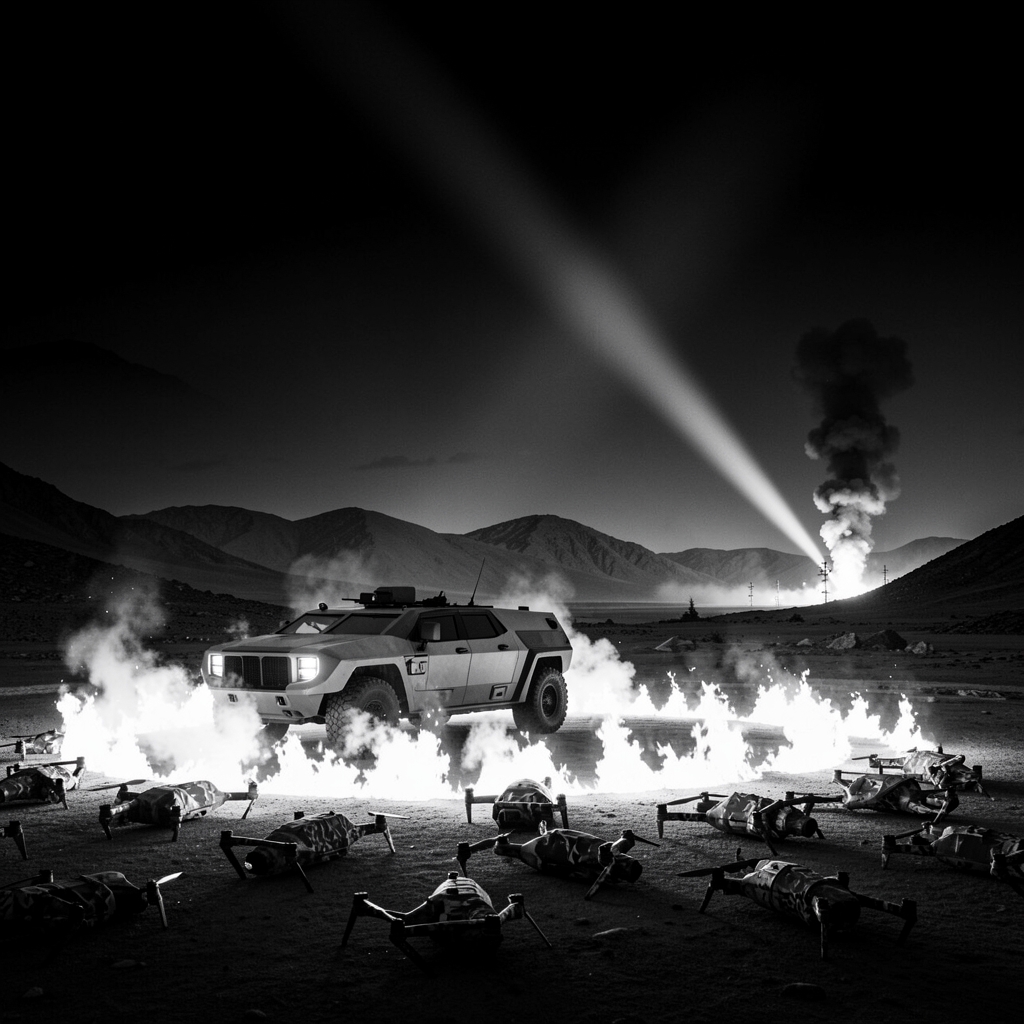
In a striking display of military innovation and power projection, China’s state television has released new footage that spotlights the People’s Liberation Army (PLA) in a live-fire exercise featuring its latest 8×8 Type 625 short-range air defense systems. The exercise, meticulously staged and closely watched by international defense observers, underlines Beijing’s commitment to countering the growing threat posed by unmanned aerial vehicles (UAVs) and reaffirms its strategic military priorities.
The broadcast footage, now circulating on multiple defense analysis platforms, particularly drew attention when defense observer Jesus Roman disseminated images that detailed the actions of approximately a dozen of these hybrid gun-and-missile platforms. The Type 625 systems, purpose-built for engaging aerial targets at close quarters, offer a compelling glimpse into China’s rapid technological advancements and its evolving operational tactics.
Historically, China’s military hardware demonstrations have served not only to boost domestic morale but also as a calculated signal to global adversaries about Beijing’s growing capabilities. Since the early 2000s, the PLA has periodically showcased cutting-edge equipment in public exercises, aligning with its broader objective of modernizing its armed forces. The current live-fire drill fits this long-standing tradition while addressing the pressing need to counter unmanned systems that can operate in swarms and complicate traditional air defense paradigms.
Over recent years, UAVs have transitioned from mere surveillance tools to potent elements in modern warfare, capable of executing coordinated strikes. In this context, the Type 625’s dual capability – combining both guns and missiles – is not merely a refinement in hardware; it represents a tactical countermeasure refined by lessons learned in contemporary conflicts. State media and defense analysts assert that the system’s design and its deployment in this exercise underscore a proactive military posture aimed at deterring potential unauthorized airspace penetrations.
The implications of this development extend beyond technical upgrades. Security analysts note that the integration of such systems heralds a shift in air defense doctrine. As UAVs become a more common feature on battlefields around the world, anti-drone systems like the Type 625 will be at the forefront of national defense strategies, potentially prompting a re-evaluation of both regional security dynamics and procurement strategies among neighboring states.
Military experts, including those affiliated with the International Institute for Strategic Studies, point out that the Type 625’s demonstration is timed impeccably in light of evolving drone tactics seen in various conflict zones. While these experts refrain from over-speculating, they underscore that nations with sophisticated aerial capabilities are likely to invest further in integrated defense systems. The PLA’s testing of these systems is indicative of a broader doctrinal shift toward electronic succession and real-time target acquisition, critical factors in modern conflict scenarios.
For policymakers and strategic analysts, the exercise raises pertinent questions about the future of air defense in an era defined by rapid technological change. How will traditional air power and emerging threats like drone swarms coexist in future battle scenarios? What adjustments will global defense budgets and policies undergo in response to this pervasive shift? As nations navigate these complexities, the PLA’s demonstration serves as an essential barometer, revealing both Beijing’s aspirations and its tactical preparedness.
Looking ahead, the international defense community will likely monitor further exercises and procurement announcements from China with heightened attention. The refinement and potential export of systems like the Type 625 could influence global arms markets and reshape alliances in regions where air superiority remains a cornerstone of national security.
In the final analysis, China’s latest display not only reinforces its domestic narrative of strength and resilience but also sends an unequivocal message to the world: as the tactical landscape evolves, so too must the tools of defense. The live-fire drill, while a snapshot in time, encapsulates a broader strategic imperative – to rather clearly define what modern air defense will look like in the age of drones and beyond.