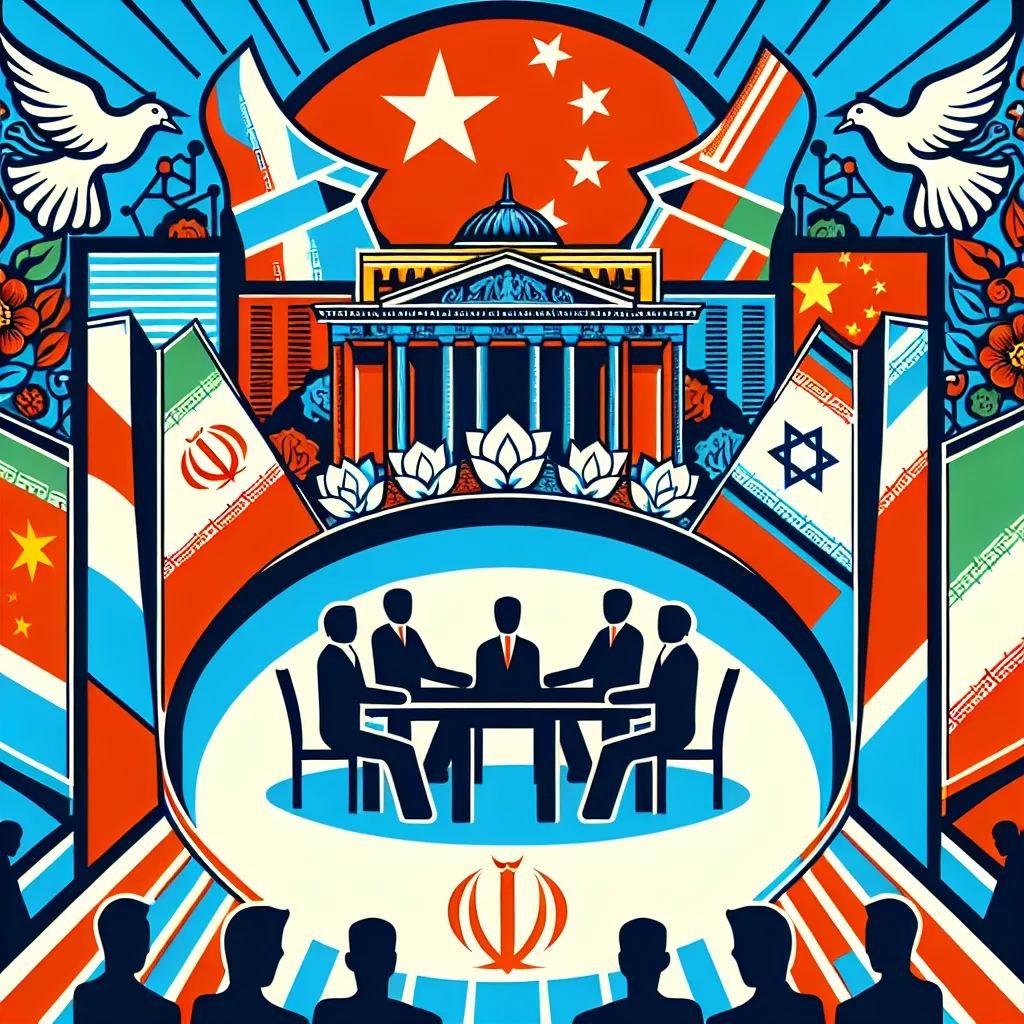
China Signals Readiness to Mediate in the Iran-Israel Tensions
In a moment that reverberates far beyond the borders of Central Asia, Chinese President Xi Jinping has expressed grave concerns over the escalating military conflict between Israel and Iran. Speaking at a high-level summit with Central Asian leaders in Astana, Xi articulated a message that could reshape geopolitical alignments: continued hostilities threaten not just regional stability but also international interests. This raises an urgent question—what role could China play in this fraught dynamic?
The historical context for this latest development cannot be overstated. The longstanding animosity between Israel and Iran is rooted in ideological divides and national security concerns, stretching back over decades. Israel views Iran’s nuclear ambitions as an existential threat, while Iran has consistently supported groups that oppose Israeli interests throughout the region. This adversarial relationship intensified with the U.S. withdrawal from the Joint Comprehensive Plan of Action (JCPOA) in 2018, followed by increased military posturing from both nations.
Today, as tensions flare once more, the stakes are profoundly high. Recent military engagements have resulted in casualties and further destabilization, drawing international condemnation. President Xi’s remarks come at a critical juncture, amidst fears that the conflict could spiral out of control and involve other nations—potentially triggering a broader regional war.
The current situation has prompted Xi to take a stand that positions China as a potential mediator—a role that contrasts sharply with its usual foreign policy posture. During his address in Kazakhstan, he reiterated Beijing’s commitment to maintaining stability in international relations, signaling a readiness to engage diplomatically to quell the rising tide of violence.
This pivot towards mediation raises several important implications for stakeholders across various domains: policymakers in the Middle East must now contend with a China eager to assert its influence on global security matters; Israel may find itself navigating an increasingly complex landscape where its actions are scrutinized by an emerging superpower; and Iran faces pressure from external forces attempting to broker peace amidst ongoing internal strife.
Understanding why China is stepping into this arena requires examining its broader strategic interests. As a nation deeply invested in economic partnerships across the Middle East—most notably through its Belt and Road Initiative—China stands to gain immensely from a stable regional environment. Moreover, facilitating peace talks aligns with China’s desire to enhance its status as a global leader capable of fostering diplomatic resolutions.
- Potential Influence: Should China succeed in mediating talks, it would position itself as an indispensable actor on the world stage, capable of influencing outcomes in key geopolitical disputes traditionally dominated by Western powers.
- Economic Implications: A peaceful resolution could open avenues for enhanced trade relations not only between China and Iran but also within Israel’s burgeoning tech sector.
- Moral Authority: By advocating for de-escalation, China aims to project itself as a responsible power committed to global peace and stability—a narrative that counters perceptions of aggression often attributed to its regional ambitions.
The insights from experts paint a clearer picture of what these developments might mean moving forward. Dr. Li Wei, an analyst at the Shanghai Institute for International Studies, suggests that “China’s involvement represents not merely an interest in regional stability but also a calculated move to bolster its influence globally.” His perspective sheds light on how Beijing might leverage this situation to gain favor with both Iranian leadership and other stakeholders concerned about Israeli military actions.
An attentive gaze towards future events reveals several key indicators worth monitoring. Watch for potential diplomatic initiatives from Beijing aimed at convening multi-party discussions involving Israel and Iran. Additionally, shifts in rhetoric from Tehran and Jerusalem regarding Chinese involvement will signal how both nations perceive this newfound attention from an emergent global power. Finally, observers should pay close attention to any ramifications this engagement has on U.S.-China relations, especially concerning Washington’s traditional role as mediator in Middle Eastern conflicts.
The broader implications of President Xi’s statements resonate through the corridors of power across continents: Can China truly assume a mediating role without exacerbating existing tensions? Or will its efforts yield new opportunities for collaboration among historically adversarial nations? As we stand at this crossroads of possibility and peril, one thing remains clear: the world is watching closely as these dynamics unfold, each party weighing their next moves amid uncertainty.



